
Exercise and Epicatechin
Exercise and Epicatechin

A study of sedentary men and women aged 18 to 45 years with no known chronic diseases divided into two groups: one received a dietary supplement and the other a placebo. Both groups engaged in moderate exercise (≥150 min/week) for three months.
(−)-Epicatechin-Enriched Extract from Camellia sinensis Improves Regulation of Muscle Mass and Function: Results from a Randomized Controlled Trial
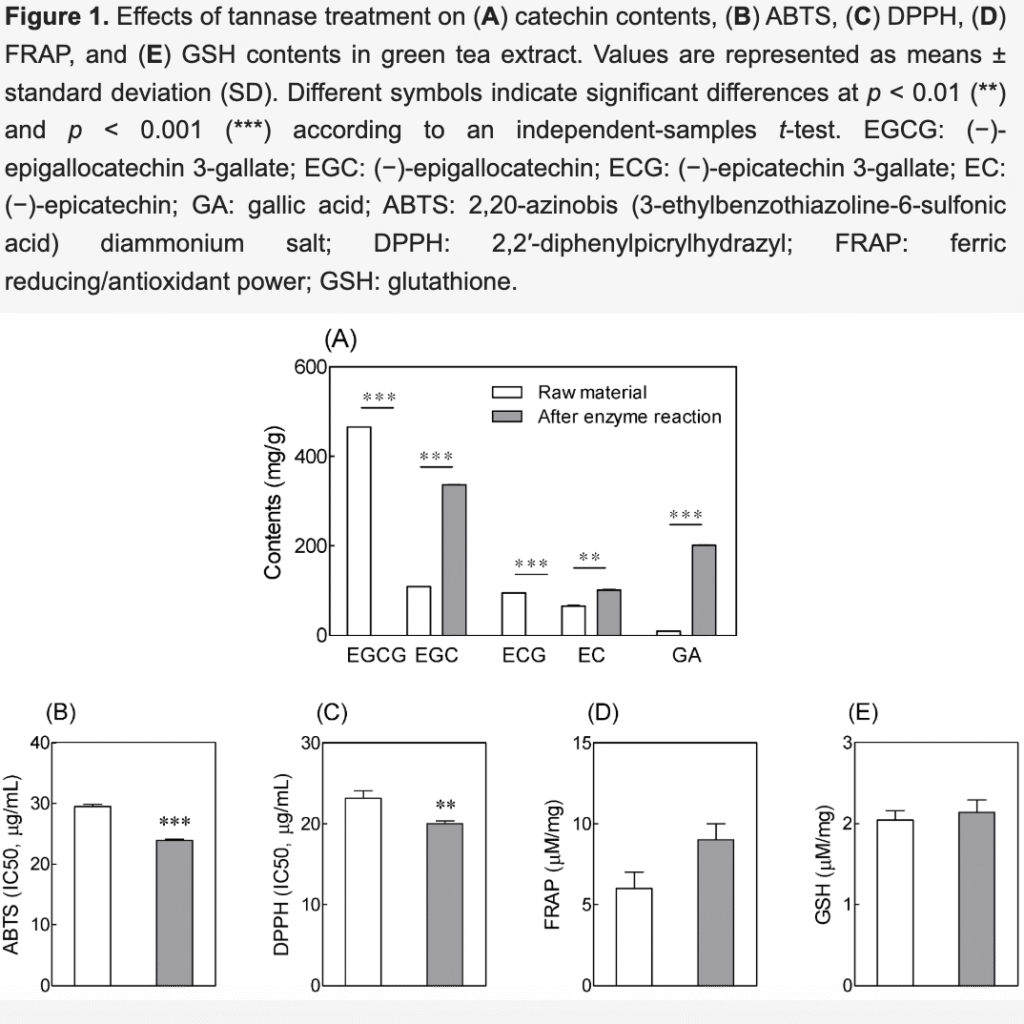
Loss of skeletal muscle mass and function with age represents an important source of frailty and functional decline in the elderly. Antioxidants from botanical extracts have been shown to enhance the development, mass, and strength of skeletal muscle by influencing age-related cellular and molecular processes. Tannase-treated green tea extract contains high levels of the antioxidants (−)-epicatechin (EC) and gallic acid that may have therapeutic benefits for age-related muscle decline. The aim of this study was to investigate the effect of tannase-treated green tea extract on various muscle-related parameters, without concomitant exercise, in a single-center, randomized, double-blind, placebo-controlled study. Administration of tannase-treated green tea extract (600 mg/day) for 12 weeks significantly increased isokinetic flexor muscle and handgrip strength in the treatment group compared with those in the placebo (control) group. In addition, the control group showed a significant decrease in arm muscle mass after 12 weeks, whereas no significant change was observed in the treatment group. Blood serum levels of follistatin, myostatin, high-sensitivity C-reactive protein (hs-CRP), interleukin (IL)-6, IL-8, insulin-like growth factor-1 (IGF-1), and cortisol were analyzed, and the decrease in myostatin resulting from the administration of tannase-treated green tea extract was found to be related to the change in muscle mass and strength. In summary, oral administration of tannase-treated green tea extract containing antioxidants without concomitant exercise can improve muscle mass and strength and may have therapeutic benefits in age-related muscle function decline.
Preeclampsia, Arginase, and Endothelial Protection

This study examined nitric oxide biology and arginase activity in plasma and endothelial cells from women with preeclampsia. It found altered L-arginine/NO signaling and showed that (-)-epicatechin reduced arginase and superoxide-related activity in HUVECs.
(-)-Epicatechin-induced recovery of mitochondria from simulated diabetes: Potential role of endothelial nitric oxide synthase
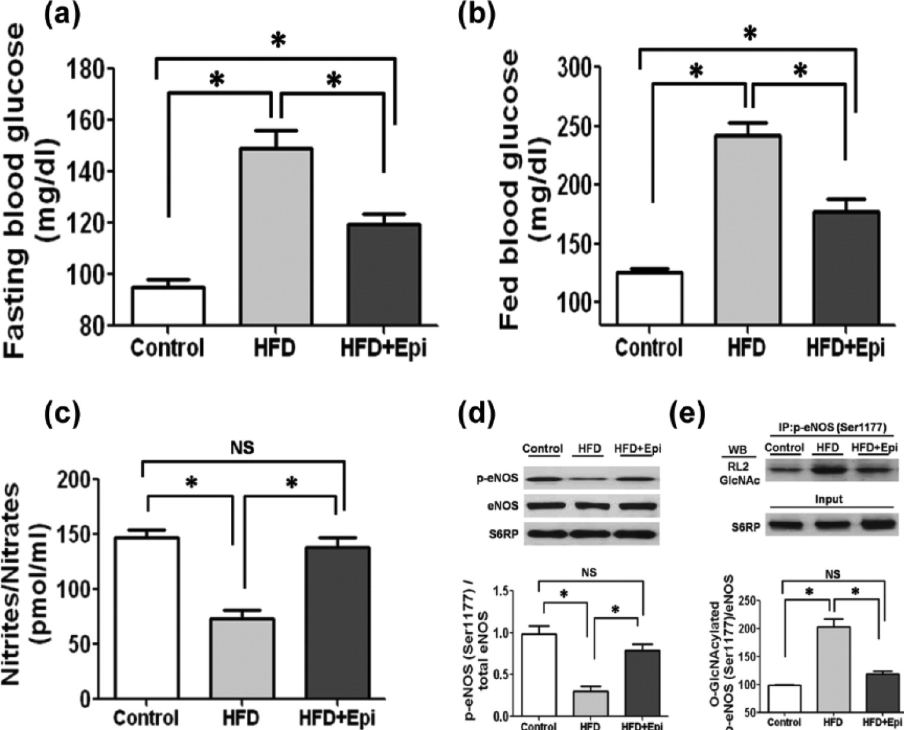
(-)-Epicatechin increases indicators associated with mitochondrial biogenesis in endothelial cells and myocardium. We investigated endothelial nitric oxide synthase involvement on (-)-epicatechin-induced increases in indicators associated with mitochondrial biogenesis in human coronary artery endothelial cells cultured in normal-glucose and high-glucose media, as well as to restore indicators of cardiac mitochondria from the effects of simulated diabetes. Here, we demonstrate the role of endothelial nitric oxide synthase on (-)-epicatechin-induced increases in mitochondrial proteins, transcription factors and sirtuin 1 under normal-glucose conditions. In simulated diabetes endothelial nitric oxide synthase function, mitochondrial function–associated and biogenesis-associated indicators were adversely impacted by high glucose, effects that were reverted by (-)-epicatechin. As an animal model of type 2 diabetes, 2-month old C57BL/6 mice were fed a high-fat diet for 16 weeks. Fasting and fed blood glucose levels were increased and NO plasma levels decreased. High-fat-diet-fed mice myocardium revealed endothelial nitric oxide synthase dysfunction, reduced mitochondrial activity and markers of mitochondrial biogenesis. The administration of 1 mg/kg (-)-epicatechin for 15 days by oral gavage shifted these endpoints towards control mice values. Results suggest that endothelial nitric oxide synthase mediates (-)-epicatechin-induced increases of indicators associated with mitochondrial biogenesis in endothelial cells. (-)-Epicatechin also counteracts the negative effects that high glucose or simulated type 2 diabetes has on endothelial nitric oxide synthase function.