
High Flavonoid Cocoa Supplement Ameliorates Plasma Oxidative Stress and Inflammation Levels While Improving Mobility and Quality of Life in Older Subjects: A Double-Blind Randomized Clinical Trial

In older adults, regular high-flavonoid cocoa intake improved oxidative stress, inflammation, physical performance, and quality-of-life measures.
Effects of (−)-epicatechin on the time course of the expression of perilipins in a diet-induced model of nonalcoholic steatohepatitis
Using a diet-induced NASH model, this study tracked the time course of perilipin expression and assessed how (-)-epicatechin altered those lipid-droplet–related responses over time.
Cell membrane mediated (−)-epicatechin effects on upstream endothelial cell signaling: Evidence for a surface receptor
This paper provides evidence that (-)-epicatechin can trigger endothelial signaling through a cell-surface receptor mechanism, supporting membrane-initiated signaling rather than only intracellular antioxidant activity.
Beneficial Effects of Flavonoids on Skeletal Muscle Health: A Systematic Review and Meta-Analysis
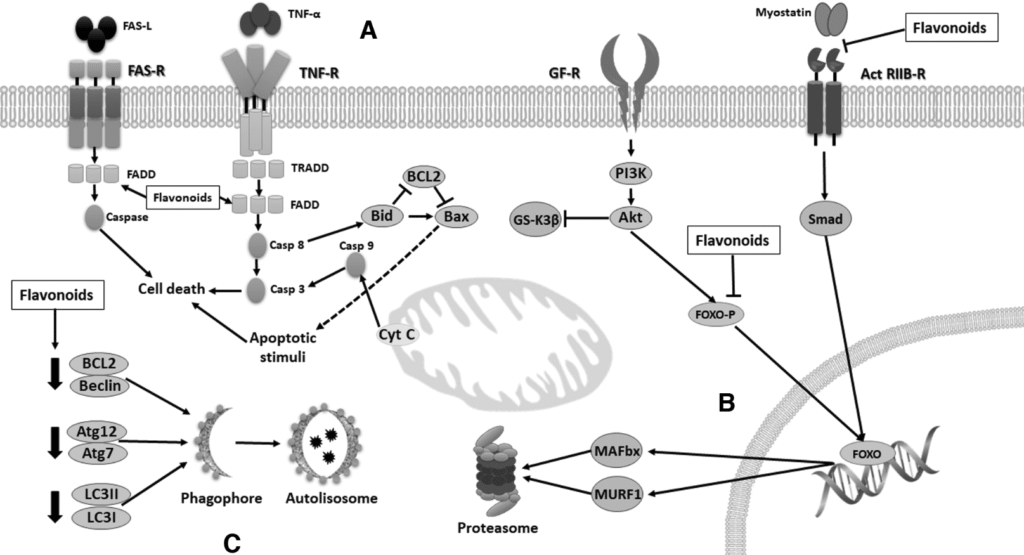
Skeletal muscle (SkM) is a highly dynamic tissue that responds to physiological adaptations or pathological conditions, and SkM mitochondria play a major role in bioenergetics, regulation of intracellular calcium homeostasis, pro-oxidant/antioxidant balance, and apoptosis. Flavonoids are polyphenolic compounds with the ability to modulate molecular pathways implicated in the development of mitochondrial myopathy. Therefore, it is pertinent to explore its potential application in conditions such as aging, disuse, denervation, diabetes, obesity, and cancer. To evaluate preclinical and clinical effects of flavonoids on SkM structure and function. We performed a systematic review of published studies, with no date restrictions applied, using PubMed and Scopus. The following search terms were used: “flavonoids” OR “flavanols” OR “flavones” OR “anthocyanidins” OR “flavanones” OR “flavan-3-ols” OR “catechins” OR “epicatechin” OR “(−)-epicatechin” AND “skeletal muscle.” The studies included in this review were preclinical studies, clinical trials, controlled clinical trials, and randomized-controlled trials that investigated the influence of flavonoids on SkM health. Three authors, independently, assessed trials for the review. Any disagreement was resolved by consensus. The use of flavonoids could be a potential tool for the prevention of muscle loss. Their effects on metabolism and on mitochondria function suggest their use as muscle regulators.