
Introduction
Most of the time, the heart doesn’t “fail” suddenly. It adapts. When your body asks for more blood flow (during exercise, illness, pregnancy, stress), your heart speeds up and squeezes harder. That flexibility is a feature. The problem starts when the baseline demand stays high for months or years, because of high blood pressure, metabolic strain, sleep apnea, anemia, lung disease, valve disease, or coronary artery narrowing.
“Working too hard” isn’t one single diagnosis. It’s a useful concept: the heart is meeting today’s needs by borrowing against long-term reserve. Early clues often show up as changes in breathing, stamina, fluid balance, or rhythm—signals that the system is operating closer to its limits.
What does “working too hard” mean?
Your heart has two main jobs:
- Fill (relax and accept blood between beats)
- Eject (pump blood forward with each beat)
The heart is considered “working too hard” when it must maintain these jobs under excess pressure or excess volume.
When resistance in the arteries is high (commonly from elevated blood pressure), the heart must generate higher pressure to push blood forward. Over time, this added workload can cause the heart muscle to thicken or enlarge, which may reduce efficiency.
Also, when the body retains fluid or when the heart can’t keep up with demand, blood can back up into the lungs or tissues. This congestion is what produces many of the symptoms people recognize, such as shortness of breath or swelling.
Mechanisms and physiology
1) Pressure load leads to thickening and stiffness
If arteries are stiff or narrowed (often from hypertension), the heart faces higher afterload. Over time, the left ventricle may thicken (left ventricular hypertrophy). The AHA notes this thickening can reduce efficiency and contribute to stiffness.
Stiffness matters because a stiff ventricle fills less easily, so pressures rise backward into the lungs, especially during activity or when lying flat.
2) Volume load leads to congestion
When the circulation holds onto salt and water (kidneys, hormones, medications, diet, or heart-related signaling), fluid can accumulate in the lungs and legs. This is why shortness of breath and swelling (edema) often travel together.
KEY CONCEPT
Pressure load, volume load, stress signaling, and energy demand together determine how hard the heart has to work.
3) Neurohormonal “stress mode”
When the heart struggles to keep up, the body switches on stress signals that help maintain circulation. Over time, however, this constant activation can raise heart rate and blood pressure, increase fluid retention, and gradually change heart structure.
4) Energy demand and mitochondria
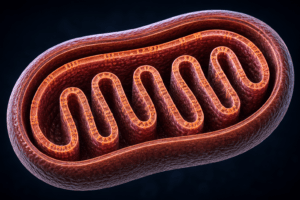
Every heartbeat requires ATP. When the heart is under sustained load, it must continuously match energy supply to demand. If energy production can’t keep up, or if oxidative stress rises, cells may become less resilient. This doesn’t mean “mitochondria cause heart disease,” but they’re a helpful lens for understanding why chronic load can gradually reduce performance and tolerance.
Practical “signs” your heart may be operating near its limits
Many of these symptoms are common and can have multiple causes, so patterns and progression matter more than any single sign.
1) Shortness of breath that’s new, progressive, or out of proportion

- During exertion (you can’t do what you used to)
- When lying flat (needing extra pillows)
- Waking at night short of breath
These are classic congestion patterns described in major patient-facing heart failure resources.
In a research context focused on HFpEF, patients commonly present with exercise intolerance, shortness of breath, and edema.
2) Reduced exercise tolerance and “heavy fatigue”
The AHA lists fatigue as a common heart failure warning sign. A useful clue is fatigue that tracks with activity (stairs, carrying groceries) and improves with rest, especially if it’s new or worsening.

3) Swelling in feet, ankles, legs, or abdomen
Fluid retention may show up as:
- Sock lines that suddenly deepen
- Shoes feeling tighter
- Abdominal bloating or a sense of heaviness
Mayo Clinic and the AHA both highlight edema as a common manifestation when fluid backs up.
4) Rapid weight gain over days (fluid, not fat)
A quick increase can reflect fluid accumulation rather than body fat changes. Patient guides on heart failure tracking emphasize weight changes as an early congestion signal.
Symptoms tend to cluster. Congestion, fatigue, and rhythm changes often appear together.
5) A racing, pounding, or irregular heartbeat
Feeling a persistent “thump,” flutter, or racing can reflect arrhythmias or compensation. The AHA recommends tracking heart rate if you feel racing or throbbing in the context of heart failure symptoms.
6) Persistent cough or wheeze, especially when lying down
Fluid congestion can irritate airways and worsen cough at night. Mayo Clinic lists cough/wheezing with frothy sputum as a concerning pattern when severe.
7) Lightheadedness, near-fainting, or “gray/blue” skin color changes
Poor forward flow can reduce perfusion; Mayo Clinic notes some heart failure states can produce blue/gray skin changes (visibility varies by skin tone).

Big-picture levers that reduce cardiac workload
- Address blood pressure (measurement, treatment adherence, lifestyle basics)
- Improve cardiorespiratory fitness gradually (consistent, tolerable activity builds reserve)
- Sleep and breathing quality (sleep apnea is a major, underrecognized workload amplifier)
- Metabolic load (glucose control, weight trajectory, lipids, often affect vascular stiffness and demand)
- Avoid “all-or-nothing” efforts: the heart responds to cumulative patterns, not single perfect weeks.
Related or emerging topics
HFpEF and “silent stiffness”
HFpEF is often framed as a problem of diastolic function, the heart can pump, but it doesn’t relax/fill normally. That’s why symptoms can appear even when an echocardiogram reports “normal ejection fraction.” This is an active research area, and treatments have historically been harder than in reduced-EF heart failure, though guidance continues to evolve.
The mitochondria angle
Energy availability and the ability to handle everyday cellular stress help determine how well the heart copes with long-term strain. Mitochondria support this by supplying steady energy, helping control damaging byproducts, and assisting with repair during rest and recovery. When these systems work well, the heart has more “reserve” and can adapt better to ongoing pressure, workload, and metabolic stress.
This perspective also helps explain how long-term energy demand and metabolic stress shape cardiovascular risk and how these patterns can be improved over time. We explore this further in a related article here.
When symptoms are urgent
Seek immediate medical care if you experience sudden, severe, or worsening symptoms that may indicate a cardiac emergency, including:
- Chest pressure, tightness, or pain
- Pain spreading to the arm, jaw, neck, back, or shoulder
- Shortness of breath at rest or with minimal activity
- Lightheadedness, fainting, or sudden weakness
- Cold sweats, nausea, or unexplained fatigue
If symptoms are intense, come on suddenly, or feel different from what you’ve experienced before, do not wait. Seek emergency care.
Conclusion
Signs that the heart is “working too hard” often reflect a mismatch between demand and the body’s ability to adapt. These signals rarely appear overnight and don’t usually point to a single cause. Instead, they tend to develop gradually as pressure load, metabolic stress, inflammation, and recovery demands accumulate over time.
Understanding these signs is not about self-diagnosis or fear. It’s about recognizing patterns early and appreciating how the heart responds to sustained strain. By paying attention to symptoms, supporting recovery, and addressing underlying stressors with appropriate medical guidance, it becomes possible to reduce long-term risk and preserve cardiac resilience.
References
American Heart Association. (2024, May 9). How high blood pressure can lead to heart failure. (www.heart.org)
American Heart Association. (2024, December 12). Warning signs of a heart attack. (www.heart.org)
American Heart Association. (2025, May 29). Warning signs of heart failure. (www.heart.org)
American Heart Association. (2025, May 29). Managing heart failure symptoms. (www.heart.org)
Heidenreich, P. A., Bozkurt, B., Aguilar, D., Allen, L. A., Byun, J. J., Colvin, M. M., … Yancy, C. W. (2022). 2022 AHA/ACC/HFSA guideline for the management of heart failure. Circulation. (AHA Journals)
Mayo Clinic. (n.d.). Heart failure: Symptoms and causes. (Mayo Clinic)
Villarreal, F. J., & colleagues. (2022). (-)-Epicatechin Ameliorates Cardiac Fibrosis in a Female Rat Model of Pre-Heart Failure with Preserved Ejection Fraction (PubMed).
If you’re interested in understanding how energy, recovery, and resilience shape long-term heart health, the free Mitozz Community offers deeper discussions, expert insights, and live Q&A sessions focused on cellular energy and adaptation.
Sign up for the Mitozz Newsletter
Get science-based education on mitochondrial health, cellular energy, and lifestyle signals that support your body over time.
Medical Disclaimer: The information provided in this article is for educational and informational purposes only and is not intended as medical advice. It is not a substitute for professional medical diagnosis, treatment, or guidance. Always consult with a qualified healthcare professional before making changes to your diet, exercise routine, fasting practices, or supplement use, especially if you have a medical condition, are pregnant or nursing, or are taking medications.
FDA Disclaimer: These statements have not been evaluated by the Food and Drug Administration. They are not not intended to diagnose, treat, cure, or prevent any disease.