Key Takeaways
- Happiness is complex. But low cellular capacity shrinks your patience and optimism.
- Your brain has an energy budget. When it’s low, joy is harder to access.
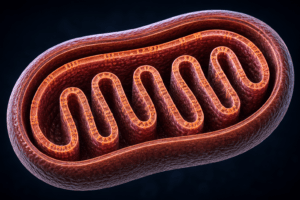
- Mitochondria help set your budget bandwidth. They power ATP and shape stress/inflammation signals.
- That’s where Mitozz fits in. If you are looking for targeted mitochondrial support, there is no better option than Mitozz.

Who doesn’t want to be happy? Few aims are more basic and universal than the pursuit of happiness. It’s shaped by many things, including our relationships, purpose, environment, mental health, and the life circumstances we navigate day to day.
But there’s also a deeper layer that is rarely discussed and easy to overlook: cellular capacity. If you’ve ever noticed that your patience, optimism, and sense of humor shrink when you’re exhausted, you’ve felt what we are talking about.
Your brain is an energy-intensive organ and emotional regulation is demanding work.12 When sleep is short, stress is chronic, inflammation is higher, or recovery is missing, your body often reallocates resources toward basic survival and maintenance.3 This can feel like lower motivation, more irritability, and less emotional flexibility.
Happiness often requires physiological bandwidth. That bandwidth is partly built at the cellular level, through energy metabolism and the mitochondria that power it.

The “Energy Budget” Behind Happiness
A useful way to think about happiness is from an “energy budget” perspective.
Your brain is constantly spending energy to:
- Basic regulation: breathing, heart function, temperature, hunger/thirst
- Sensing + body-state monitoring: processes the world and your internal signals
- Prediction + learning: forecasts what’s next and updates its model (plasticity)
- Attention + control: focuses, holds working memory, makes decisions, and inhibits impulses
- Emotion + stress regulation: calibrates threat/safety, mood, and stress responses
- Action + connection: plans movement and supports language/social understanding and motivation/reward.
When your system is running low, or spending heavily on stress and inflammation, your brain has less budget left for flexibility and joy.
Where Mitochondria Fit In: More Than “ATP Power Plants”
Mitochondria are famous for producing ATP, the cell’s main energy currency.4 But they’re also involved in:
- Redox balance (managing oxidative stress)
- Inflammatory signaling (how cells coordinate immune and repair responses)
- Stress responsiveness (how cells detect and respond to metabolic and environmental stress)
- Cellular adaptation to exercise and recovery (mitochondrial remodeling and improved energy capacity)
In psychiatric and neuroscience research, mitochondrial dysfunction is repeatedly discussed as part of the biology of mood disorders (including depression5 and bipolar disorder).6
This doesn’t mean mitochondria cause psychological disorders. It means mitochondria sit at a crossroads where stress, inflammation, and brain energy needs converge, factors that strongly affect how we feel.
Motivation and Pleasure Are Energy-Dependent
“Happiness” isn’t only calm contentment, it’s also:
- interest
- drive
- social engagement
- the ability to feel reward
Those functions rely on brain circuits that are metabolically demanding. In animal research, differences in brain mitochondrial function have been linked to anxiety-related and social behaviors, highlighting how energy metabolism can intersect with behavioral states.7
Happiness is far too complex to explain with any single mechanism. But a reasonable takeaway is that when cellular energy systems are strained, by chronic stress, poor sleep, or inadequate recovery, motivation, positive mood, and the capacity to feel reward can become harder to sustain.
Biggest Levers Connecting Cellular Capacity and Happiness
If you want to support “happiness biology,” you should focus on building cellular capacity.
1) Sleep: the fastest way to restore bandwidth
Sleep loss taxes energy metabolism, raises stress sensitivity, and can magnify irritability and low mood the next day.8 If you’ve ever been jet-lagged and noticed everything feels harder, you already understand this.
Action Item: consistent wake time + morning light + protect the last hour before bed.
2) Movement: mitochondria adapt to what you repeatedly ask them to do
Regular exercise supports mitochondrial function and is consistently associated with improved mental health outcomes, including reduced depressive symptoms in many people.9
Action Item: start with walking + 2–3 weekly “easy aerobic” sessions + strength training.
3) Fuel stability: fewer crashes, steadier mood
Big blood-sugar swings, under-fueling, and dehydration can feel like anxiety, irritability, or “low mood.”10
Action Item: protein + fiber early in the day; hydrate; avoid long gaps if you’re prone to energy dips.
4) Inflammation and stress load: the hidden energy drain
Inflammation behaves like an “energy tax,” and mitochondrial function and inflammation can reinforce each other in ways linked to anxiety and depression risk.11
Action Item: treat recovery as a practice (sleep, deload weeks, stress downshifts, time outdoors).
Where Mitozz Fits In
If you are looking for targeted nutritional support aimed at mitochondrial health we welcome you to explore Mitozz as a way to improve your day-to-day vitality and resilience.
If you want to learn more about mitochondria are, what they do, what happens when they function poorly and how to improve them, explore Mitochondria 101.
Bottom Line
Cellular capacity isn’t happiness but it can set the conditions that happiness depends on: stable mood, steady motivation, and the resilience to bounce back.
Building energy capacity doesn’t guarantee joy. But it can make your nervous system less reactive, your recovery more reliable, and your mind more available, so you’re far more likely to notice the good, pursue what matters, and actually feel the reward when it arrives.
Share this blog article
Footnotes
- Raichle ME, Gusnard DA. Appraising the brain’s energy budget. PNAS (2002). ↩︎
- Padamsey Z, et al. Paying the brain’s energy bill. ScienceDirect (2023). ↩︎
- Palmer CA, Alfano CA. Sleep Loss and Emotion: A Systematic Review and Meta-Analysis. Psychological Bulletin (2023). ↩︎
- Picard M, et al. Mitochondrial signal transduction. Cell Metabolism (2022). ↩︎
- Xia X, et al. Mitochondrial dysfunction in depression: mechanisms and… (2025). ↩︎
- Giménez-Palomo A, et al. Mitochondrial dysfunction as a biomarker… in bipolar disorder. (2024). ↩︎
- Hollis F, et al. Mitochondrial function in the brain links anxiety with social subordination. PNAS (2015). ↩︎
- Meigs JM, Kiderman M, Kircanski K, Cardinale EM, Pine DS, Leibenluft E, Brotman MA, Naim R. Sleepless nights, sour moods: daily sleep–irritability links in a pediatric clinical sample. Journal of Child Psychology and Psychiatry. 2024. ↩︎
- Noetel M, et al. Effect of exercise for depression: systematic review and meta-analysis of RCTs. BMJ (2024). ↩︎
- Mayo Clinic. Hypoglycemia – symptoms include irritability or anxiety. (2023). ↩︎
- Osimo EF, et al. Inflammatory markers in depression: meta-analysis. (2020). ↩︎
Understanding mitochondrial health is a long-term process. That’s why we created the Mitozz Newsletter: a free way to keep learning about cellular energy, mitochondrial health, and the lifestyle signals that support your body over time. You’ll receive science-based educational content, practical guidance, and updates from Mitozz, all at your own pace.
Sign up for the Mitozz Newsletter
Get science-based education on mitochondrial health, cellular energy, and lifestyle signals that support your body over time.
Medical Disclaimer: The information provided in this article is for educational and informational purposes only and is not intended as medical advice. It is not a substitute for professional medical diagnosis, treatment, or guidance. Always consult with a qualified healthcare professional before making changes to your diet, exercise routine, fasting practices, or supplement use, especially if you have a medical condition, are pregnant or nursing, or are taking medications.
FDA Disclaimer: These statements have not been evaluated by the Food and Drug Administration. They are not not intended to diagnose, treat, cure, or prevent any disease.