
Exercise and Epicatechin
Exercise and Epicatechin

A study of sedentary men and women aged 18 to 45 years with no known chronic diseases divided into two groups: one received a dietary supplement and the other a placebo. Both groups engaged in moderate exercise (≥150 min/week) for three months.
Preliminary results in patients with COVID-19

Persistent fatigue is one of the symptoms that can last weeks or months after the initial SARS-CoV-2 infection.
There is scientific evidence that the flavonoids can modulate the molecular pathways involved in the development of
mitochondrial myopathy. To determine whether an epicatechin-enriched supplement (EC) can improve plasma markers of
inflammation and fatigue in long COVID-19 patients, we conducted a randomized, double-blind, clinical trial.
The study included 46 subjects (mean age 52 years) allocated into EC or placebo, and were instructed to consume 2
capsules /day for up to 90 days. A comprehensive set of endpoints were assessed, which included mean change in plasma
inflammatory and endothelial dysfunction markers, hand strength, fatigue scale, and quality of life (QoL). The results
suggested an EC-induced significant improvement in almost all endpoints as compared with the placebo.
The results open a new venue in the treatment of this elusive illness after COVID-19
(−)-Epicatechin-Enriched Extract from Camellia sinensis Improves Regulation of Muscle Mass and Function: Results from a Randomized Controlled Trial
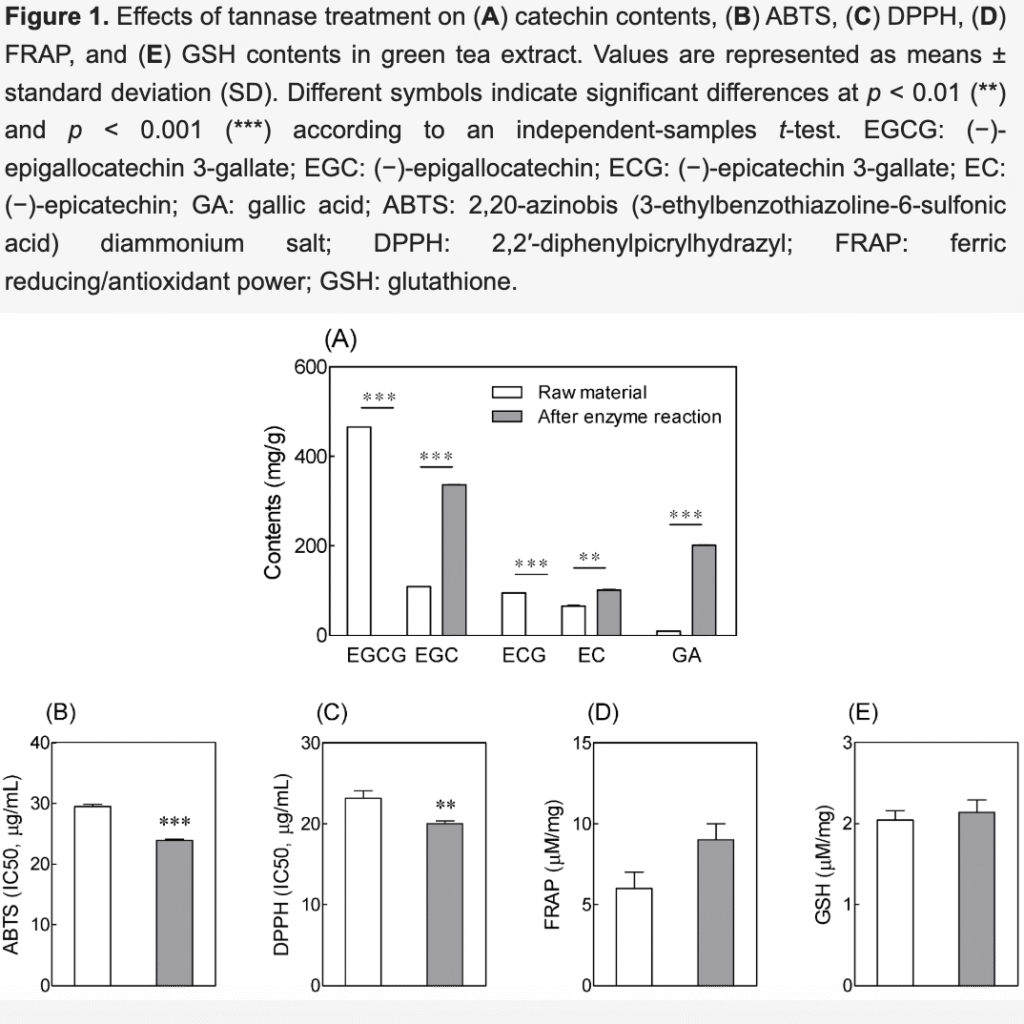
Loss of skeletal muscle mass and function with age represents an important source of frailty and functional decline in the elderly. Antioxidants from botanical extracts have been shown to enhance the development, mass, and strength of skeletal muscle by influencing age-related cellular and molecular processes. Tannase-treated green tea extract contains high levels of the antioxidants (−)-epicatechin (EC) and gallic acid that may have therapeutic benefits for age-related muscle decline. The aim of this study was to investigate the effect of tannase-treated green tea extract on various muscle-related parameters, without concomitant exercise, in a single-center, randomized, double-blind, placebo-controlled study. Administration of tannase-treated green tea extract (600 mg/day) for 12 weeks significantly increased isokinetic flexor muscle and handgrip strength in the treatment group compared with those in the placebo (control) group. In addition, the control group showed a significant decrease in arm muscle mass after 12 weeks, whereas no significant change was observed in the treatment group. Blood serum levels of follistatin, myostatin, high-sensitivity C-reactive protein (hs-CRP), interleukin (IL)-6, IL-8, insulin-like growth factor-1 (IGF-1), and cortisol were analyzed, and the decrease in myostatin resulting from the administration of tannase-treated green tea extract was found to be related to the change in muscle mass and strength. In summary, oral administration of tannase-treated green tea extract containing antioxidants without concomitant exercise can improve muscle mass and strength and may have therapeutic benefits in age-related muscle function decline.
Calcium-Independent eNOS Activation via HSP90 and AKT

The study reports that (-)-epicatechin can activate eNOS through a calcium-independent pathway involving HSP90 and AKT, offering a plausible endothelial mechanism for vascular benefit.
Cocoa Flavanols and Cardiovascular Event Prevention
The headline result is mixed: null for the primary total-CVD endpoint, but lower CVD death.
Effects of (−)-epicatechin on molecular modulators of skeletal muscle growth and differentiation
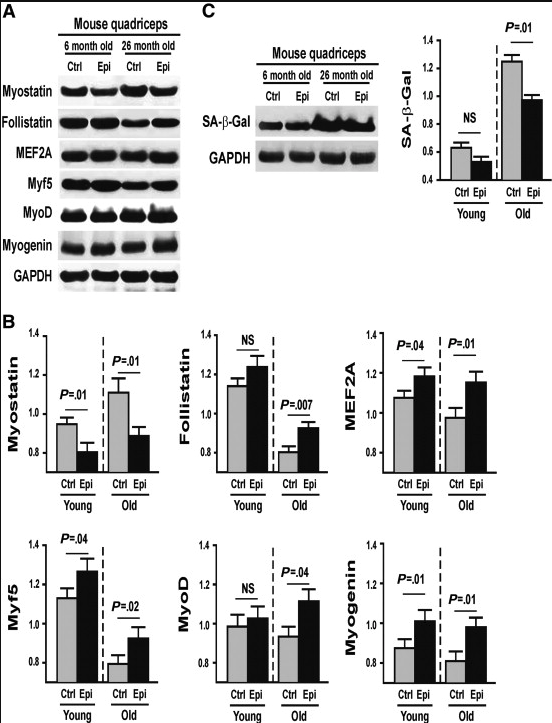
Sarcopenia is a notable and debilitating age-associated condition. Flavonoids are known for their healthy effects and limited toxicity. The flavanol (−)-epicatechin (Epi) enhances exercise capacity in mice, and Epi-rich cocoa improves skeletal muscle structure in heart failure patients. (−)-Epicatechin may thus hold promise as treatment for sarcopenia. We examined changes in protein levels of molecular modulators of growth and differentiation in young vs. old, human and mouse skeletal muscle. We report the effects of Epi in mice and the results of an initial proof-of-concept trial in humans, where muscle strength and levels of modulators of muscle growth were measured. In mice, myostatin and senescence-associated β-galactosidase levels increase with aging, while those of follistatin and Myf5 decrease. (−)-Epicatechin decreases myostatin and β-galactosidase and increases levels of markers of muscle growth. In humans, myostatin and β-galactosidase increase with aging while follistatin, MyoD and myogenin decrease. Treatment for 7 days with (−)-epicatechin increases hand grip strength and the ratio of plasma follistatin/myostatin. In conclusion, aging has deleterious effects on modulators of muscle growth/differentiation, and the consumption of modest amounts of the flavanol (−)-epicatechin can partially reverse these changes. This flavanol warrants its comprehensive evaluation for the treatment of sarcopenia.
Flavonoids from dark chocolate and (−)-epicatechin ameliorate high-fat diet-induced decreases in mobility and muscle damage in aging mice
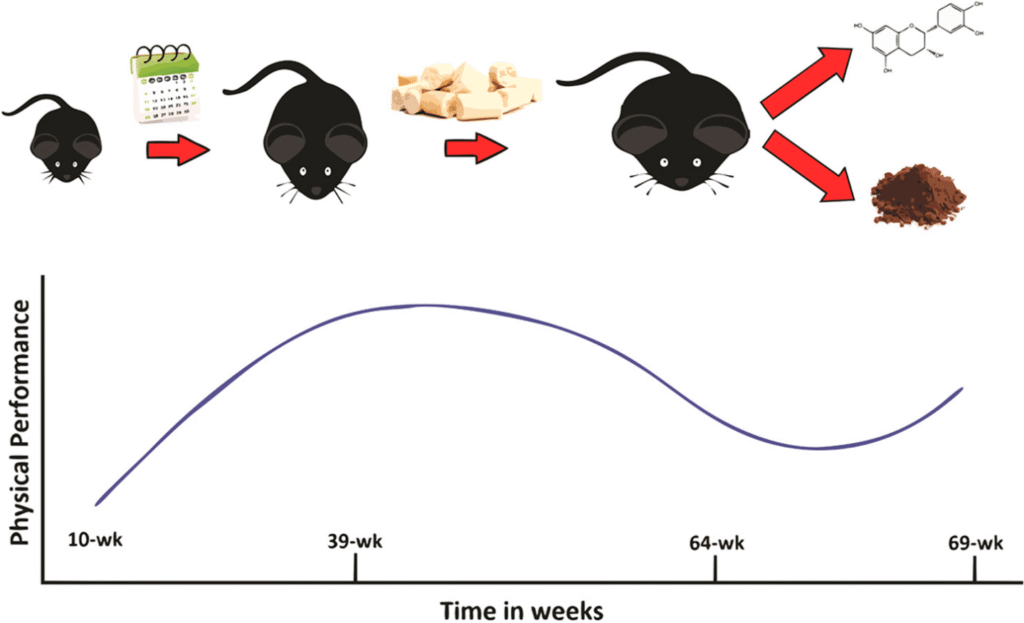
Age-related muscle decline, when associated with obesity, leads to adverse outcomes with increased risks for falling, loss of independence, disability and risk of premature mortality. The aim of this study was to assess the potential beneficial effects of flavonoids in improving the age-/high-fat-diet-induced decrease in physical activity/capacity related to the onset of skeletal muscle decline. The effects of the administration of a cocoa beverage enriched with flavanols or pure (−)-epicatechin for 5 wk in a model of physical activity decline induced by the ingestion of a high-fat diet (60% fat) in middle-age mice were evaluated. The results showed that both products, the cocoa beverage enriched with flavanols and pure (−)-epicatechin, improved physical performance evaluated with the hang-wire, inverted-screen, and weight-lifting tests and dynamometry compared with the performance of the controls. The beverage and (−)-epicatechin increased the follistatin/myostatin ratio and increased the expression of myocyte enhancer factor 2A (MEF2A), suggesting an effect on molecular modulators of growth differentiation. Furthermore, the beverage and (−)-epicatechin decreased the expression of O-type fork-head transcription factor (FOXO1A) and muscle ring finger 1 (MURF1) markers of the skeletal muscle ubiquitin-proteasome degradation pathway.
Preeclampsia, Arginase, and Endothelial Protection
This study examined nitric oxide biology and arginase activity in plasma and endothelial cells from women with preeclampsia. It found altered L-arginine/NO signaling and showed that (-)-epicatechin reduced arginase and superoxide-related activity in HUVECs.
(-)-Epicatechin-induced recovery of mitochondria from simulated diabetes: Potential role of endothelial nitric oxide synthase
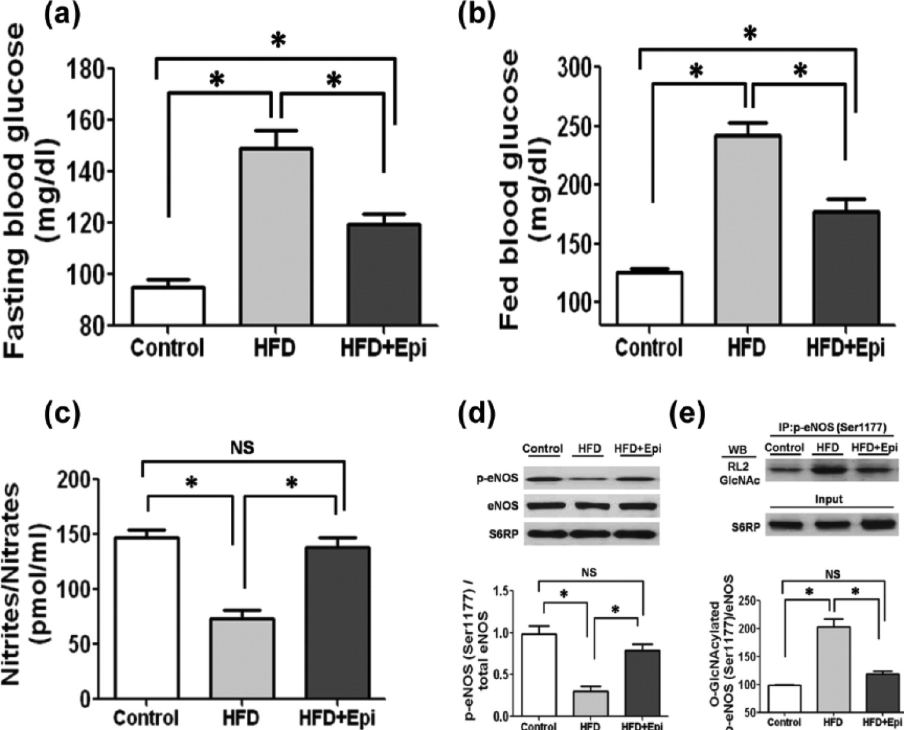
(-)-Epicatechin increases indicators associated with mitochondrial biogenesis in endothelial cells and myocardium. We investigated endothelial nitric oxide synthase involvement on (-)-epicatechin-induced increases in indicators associated with mitochondrial biogenesis in human coronary artery endothelial cells cultured in normal-glucose and high-glucose media, as well as to restore indicators of cardiac mitochondria from the effects of simulated diabetes. Here, we demonstrate the role of endothelial nitric oxide synthase on (-)-epicatechin-induced increases in mitochondrial proteins, transcription factors and sirtuin 1 under normal-glucose conditions. In simulated diabetes endothelial nitric oxide synthase function, mitochondrial function–associated and biogenesis-associated indicators were adversely impacted by high glucose, effects that were reverted by (-)-epicatechin. As an animal model of type 2 diabetes, 2-month old C57BL/6 mice were fed a high-fat diet for 16 weeks. Fasting and fed blood glucose levels were increased and NO plasma levels decreased. High-fat-diet-fed mice myocardium revealed endothelial nitric oxide synthase dysfunction, reduced mitochondrial activity and markers of mitochondrial biogenesis. The administration of 1 mg/kg (-)-epicatechin for 15 days by oral gavage shifted these endpoints towards control mice values. Results suggest that endothelial nitric oxide synthase mediates (-)-epicatechin-induced increases of indicators associated with mitochondrial biogenesis in endothelial cells. (-)-Epicatechin also counteracts the negative effects that high glucose or simulated type 2 diabetes has on endothelial nitric oxide synthase function.
Oxidative Stress Regulation in Skeletal Muscle Under Clinical Metabolic Strain
In patients with heart failure and type 2 diabetes, (-)-epicatechin-rich cocoa modulated oxidative-stress regulators in skeletal muscle, supporting an effect on redox biology in clinically relevant tissue.
Skeletal Muscle Structure, Regeneration, and Cardiometabolic Health
This clinical study found structural sarcomere abnormalities in skeletal muscle from patients with heart failure and type 2 diabetes, and reported restorative effects after (-)-epicatechin-rich cocoa intake.