Key Takeaways
- Stress is a signal: Helpful short-term but chronic stress without recovery drains cellular capacity.
- Allostatic load = cumulative wear-and-tear: Repeated stress responses that don’t shut off efficiently raise long-term strain.
- Cellular impacts show up in energy and repair systems: Mitochondria, inflammation balance, and recovery processes can shift toward short-term coping.
- Your biggest levers are sleep + movement + downshifting: Protect sleep regularity, use exercise as “controlled stress,” and use breath/mindfulness to return to baseline.
- Where Mitozz fits in: In addition to the levers, Mitozz can help mitochondrial function, oxidative balance, and cell signaling.
Stress Is an Energy Allocation Signal
Stress is often described as an emotion or a mindset but biologically, stress is a resource-allocation command. When your brain detects a threat (physical, social, or psychological), it sends signals that re-route energy toward immediate survival: mobilize fuel, increase alertness, and prepare the body to act.
In the short term, this is adaptive. The problem is not that stress exists, it’s that modern stressors can become frequent, persistent, and recovery-poor, turning a useful response into a chronic biological state.
Over time, that chronic state changes how your cells manage energy, repair, and maintenance. And that’s where “stress management” becomes something deeper than relaxation: it becomes a strategy for protecting cellular capacity.
Allostatic Load: When Adaptation Becomes Wear-and-Tear
Your body maintains stability through change. That process is called allostasis. When a stressor hits, systems like the autonomic nervous system and the hypothalamic–pituitary–adrenal (HPA) axis ramp up to help you adapt. Heart rate rises, cortisol patterns shift, immune signaling changes, and energy is redirected.
But adaptation has a cost. When stress responses are triggered too often, last too long, or fail to shut off efficiently, the cumulative “wear and tear” is described as allostatic load.1

Think of it like revving an engine. Revving is fine when you need to accelerate but living at high RPM with poor maintenance is a different story. Allostatic load is essentially the biological bookkeeping of that high-RPM lifestyle.
What Stress Does at the Cellular Level
Stress becomes “cellular” through signals that influence energy production, inflammation, and repair priorities. While researchers are still mapping all the pathways in humans, several themes are consistent across stress physiology and cellular biology.
Mitochondria and “Energy Budgeting”
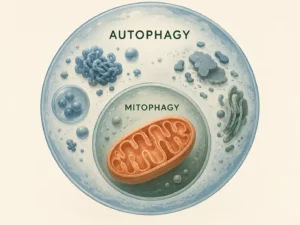
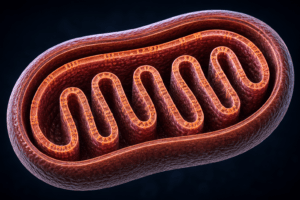
Mitochondria help convert nutrients into usable cellular energy and participate in signaling processes that shape adaptation. Under acute stress, cells may temporarily increase energy output and defensive signaling. Under chronic stress, researchers are investigating how sustained stress physiology may shift mitochondrial dynamics, oxidative balance, and energy efficiency, sometimes framed as “mitochondrial allostatic load,” an emerging concept linking cumulative stress with mitochondrial strain.2
The key idea for everyday health: Chronic stress can push cells toward short-term coping at the expense of long-term maintenance. That doesn’t mean stress “breaks” mitochondria overnight. It means the body’s priorities can gradually tilt away from repair, which matters for resilience over time.
Inflammation and Repair Tradeoffs
Stress signaling interacts with immune function. In acute stress, immune changes can be functional, preparing you for injury or infection. But chronically elevated stress physiology is often associated with less favorable inflammatory patterns and recovery dynamics (the direction and magnitude vary by individual, context, sleep, and behavior).3 This is one reason stress is increasingly discussed as a systems-level load, not a single pathway problem.
A practical takeaway: stress management isn’t only about feeling calmer. It’s about reducing unnecessary biological signaling that can compete with recovery.
Sleep, Circadian Timing, and Cortisol Rhythms
Cortisol is not “bad.” It’s a normal hormone with a daily rhythm that helps coordinate metabolism and alertness, generally higher in the morning and lower in the evening.4 That rhythm is regulated by circadian biology and the sleep–wake cycle.

When sleep is shortened, irregular, or consistently disrupted, the HPA axis can become misaligned, contributing to cortisol rhythm disruption and downstream metabolic and inflammatory effects.5
If there’s one “quiet superpower” in stress resilience, it’s this: Protecting sleep regularity protects the timing signals your cells use to schedule repair.
The Stress-Resilience Habits That Move the Needle
Cellular resilience is built through repeated signals. The goal isn’t to eliminate stress—it’s to create a biology that can respond strongly when needed and return to baseline efficiently afterward.
Exercise as Controlled Stress (Mitohormesis)
Exercise is a form of intentional stress. But it’s typically time-limited and paired with recovery, which is why it can strengthen adaptive systems. During exercise, reactive oxygen species (ROS) increase temporarily and can act as signals that trigger beneficial adaptations, including pathways involved in mitochondrial biogenesis and metabolic flexibility.6

This is sometimes discussed through the lens of mitohormesis: small, controlled stressors that encourage mitochondria and cells to build more robust defenses and capacity.7
You’re not “burning out” your cells with smart training. You’re teaching them to adapt. The protective effect depends on dose, recovery, sleep, and consistency.
Downshifting the Threat Signal (Breath & Mindfulness)
Mindfulness-based practices are often portrayed as purely psychological. But there’s growing interest in their measurable physiological correlates, especially in how they may reduce perceived stress and modulate stress biomarkers in some contexts. Reviews of mindfulness-based interventions report improvements in stress-related outcomes, and some studies report changes in cortisol, though results vary based on methods and populations.8

You don’t need a perfect meditation habit to benefit from a downshift. Even brief, consistent practices, slow breathing, guided relaxation, or mindful walking, can act as a repeated signal of “safety,” helping the body practice returning to baseline.
Social Safety and Recovery Capacity
Humans are social and social connection is not just emotional. It’s biological. Research linking psychosocial resources (like social support and a sense of control) to allostatic load suggests that social and psychological buffers may be associated with healthier multi-system stress profiles over time.9

This doesn’t mean you should “just be more social.” It means that building supportive relationships and reducing social threat where possible can be part of a real, biology-facing resilience plan.
Where Mitozz Fits In
Every day, your cells respond to stress ranging from healthy, short-term demands, like exercise, to more persistent, long-term stress. When cells manage this stress effectively, they sustain energy production, repair efficiently, and adapt to changing demands.
Mitozz is designed to support this cellular response by supporting mitochondrial function, oxidative balance, and key signaling pathways involved in energy production and stress adaptation.
By supporting these foundational systems, Mitozz helps cells maintain balance, respond efficiently to stress, and adapt in ways that support resilience over time.
Conclusion
Most people think of stress management as a mindset tool. But at the biological level, it’s about cellular capacity. The goal is to reduce unnecessary demand signals, protect sleep timing, use controlled stressors (like exercise) to build stronger adaptation and support these processes with targeted supplementation..
Stress as an energy-allocation signal: respond when needed, recover on schedule, and preserve long-term resilience.
If you’d like to explore a targeted nutritional approach designed to complement those foundations, you can learn more here: Product Page: Mitozz.
Share this blog article
Citations
- McEwen, B. S. (1998). Stress, adaptation, and disease: Allostasis and allostatic load. Annals of the New York Academy of Sciences. ↩︎
- Picard M, et al. Psychological Science at the Cellular Level: Mitochondria’s Role in… Current Directions in Psychological Science. 2025. ↩︎
- Gouin J-P, Hantsoo L, Kiecolt-Glaser JK. Chronic stress, daily stressors, and circulating inflammatory markers. Brain, Behavior, and Immunity. 2012. ↩︎
- O’Byrne NA, et al. Sleep and circadian regulation of cortisol: A short review. 2021. ↩︎
- Hirotsu C, Tufik S, Andersen ML. Interactions between sleep, stress, and metabolism. Sleep Science. 2015. ↩︎
- Bouvière J, Fortunato RS, et al. Exercise-stimulated ROS sensitive signaling pathways in skeletal muscle. 2021. ↩︎
- (Review article) Interplay of ROS, mitochondrial quality, and exercise in aging. 2024. (ScienceDirect) ↩︎
- (Systematic review) Neurobiological Changes Induced by Mindfulness and Meditation: A Systematic Review. 2024. ↩︎
- Wiley JF, Bei B, Bower JE, Stanton AL. Relationship of psychosocial resources with allostatic load: A systematic review. 2017. ↩︎
Understanding mitochondrial health is a long-term process. That’s why we created the Mitozz Newsletter: a free way to keep learning about cellular energy, mitochondrial health, and the lifestyle signals that support your body over time. You’ll receive science-based educational content, practical guidance, and updates from Mitozz, all at your own pace.
Sign up for the Mitozz Newsletter
Get science-based education on mitochondrial health, cellular energy, and lifestyle signals that support your body over time.
Medical Disclaimer: The information provided in this article is for educational and informational purposes only and is not intended as medical advice. It is not a substitute for professional medical diagnosis, treatment, or guidance. Always consult with a qualified healthcare professional before making changes to your diet, exercise routine, fasting practices, or supplement use, especially if you have a medical condition, are pregnant or nursing, or are taking medications.
FDA Disclaimer: These statements have not been evaluated by the Food and Drug Administration. They are not not intended to diagnose, treat, cure, or prevent any disease.