
がん、細胞エネルギー、そしてミトコンドリア:表面の下にある生物学の理解

がん生物学は、細胞のエネルギー、代謝、およびミトコンドリアの機能に関する科学的理解を深める一助となり、複雑な生物学的システム内でエネルギー調節がどのように機能するかについての知見をもたらしている。
ダークチョコレート、エピカテキン、そして細胞エネルギー
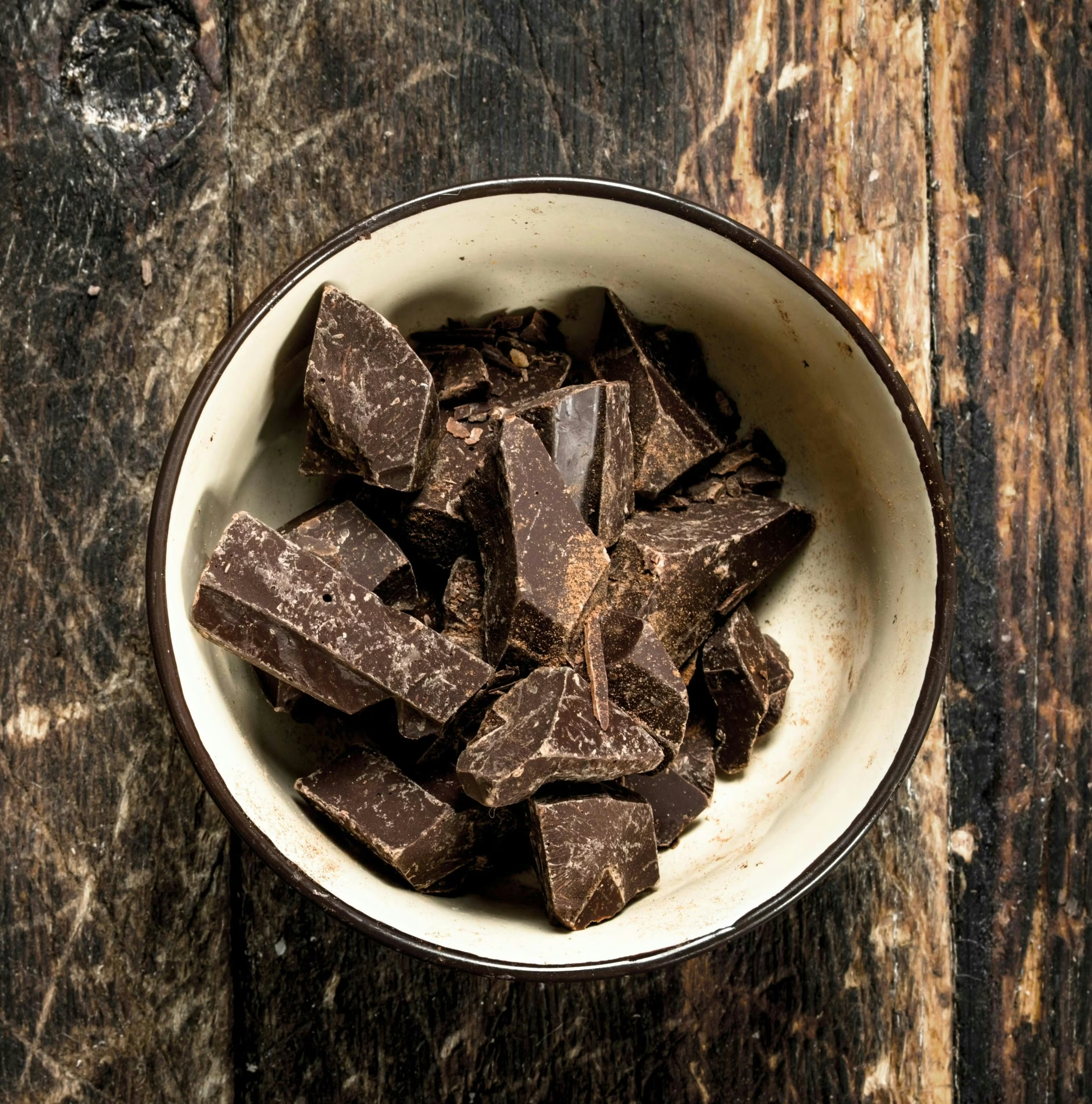
チョコレートはその風味で親しまれていますが、カカオに関する研究は、それ以上の深遠な側面を明らかにしています。エピカテキンが、細胞のエネルギー産生と管理を支える役割について、どのように研究されてきたのかをご紹介します。
睡眠不足になると、ミトコンドリアには何が起こるのでしょうか?

睡眠が脳や気分にとって不可欠であることはご存知でしょうが、ミトコンドリアにとっても極めて重要だということはご存知でしたか?
Where Energy, Science, and Community Come Together – Mitozz Community

We’re excited to announce that on 月曜日, 10月 20th, we officially launched the Mitozz Community, a new digital home for people who want to understand, explore, and share everything about mitochondrial health, cellular energy, and vitality.
How Does Mitochondrial Health Define Your Body? The Real Story of Energy from Within

We often hear that “food gives us energy,” but the truth is a little more complex and a lot more fascinating. The real powerhouses behind your energy are tiny structures inside your cells called mitochondria.
Mitochondrial Biogenesis and Oxidative Stress in Aging

In senile mice, (-)-epicatechin restored markers linked to mitochondrial biogenesis and improved oxidative-stress and aging-related indicators.
Skeletal Muscle Mitochondrial Structure in Type 2 Diabetes and Heart Failure
This clinical study reported improved skeletal-muscle mitochondrial structure and increased markers of mitochondrial biogenesis after epicatechin-rich cocoa in patients with type 2 diabetes and heart failure.
Mitochondrial Biogenesis in Muscle Cells via GPER
In C2C12 myotubes, (-)-epicatechin stimulated mitochondrial biogenesis and cell growth, and the study implicated the G-protein–coupled estrogen receptor in that response.
Postprandial Fat Oxidation and Epicatechin
This human study assessed short-term metabolic effects of an oral (-)-epicatechin supplement after meals, reporting changes in postprandial fat and carbohydrate handling in normal and overweight participants.
Exercise Capacity, Dark Chocolate, and Mitochondrial Efficiency
In sedentary adults, dark chocolate intake improved exercise-related performance measures, including work achieved and VO2 max trends, with mechanistic data pointing toward mitochondrial efficiency and upstream signaling changes.
(-)-Epicatechin-induced recovery of mitochondria from simulated diabetes: Potential role of endothelial nitric oxide synthase
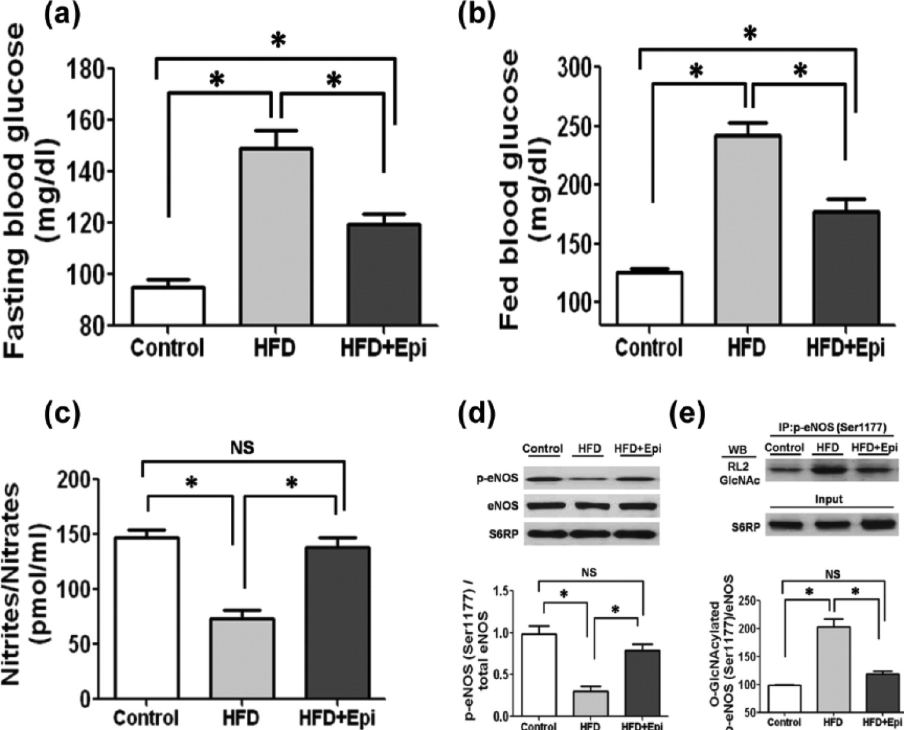
(-)-Epicatechin increases indicators associated with mitochondrial biogenesis in endothelial cells and myocardium. We investigated endothelial nitric oxide synthase involvement on (-)-epicatechin-induced increases in indicators associated with mitochondrial biogenesis in human coronary artery endothelial cells cultured in normal-glucose and high-glucose media, as well as to restore indicators of cardiac mitochondria from the effects of simulated diabetes. Here, we demonstrate the role of endothelial nitric oxide synthase on (-)-epicatechin-induced increases in mitochondrial proteins, transcription factors and sirtuin 1 under normal-glucose conditions. In simulated diabetes endothelial nitric oxide synthase function, mitochondrial function–associated and biogenesis-associated indicators were adversely impacted by high glucose, effects that were reverted by (-)-epicatechin. As an animal model of type 2 diabetes, 2-month old C57BL/6 mice were fed a high-fat diet for 16 weeks. Fasting and fed blood glucose levels were increased and NO plasma levels decreased. High-fat-diet-fed mice myocardium revealed endothelial nitric oxide synthase dysfunction, reduced mitochondrial activity and markers of mitochondrial biogenesis. The administration of 1 mg/kg (-)-epicatechin for 15 days by oral gavage shifted these endpoints towards control mice values. Results suggest that endothelial nitric oxide synthase mediates (-)-epicatechin-induced increases of indicators associated with mitochondrial biogenesis in endothelial cells. (-)-Epicatechin also counteracts the negative effects that high glucose or simulated type 2 diabetes has on endothelial nitric oxide synthase function.
White Fat Browning and Mitochondrial Biogenesis in Adipose Tissue
This study found that (-)-epicatechin promoted browning-related changes in adipocytes and white adipose tissue, with associated improvements in mitochondrial function and thermogenic markers.