
Effects of (−)-epicatechin on molecular modulators of skeletal muscle growth and differentiation
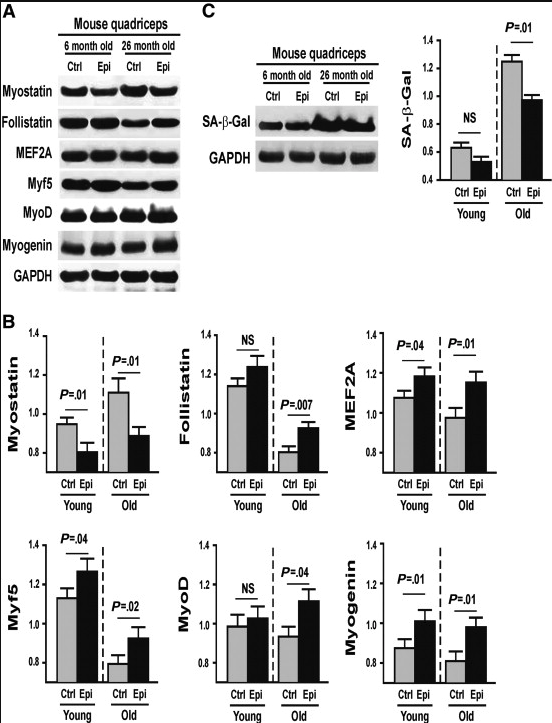
Sarcopenia is a notable and debilitating age-associated condition. Flavonoids are known for their healthy effects and limited toxicity. The flavanol (−)-epicatechin (Epi) enhances exercise capacity in mice, and Epi-rich cocoa improves skeletal muscle structure in heart failure patients. (−)-Epicatechin may thus hold promise as treatment for sarcopenia. We examined changes in protein levels of molecular modulators of growth and differentiation in young vs. old, human and mouse skeletal muscle. We report the effects of Epi in mice and the results of an initial proof-of-concept trial in humans, where muscle strength and levels of modulators of muscle growth were measured. In mice, myostatin and senescence-associated β-galactosidase levels increase with aging, while those of follistatin and Myf5 decrease. (−)-Epicatechin decreases myostatin and β-galactosidase and increases levels of markers of muscle growth. In humans, myostatin and β-galactosidase increase with aging while follistatin, MyoD and myogenin decrease. Treatment for 7 days with (−)-epicatechin increases hand grip strength and the ratio of plasma follistatin/myostatin. In conclusion, aging has deleterious effects on modulators of muscle growth/differentiation, and the consumption of modest amounts of the flavanol (−)-epicatechin can partially reverse these changes. This flavanol warrants its comprehensive evaluation for the treatment of sarcopenia.
Skeletal Muscle Mitochondrial Structure in Type 2 Diabetes and Heart Failure

This clinical study reported improved skeletal-muscle mitochondrial structure and increased markers of mitochondrial biogenesis after epicatechin-rich cocoa in patients with type 2 diabetes and heart failure.
Oxidative Stress Regulation in Skeletal Muscle Under Clinical Metabolic Strain
In patients with heart failure and type 2 diabetes, (-)-epicatechin-rich cocoa modulated oxidative-stress regulators in skeletal muscle, supporting an effect on redox biology in clinically relevant tissue.
Skeletal Muscle Structure, Regeneration, and Cardiometabolic Health
This clinical study found structural sarcomere abnormalities in skeletal muscle from patients with heart failure and type 2 diabetes, and reported restorative effects after (-)-epicatechin-rich cocoa intake.
Beneficial Effects of Flavonoids on Skeletal Muscle Health: A Systematic Review and Meta-Analysis
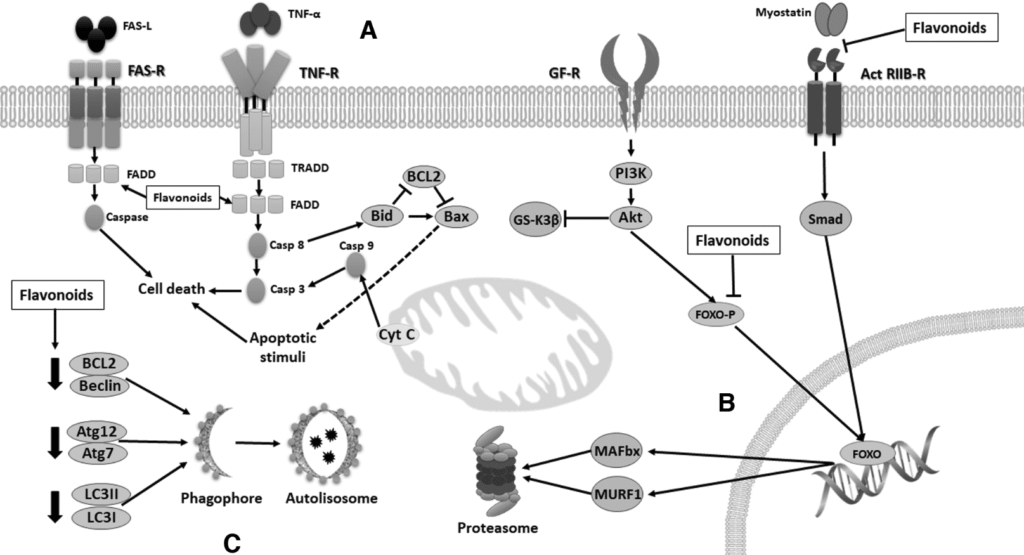
Skeletal muscle (SkM) is a highly dynamic tissue that responds to physiological adaptations or pathological conditions, and SkM mitochondria play a major role in bioenergetics, regulation of intracellular calcium homeostasis, pro-oxidant/antioxidant balance, and apoptosis. Flavonoids are polyphenolic compounds with the ability to modulate molecular pathways implicated in the development of mitochondrial myopathy. Therefore, it is pertinent to explore its potential application in conditions such as aging, disuse, denervation, diabetes, obesity, and cancer. To evaluate preclinical and clinical effects of flavonoids on SkM structure and function. We performed a systematic review of published studies, with no date restrictions applied, using PubMed and Scopus. The following search terms were used: “flavonoids” OR “flavanols” OR “flavones” OR “anthocyanidins” OR “flavanones” OR “flavan-3-ols” OR “catechins” OR “epicatechin” OR “(−)-epicatechin” AND “skeletal muscle.” The studies included in this review were preclinical studies, clinical trials, controlled clinical trials, and randomized-controlled trials that investigated the influence of flavonoids on SkM health. Three authors, independently, assessed trials for the review. Any disagreement was resolved by consensus. The use of flavonoids could be a potential tool for the prevention of muscle loss. Their effects on metabolism and on mitochondria function suggest their use as muscle regulators.