



Mitozz de Mitozz

Evidence-based articles on mitochondrial science, cellular energy, recovery, skin health, and healthy aging.

Middle-aged Black man relaxing in his backyard after a demanding day, illustrating recovery after physical and mental stress

How Your Body Recovers After Physical and Mental Stress

You may feel ready to move on after a demanding day, but your body may still be restoring the systems that support energy, focus, and resilience. What actually has to happen before you’re truly ready for the next challenge?
Generic NAD+ support supplement bottle representing NAD and mitochondrial energy metabolism

NAD and Mitochondrial Capacity: Why More NAD Is Not Enough

Raising NAD+ may support cellular energy metabolism, but does more NAD+ actually mean better mitochondria? The answer depends on what happens beyond NAD+.
Large ROS text above the word ENEMY crossed out in red, illustrating that reactive oxygen species are not always harmful.

ROS Are Not the Enemy: How Cells Turn Stress Into Adaptation

Reactive oxygen species are usually portrayed as cellular enemies. In controlled amounts, however, they help cells respond to exercise, tissue injury, and mitochondrial stress. The real issue is when a useful signal becomes chronic noise.
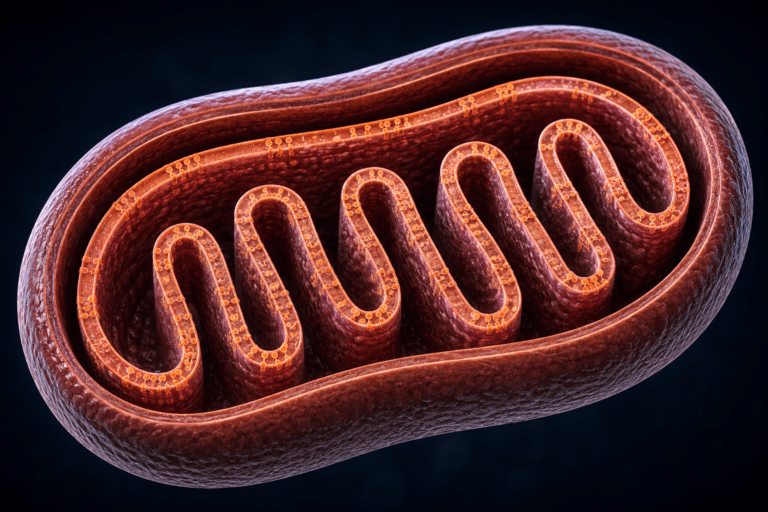
Mitochondrion with cardiolipin highlighted along the curved inner membrane and cristae.

Cardiolipin: The Mitochondrial Fat Almost Nobody Talks About

Cardiolipin is a specialized phospholipid found mainly in the inner mitochondrial membrane. Its unusual four-tailed structure helps support mitochondrial cristae and the proteins involved in ATP production. Here is why this little-known membrane lipid matters for mitochondrial organization, energy production, and renewal.
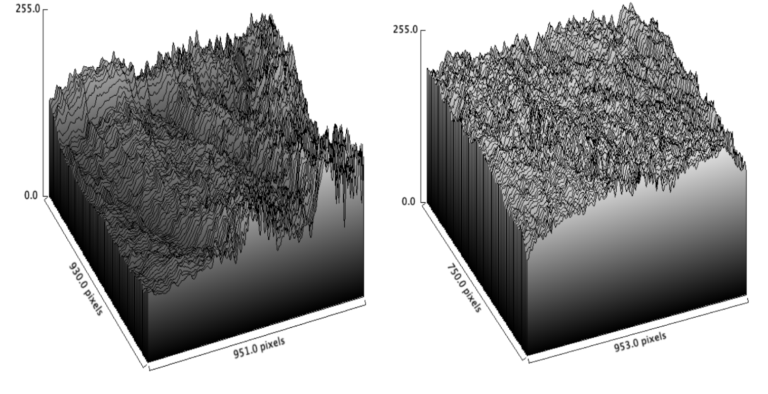
Three-dimensional skin surface maps used to analyze changes in wrinkle height, depth, and roughness.

Mitozz RS Study Finds Measurable Improvements in Wrinkles and Skin Texture

FMG Health Sciences evaluated the Mitozz RS epicatechin formula in 18 participants over two months. Three-dimensional imaging and numerical analysis found measurable improvements in wrinkle height, depth, amplitude, and surface roughness, with changes observed in both hand and facial skin.
Adulto que sufre fatiga persistente a pesar de haber comenzado el día con normalidad, lo que ilustra la diferencia entre los patrones de fatiga mitocondrial y el cansancio habitual.

Fatiga mitocondrial frente a cansancio habitual: cómo distinguirlos

Descubre en qué se diferencia el cansancio habitual de la fatiga persistente, por qué las mitocondrias pueden tener algo que ver y qué patrones merecen un análisis más detallado.
Los niveles elevados de cortisol y el envejecimiento cutáneo, ilustrados a través de las hormonas del estrés, los nervios sensoriales, los fibroblastos, el colágeno y la energía mitocondrial.

La relación oculta entre los niveles elevados de cortisol y un envejecimiento cutáneo más rápido

El estrés crónico puede afectar a algo más que al aspecto de la piel tras una semana difícil. Las investigaciones relacionan las señales de estrés con una recuperación más lenta de la barrera cutánea, cambios en los fibroblastos que producen colágeno y diferencias visibles en la textura de la piel. Los nuevos hallazgos también sugieren que los nervios sensoriales contribuyen activamente a regular el envejecimiento cutáneo.
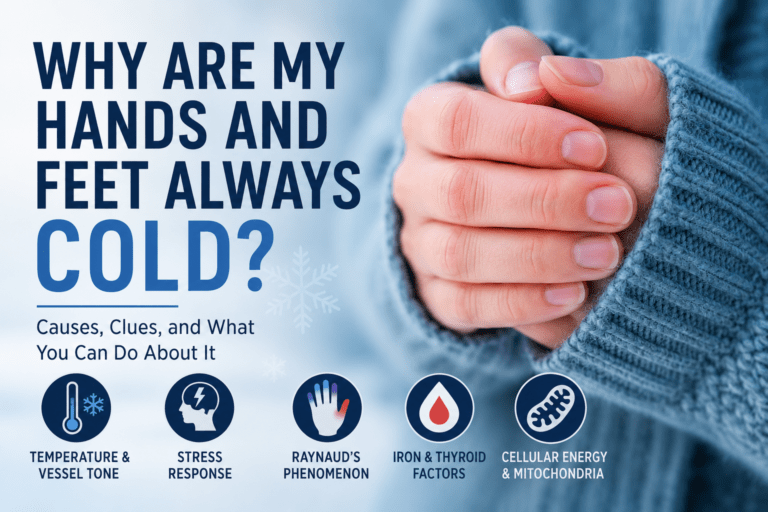
unas manos ancianas envueltas en un jersey junto al título «¿Por qué siempre tengo las manos y los pies fríos?», con iconos que representan la circulación, el estrés, el síndrome de Raynaud, el hierro, la tiroides y la energía celular.

¿Por qué siempre tengo las manos y los pies fríos?

Tener las manos y los pies fríos no siempre es un problema de circulación. Descubre cómo pueden influir el tono vascular, el estrés, el síndrome de Raynaud, la función tiroidea, los niveles de hierro y la energía celular.