Mitozz de Mitozz


Comprende los fundamentos científicos de la energía celular, la salud mitocondrial, la recuperación y la longevidad.

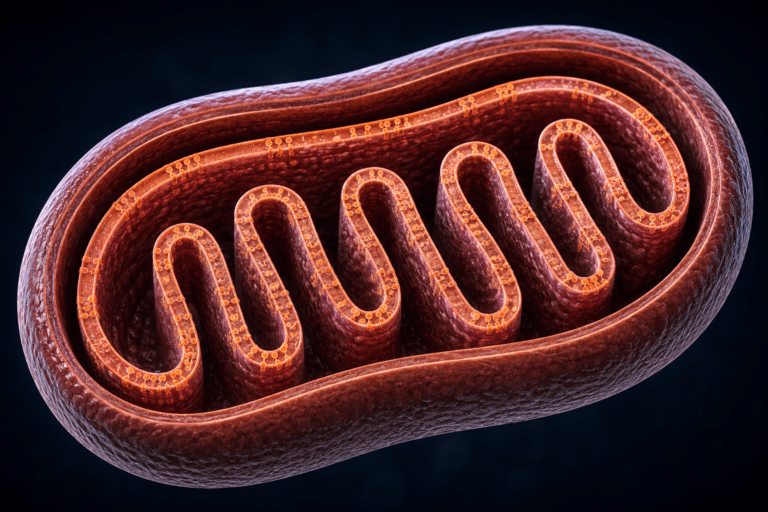
Mitochondrion with cardiolipin highlighted along the curved inner membrane and cristae.

Cardiolipin: The Mitochondrial Fat Almost Nobody Talks About

Cardiolipin is a specialized phospholipid found mainly in the inner mitochondrial membrane. Its unusual four-tailed structure helps support mitochondrial cristae and the proteins involved in ATP production. Here is why this little-known membrane lipid matters for mitochondrial organization, energy production, and renewal.
Adulto que sufre fatiga persistente a pesar de haber comenzado el día con normalidad, lo que ilustra la diferencia entre los patrones de fatiga mitocondrial y el cansancio habitual.

Fatiga mitocondrial frente a cansancio habitual: cómo distinguirlos

Descubre en qué se diferencia el cansancio habitual de la fatiga persistente, por qué las mitocondrias pueden tener algo que ver y qué patrones merecen un análisis más detallado.
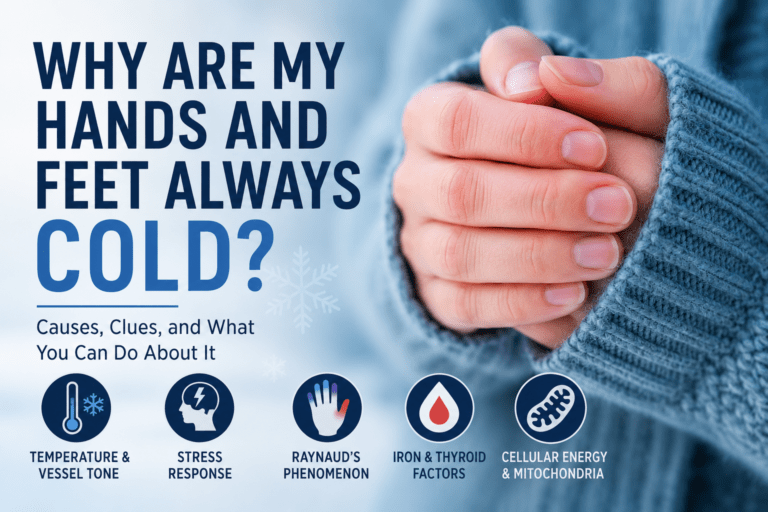
unas manos ancianas envueltas en un jersey junto al título «¿Por qué siempre tengo las manos y los pies fríos?», con iconos que representan la circulación, el estrés, el síndrome de Raynaud, el hierro, la tiroides y la energía celular.

¿Por qué siempre tengo las manos y los pies fríos?

Tener las manos y los pies fríos no siempre es un problema de circulación. Descubre cómo pueden influir el tono vascular, el estrés, el síndrome de Raynaud, la función tiroidea, los niveles de hierro y la energía celular.
Texto alternativo: Un profesional descansando tras una jornada laboral agotadora.

La fatiga cognitiva en personas de alto rendimiento: una perspectiva mitocondrial

El rendimiento mental no depende solo de la motivación. Depende de si tu cerebro tiene la capacidad de satisfacer las exigencias, recuperarse y volver a hacerlo.
Mujer de pie bajo una suave luz solar filtrada, con un haz de luz que resalta su zona abdominal para representar la conexión entre la microbiota intestinal y la energía mitocondrial.

Cómo se influyen mutuamente el microbioma y las mitocondrias

La microbiota intestinal no solo favorece la digestión. Los metabolitos microbianos pueden influir en el uso de energía, la señalización y el control de calidad de las mitocondrias, mientras que estas, a su vez, contribuyen a configurar el entorno intestinal.
A middle-aged man sitting on a wooden chair in a living room, looking weary with his hand on his forehead, illustrating the physical and mental fatigue associated with age-related energy decline.

Why Does Energy Drop as We Get Older? What Changes at the Cellular Level

By age 80, the average person’s mitochondrial energy output drops by 50% while, at the same time, cellular damage skyrockets. This isn't because we are just "getting older," it’s a biological shift in your cellular power plants. We dive into the landmark research on mitochondrial mass and explore how targeted interventions like Mitozz are helping to shift the curve of aging to restore youthful energy at the source.
Photorealistic scientific image of the human eye and retina with a subtle mitochondrial energy motif, representing visual resilience, Mitozz, FMG Health Sciences, and (-)-epicatechin.

Mitochondria and Vision: The Energy Behind the Retina

Your retina is one of the body’s most energy-demanding tissues, built to process light and contrast in real time. This article explains why vision depends so heavily on mitochondrial energy, how photoreceptors spend ATP even in darkness, and why supporting cellular resilience may matter for long-term visual health.
Tired woman sitting in bed with a subtle mitochondrial motif shifting from cool teal to yellow behind her, representing mitochondrial stress and inflammation for Mitozz.

Mitochondria and Inflammation: The Two-Way Connection

Explore the "energy-inflammation loop" and the emerging science of mitochondrial signaling. Discover how leaking mitochondrial DNA acts as a cellular alarm, triggering systemic inflammation and directly influencing your long-term physiological resilience and adaptive capacity. Learn why maintaining mitochondrial integrity is a foundational pillar for healthy aging and metabolic vitality.
Person feeling cold indoors while others are comfortable, cold intolerance explained by FMG Health Sciences and Mitozz

Why Do I Always Feel Cold?

If you always feel cold, even when everyone else is comfortable, it’s usually not just the room temperature. It’s your body’s heat system, how you produce, conserve, and distribute warmth. This article breaks down the real physiology behind feeling cold, from metabolism and blood flow to thyroid and energy balance, and helps you understand what your body might be trying to tell you.

Middle-aged woman sitting on a couch in natural window light, wondering what Does “Low Mitochondrial Function” Actually Feel Like? - Mitozz

What Does “Mitochondrial Dysfunction” Actually Feel Like?

If your energy, recovery, or mental stamina feels off, it may not be just motivation or sleep. Mitochondrial function shapes how you feel day to day. This article breaks down what that can look like.
Escena Mitozz en la que se ve a un profesional sufriendo un bajón de energía a mediodía en el trabajo, sentado en su escritorio con una expresión neutra y cansada bajo la luz natural

¿Por qué siempre estoy cansado?

¿Te sientes cansado todo el tiempo, aunque tu rutina parezca ir bien? A continuación te explicamos cómo la energía celular, el nivel de estrés, la calidad del sueño y el metabolismo pueden influir de forma sutil en tu nivel de energía.
Escena fotorrealista de la rutina matutina de una mujer de unos treinta años preparando un desayuno saludable en una cocina iluminada por la luz del sol, con la ropa de deporte y las zapatillas cuidadosamente colocadas sobre una mesa; luz natural y tranquila, Mitozz

El síndrome de ovario poliquístico y la energía celular: la biología que subyace a los síntomas

El síndrome de ovario poliquístico (SOP) es una afección que afecta a todo el organismo. Descubre cómo se interrelacionan la señalización metabólica, las hormonas ováricas, el estrés oxidativo y la biología de la energía celular, y qué factores favorecen la resiliencia a lo largo del tiempo.