Mitozz de Mitozz


Comprende los fundamentos científicos de la energía celular, la salud mitocondrial, la recuperación y la longevidad.

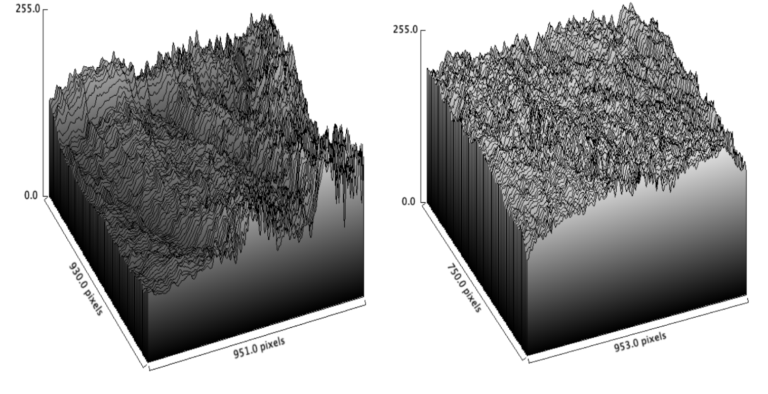
Three-dimensional skin surface maps used to analyze changes in wrinkle height, depth, and roughness.

Mitozz RS Study Finds Measurable Improvements in Wrinkles and Skin Texture

FMG Health Sciences evaluated the Mitozz RS epicatechin formula in 18 participants over two months. Three-dimensional imaging and numerical analysis found measurable improvements in wrinkle height, depth, amplitude, and surface roughness, with changes observed in both hand and facial skin.
Adulto que sufre fatiga persistente a pesar de haber comenzado el día con normalidad, lo que ilustra la diferencia entre los patrones de fatiga mitocondrial y el cansancio habitual.

Fatiga mitocondrial frente a cansancio habitual: cómo distinguirlos

Descubre en qué se diferencia el cansancio habitual de la fatiga persistente, por qué las mitocondrias pueden tener algo que ver y qué patrones merecen un análisis más detallado.
Los niveles elevados de cortisol y el envejecimiento cutáneo, ilustrados a través de las hormonas del estrés, los nervios sensoriales, los fibroblastos, el colágeno y la energía mitocondrial.

La relación oculta entre los niveles elevados de cortisol y un envejecimiento cutáneo más rápido

El estrés crónico puede afectar a algo más que al aspecto de la piel tras una semana difícil. Las investigaciones relacionan las señales de estrés con una recuperación más lenta de la barrera cutánea, cambios en los fibroblastos que producen colágeno y diferencias visibles en la textura de la piel. Los nuevos hallazgos también sugieren que los nervios sensoriales contribuyen activamente a regular el envejecimiento cutáneo.
Texto alternativo: Un profesional descansando tras una jornada laboral agotadora.

La fatiga cognitiva en personas de alto rendimiento: una perspectiva mitocondrial

El rendimiento mental no depende solo de la motivación. Depende de si tu cerebro tiene la capacidad de satisfacer las exigencias, recuperarse y volver a hacerlo.
Una persona que se recupera en casa tras una operación, sentada junto a una ventana con agua, comida nutritiva, instrucciones para la recuperación y un cuaderno a su lado.

Las mitocondrias y la recuperación tras una intervención quirúrgica: preguntas que debes plantear a tu médico

La recuperación tras una intervención quirúrgica es algo más que el descanso. En este artículo se explica cómo la energía celular, la inflamación, la nutrición, el sueño y el movimiento gradual influyen en el entorno de recuperación del organismo.
food and mitochondria

Food, Fasting, and Mitochondria: How Nutrient Timing Shapes Cellular Energy

Food and fasting both send important signals to your mitochondria. Learn how the body shifts between using incoming nutrients after meals and stored fuels during fasting, and why metabolic flexibility matters more than extreme restriction.
Photorealistic image of moderate exercise showing a person cycling on a forest path with a small mitochondria icon and upward arrow illustrating cellular adaptation and mitohormesis in the context of mitochondrial health, relevant to Mitozz by FMG Health Sciences and research involving (-)-epicatechin.

El ejercicio y las mitocondrias: el «bio-hack» más contrastado

El ejercicio es una de las formas con mayor respaldo científico para favorecer la salud mitocondrial. Descubre cómo el ejercicio influye en la energía celular, la biogénesis, la mitofagia y la recuperación.
A woman looking down in deep reflection near a window, illustrating the biological connection between chronic stress, mental health, and mitochondrial bioenergetics.

Mitochondria and Depression: The Bioenergetic Link to Mood

Mitochondria may play a deeper role in mood than once thought. This article explores the “Mito-Mood Hypothesis,” how cellular energy, oxidative stress, inflammation, and neuroplasticity may connect mitochondrial function with emotional resilience, and what practical habits can support the brain’s bioenergetic health.
Photorealistic scientific image of the human eye and retina with a subtle mitochondrial energy motif, representing visual resilience, Mitozz, FMG Health Sciences, and (-)-epicatechin.

Mitochondria and Vision: The Energy Behind the Retina

Your retina is one of the body’s most energy-demanding tissues, built to process light and contrast in real time. This article explains why vision depends so heavily on mitochondrial energy, how photoreceptors spend ATP even in darkness, and why supporting cellular resilience may matter for long-term visual health.
A traveler suffering from jet lag looking out the window of a long-haul flight at night over city lights, illustrating the impact of travel and sleep debt on cellular energy. FMG Health Sciences

El jet lag y las mitocondrias: por qué estás tan cansado

Jet lag isn’t just sleep disruption. It’s a temporary mismatch between your brain’s master clock and the cellular clocks that regulate mitochondrial energy production. This article explains why crossing time zones can leave you feeling drained, foggy, and physically slow, and how light exposure, meal timing, movement, and sleep routines help your body resynchronize from the brain down to the mitochondria.

Tired woman sitting in bed with a subtle mitochondrial motif shifting from cool teal to yellow behind her, representing mitochondrial stress and inflammation for Mitozz.

Mitochondria and Inflammation: The Two-Way Connection

Explore the "energy-inflammation loop" and the emerging science of mitochondrial signaling. Discover how leaking mitochondrial DNA acts as a cellular alarm, triggering systemic inflammation and directly influencing your long-term physiological resilience and adaptive capacity. Learn why maintaining mitochondrial integrity is a foundational pillar for healthy aging and metabolic vitality.
Person feeling cold indoors while others are comfortable, cold intolerance explained by FMG Health Sciences and Mitozz

Why Do I Always Feel Cold?

If you always feel cold, even when everyone else is comfortable, it’s usually not just the room temperature. It’s your body’s heat system, how you produce, conserve, and distribute warmth. This article breaks down the real physiology behind feeling cold, from metabolism and blood flow to thyroid and energy balance, and helps you understand what your body might be trying to tell you.