According to the World Health Organization, cancer remains one of the leading causes of death worldwide, with millions of new cases diagnosed each year. Beyond its clinical and societal impact, cancer has also played a central role in advancing scientific understanding of how cells regulate energy, respond to stress, and maintain internal balance.
One of the most important insights to emerge from modern cancer biology is that cancer is not only a genetic condition. It is also a metabolic one. Across many cancer types, researchers consistently observe changes in how cells generate, manage, and prioritize energy. These changes offer a valuable window into cellular resilience, metabolic health, and the biological importance of mitochondria.
This article explores how cancer affects cellular energy systems, why mitochondria sit at the center of this process, and what cancer biology reveals about the deeper relationship between energy regulation, cellular stress, and long-term health.
Cancer as a Cellular and Metabolic Condition
Cancer develops when cells lose normal regulatory controls over growth, division, and survival. Genetic mutations contribute to this loss of control, but they do not operate in isolation. Cells function within complex metabolic environments that influence how genetic signals are expressed and acted upon.

In healthy cells, energy production is tightly regulated and responsive to demand. Cells continuously adjust fuel usage based on nutrient availability, oxygen levels, and workload. This capacity to shift between energy sources—often described as metabolic flexibility—supports efficient energy use and cellular stability.
In cancer biology, altered cellular metabolism is a recurring and well-established feature. Cancer cells frequently reprogram metabolic pathways to support rapid growth and persistence under stressful conditions. Rather than prioritizing energy efficiency, these cells tend to favor pathways that provide building blocks for cellular replication.
Research suggests that this metabolic reprogramming is closely connected to intracellular signaling networks, mitochondrial behavior, and cellular stress responses. As a result, cancer is increasingly understood as a condition involving disrupted energy regulation at the cellular level, not solely abnormal genetic instructions.
KEY CONCEPT
Why Metabolism Matters in Cancer Biology
Metabolism governs how cells convert nutrients into energy and molecular components needed for maintenance and growth. In cancer biology, metabolic pathways are often reshaped in ways that allow cells to survive and proliferate in environments that would normally limit growth.
Studies indicate that cancer cells may rely more heavily on energy strategies that remain functional under fluctuating oxygen and nutrient conditions. While this adaptability can support cellular survival, it also reflects a departure from the tightly regulated energy systems characteristic of healthy cells.
Viewing cancer through a metabolic lens does not replace genetic explanations. Instead, it complements them. Together, genetics and metabolism provide a more complete picture of how cellular behavior becomes dysregulated and why energy systems are so deeply involved in cancer biology.
The Central Role of Mitochondria in Cellular Energy
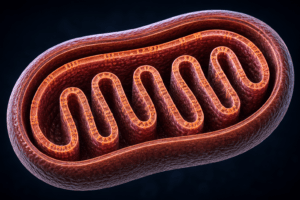
Mitochondria are often described as the “power plants” of the cell, but this simplified label understates their importance. While mitochondria generate most of the cell’s ATP (adenosine triphosphate), they also act as critical signaling hubs that help coordinate cellular responses to stress and environmental change.
In healthy cells, mitochondria:
- Produce ATP through regulated energy pathways
- Help maintain redox balance by managing reactive oxygen species
- Participate in apoptosis, or programmed cell death
- Influence immune signaling and inflammatory responses
- Support cellular repair, adaptation, and stress resilience
Because of these roles, mitochondrial function is inseparable from overall cellular health. Mitochondria do not simply supply energy; they integrate signals related to nutrient status, oxidative stress, and cellular damage, helping cells decide how to respond.
When mitochondrial signaling remains balanced and responsive, cells are better equipped to adapt to stress, recover from damage, and maintain energy stability over time.
Cancer and Mitochondrial Dysfunction
Research examining cancer and mitochondria has shown that many cancer cells exhibit altered mitochondrial behavior. This does not mean mitochondria become inactive. Rather, their function and integration with cellular metabolism are reprogrammed.
One well-documented feature of cancer cells, known as the Warburg effect, is their increased reliance on less efficient energy pathways, even when oxygen is available. This pattern reflects altered cellular metabolism and allows cancer cells to redirect metabolic resources toward growth-related processes rather than maximal energy efficiency.
Altered cellular metabolism allows cancer cells to redirect metabolic resources toward growth-related processes rather than maximal energy efficiency.
Evidence from cancer metabolism research suggests that mitochondrial dysfunction in cancer is associated with:
- Disrupted cellular energy production
- Altered mitochondrial signaling pathways
- Changes in oxidative stress regulation
- Reduced sensitivity to programmed cell-death cues
These changes highlight why mitochondria sit at the center of cancer biology. They link energy production, stress signaling, and cellular decision-making. Studying mitochondrial behavior in cancer helps researchers understand how normal energy regulation and cellular resilience become compromised.
Oxidative Stress, Redox Balance, and the Cellular Environment
Oxidative stress occurs when reactive molecules build up faster than a cell can manage them. Redox balance is the cell’s way of keeping these molecules under control, allowing them to support normal cellular communication without overwhelming protective systems. Under healthy conditions, mitochondria help regulate this balance.
- Cells constantly manage reactive molecules generated during energy production
- Redox balance helps maintain orderly cellular communication
- Disrupted redox balance can influence how cells respond to stress
- Mitochondria help coordinate these redox-sensitive signals
In cancer biology, chronic oxidative stress often coexists with altered metabolism and inflammation. This shifted cellular environment can influence signaling pathways involved in growth regulation, immune interactions, and cellular repair mechanisms.
It is important to note that oxidative stress is not inherently harmful. At controlled levels, reactive molecules play a role in cellular communication and adaptation. Problems arise when oxidative signaling becomes excessive or persistent, disrupting regulatory balance.
Maintaining redox balance depends on coordinated mitochondrial function, antioxidant systems, and metabolic flexibility. Disruption in any of these areas can reduce cellular resilience over time.
Apoptosis and Cellular Self-Regulation
Apoptosis, or programmed cell death, is a fundamental biological process that allows the body to remove damaged or dysfunctional cells in an orderly manner. Mitochondria play a central role in initiating and regulating this process.
In healthy tissues, apoptosis supports renewal, immune surveillance, and long-term cellular balance. It is not a failure mechanism, but an essential form of cellular self-regulation.
In cancer cells, apoptotic signaling is frequently impaired. Altered mitochondrial function may interfere with a cell’s ability to respond appropriately to internal damage signals, allowing abnormal cells to persist longer than they otherwise would.
From a biological perspective, apoptosis represents balance. When this system is disrupted, the equilibrium between survival and removal shifts, contributing to broader dysregulation of cellular systems.
Cancer, Energy Regulation, and Whole-Body Context
While cancer biology is complex, it offers broader insight into how cellular energy systems influence overall health. Cellular energy production does not occur in isolation. It is shaped by systemic factors that affect mitochondrial signaling across tissues.
Research suggests that lifestyle factors such as physical activity, nutrient quality, sleep, and recovery influence mitochondrial behavior and metabolic flexibility. Regular movement is associated with improved mitochondrial efficiency and adaptive capacity. Adequate sleep supports cellular repair processes and stress recovery. Chronic inflammation, by contrast, can impair cellular energy systems over time.
You can read more about how everyday factors such as exercise, nutrition, sleep, and and other factors relate to mitochondrial function in our post, How to Repair and Maintain Mitochondrial Health Naturally.
Cellular Resilience and the Biology of Energy
One of the most important insights from cancer and metabolism research is that cellular health is dynamic. Mitochondria continuously respond to environmental signals, adjusting energy output and stress responses based on demand.
This adaptability underlies cellular resilience, the capacity of cells to maintain function under stress and recover efficiently. When mitochondrial signaling is supported, cells are better positioned to sustain balanced energy production over time.
From an educational perspective, this reinforces a foundational principle: human energy is generated at the cellular level. It is not created by stimulants, shortcuts, or willpower alone, but through the coordinated function of mitochondria, metabolic pathways, and cellular signaling networks.
Human energy is generated at the cellular level.
At Mitozz, this understanding informs an educational approach to cellular health. Supplements, when used thoughtfully, are viewed as complementary to foundational lifestyle practices such as nutrition, movement, sleep, and recovery.
Conclusion: Energy Begins at the Cellular Level
Cancer biology has significantly expanded scientific understanding of how cellular energy systems become disrupted and why mitochondria are central to cellular function. By examining how energy regulation breaks down, we can gain insight into what supports cellular resilience in the first place.
Mitochondria integrate energy production, stress signaling, and cellular decision-making in every tissue of the body. Their function influences how cells adapt, recover, and maintain balance over time.
Energy is the currency of life. Supporting the systems that generate and regulate it, is fundamental to resilience, adaptability, and long-term vitality.
Compartilhe este artigo do blog
Compreender a saúde mitocondrial é um processo de longo prazo. É por isso que criamos o Mitozz : uma forma gratuita de continuar aprendendo sobre energia celular, saúde mitocondrial e os hábitos de vida que apoiam seu corpo ao longo do tempo. Você receberá conteúdo educativo com base científica, orientações práticas e novidades da Mitozz, tudo no seu próprio ritmo.
Inscreva-se no Mitozz da Mitozz
Obtenha informações com base científica sobre saúde mitocondrial, energia celular e hábitos de vida que contribuem para a saúde do seu corpo a longo prazo.
Aviso médico: As informações fornecidas neste artigo têm caráter exclusivamente educativo e informativo, não constituindo orientação médica. Não substituem o diagnóstico, o tratamento ou a orientação de um profissional de saúde. Consulte sempre um profissional de saúde qualificado antes de fazer alterações em sua dieta, rotina de exercícios, práticas de jejum ou uso de suplementos, especialmente se você tiver alguma condição médica, estiver grávida ou amamentando, ou estiver tomando medicamentos.
Isenção de responsabilidade da FDA: Estas declarações não foram avaliadas pela Food and Drug Administration. Elas não se destinam a diagnosticar, tratar, curar ou prevenir qualquer doença.