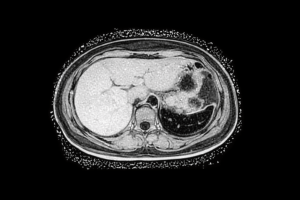
Key Article Takeaways
- In rare neuromuscular diseases, muscle atrophy is often a downstream outcome of very different upstream drivers.
- Despite different causes, many conditions “converge” on a shared bottleneck: the muscle cell’s capacity to meet ongoing energy, repair, and quality-control demands.
- A mitochondrial health lens helps organize that bottleneck into three practical pillars of mitophagy, mitochondrial biogenesis, and ATP production.
- (–)-Epicatechin can be viewed as an adjunctive, exploratory option as a complement to condition-specific clinical care.
Introduction
Rare neuromuscular diseases are individually uncommon but together they affect a meaningful number of people worldwide. Many of these conditions share a visible outcome:
- Progressive muscle weakness
- Muscle atrophy (loss of muscle size).
This article walks through several rare disorders where progressive muscle wasting is a defining feature and uses them to explain the major biological routes, related to mitochondria, that lead to atrophy.
Why do rare neuromuscular diseases often lead to muscle atrophy?
Muscle atrophy can look like a purely “muscle” problem. But in many neuromuscular disorders, the primary driver begins elsewhere, which can show up in muscle over time.
A helpful distinction is:
- Upstream cause: the initiating problem, for example:
- Motor neuron degeneration
- A defect in a structural muscle protein
- Lysosomal dysfunction
- Immune activity
- Downstream capacity limits: the muscle cell’s ability to keep up with:
- Daily demands, especially energy production
- Protein turnover, and
- Repair
Damage load = the cumulative mechanical, metabolic, and inflammatory stress that muscle must continuously repair to stay structurally and functionally maintained as working muscle tissue.
When the ongoing “damage load” outpaces repair capacity, muscle can gradually shift toward loss of tissue and function.
The mitochondrial health lens: quality control, capacity, and energy
“Mitochondrial health” is a broad term. For muscle cells, the focus of this article, it comes down to three maintenance jobs they perform that shape day-to-day resilience:
1) Mitophagy (mitochondrial quality control)
Mitophagy is a core part of mitochondrial health because it keeps the mitochondrial network “clean,” clearing out worn or malfunctioning mitochondria before they drag down energy efficiency, amplify stress signaling, or overload the cell’s repair and recycling systems.
2) Mitochondrial biogenesis (building capacity)
Biogenesis supports mitochondrial health by renewing and expanding the mitochondrial network, helping muscle maintain an energy buffer that can meet higher demands during recovery, adaptation, or chronic stress.
3) ATP production (meeting energy demand)
ATP production is the functional output of mitochondrial health. When mitochondria can reliably convert fuel into ATP, muscle can afford the ongoing costs of contraction, protein turnover, and repair.
One way to support mitochondrial health is through compounds being studied for mitochondria-related signaling, such as (–)-epicatechin. Mitozz is a supplement that features 98% pure (–)-epicatechin as its primary ingredient. But there are also other foundational ways to support mitochondria. For a practical guide, see our article “How to Repair and Maintain Mitochondrial Health Naturally“.
Rare disease categories where atrophy is common
Below are major categories where muscle atrophy often appears, and how each can intersect with cellular energy and repair demands.
Motor neuron disorders (denervation-driven atrophy)
In motor neuron diseases, the initiating problem is loss or dysfunction of the nerve input that activates muscle. Without consistent neural signaling, muscle can shrink over time.
- Spinal muscular atrophy (SMA): classically involves degeneration of lower motor neurons, leading to weakness and atrophy.
- Spinal and bulbar muscular atrophy (SBMA/Kennedy disease): an X-linked condition involving an expanded CAG repeat in the androgen receptor; weakness and atrophy may reflect both neurogenic effects and broader tissue stress.
Why this matters: The starting point is the neuron, but atrophy reflects downstream consequences in muscle. Mitochondrial support here may help muscle cope with reduced activation and maintain energy for baseline repair. Related evidence is preclinical; for example, epicatechin has been studied in a rat spinal cord injury model.
Muscular dystrophies (structural fragility and chronic injury)
In many dystrophies, defects in structural proteins make fibers more vulnerable to injury during contraction. Over time, repeated damage can exceed repair capacity.
- Becker muscular dystrophy (BMD): in a small, open-label human study, researchers explored (–)-epicatechin in ambulatory adults that reported changes in tissue biomarkers consistent with mitochondrial biogenesis and muscle regeneration signaling, as well as some exercise testing improvements.
Why this matters: Chronic micro-injury increases demand for repair and regeneration. Because repair is energy-intensive, mitochondrial health may shape how well muscle meets that ongoing “maintenance cost,” making it a plausible adjunctive focus alongside condition-specific care.
Lysosomal and metabolic myopathies (fuel handling and cellular cleanup)
Some rare myopathies involve impaired fuel processing or impaired cellular “cleanup,” which can disrupt muscle structure and function.
- Pompe disease (GSD II): often discussed as a case where lysosomal dysfunction and abnormal storage can contribute to muscle pathology.
Why this matters: When cellular recycling or fuel handling is impaired, stress can spread to energy systems. In that context, mitochondrial quality control and ATP supply can shape how well muscle tolerates metabolic strain. Consistent with this, (–)-epicatechin has been shown in preclinical muscle models to increase markers of mitochondrial capacity and improve fatigue resistance (see study).
Inflammatory and degenerative myopathies (immune activity + degeneration)
Some rare myopathies blend inflammatory features with degenerative changes inside muscle fibers.
- Inclusion body myositis (IBM): typically later onset, often slowly progressive, with characteristic patterns of weakness and atrophy.
Why this matters: Chronic immune signaling and ongoing fiber degeneration can increase metabolic stress inside muscle. Because mitochondrial function helps set ATP supply and resilience under inflammatory load, strategies that support mitochondrial capacity may help with fatigue tolerance and recovery as an adjunct to disease-specific care. In a recent clinical case report, (–)-epicatechin intake was associated with improved inflammatory signaling markers (TLR4-related), lower IL-6, and changes consistent with improved mitochondrial morphology (see study).
Practical takeaways
Separate “disease cause” from “capacity constraints”
A gene variant, immune mechanism, or cellular defect may initiate disease. But day-to-day function can still be influenced by foundational factors that affect recovery capacity, such as sleep, nutrition adequacy, and activity level (as appropriate and medically supervised).
Think “load vs recovery”
- How much stress is coming in?
- How much repair capacity is available?
Conclusion
Rare neuromuscular diseases differ dramatically in cause and clinical presentation, however, many share a similar downstream challenge. Muscle shrinks when long-term stress and damage outpace the cell’s capacity to produce energy and maintain repair systems.
A mitochondrial health–focused framework that includes mitophagy, biogenesis, and ATP production is a useful way to understand disease-related muscle atrophy and may help inform adjunctive, supportive strategies alongside condition-specific clinical care.
Want an easy adjunct to your mitochondrial-support toolkit? Check out Mitozz (98% pure (–)-epicatechin). It’s one optional layer best used alongside movement, sleep, nutrition, and condition-specific clinical care.
Share this blog article
Understanding mitochondrial health is a long-term process and that’s why we created the Mitozz Community. It’s is a free space to explore the science of cellular energy, learn how lifestyle signals support mitochondria, and stay informed through expert discussions, educational content, and live Q&A—at your own pace.
Join the Mitozz Community
Access member and expert discussions, educational content, and live Q&A sessions focused on cellular energy and mitochondrial health.
Medical Disclaimer: The information provided in this article is for educational and informational purposes only and is not intended as medical advice. It is not a substitute for professional medical diagnosis, treatment, or guidance. Always consult with a qualified healthcare professional before making changes to your diet, exercise routine, fasting practices, or supplement use, especially if you have a medical condition, are pregnant or nursing, or are taking medications.
FDA Disclaimer: These statements have not been evaluated by the Food and Drug Administration. They are not not intended to diagnose, treat, cure, or prevent any disease.