Key Takeaways
- Ovulation is a high-energy cellular event.
- Mitochondria and redox balance help shape egg readiness.
- Sleep, recovery, and metabolic stability shape the follicle environment.
- Targeted mitochondrial support, with Mitozz may be worth considering.
Most people think of ovulation as a calendar event. A date, a test strip, a window of time but under the hood, it’s more like a carefully timed energy sprint, where one cell is asked to do a lot of work very quickly.
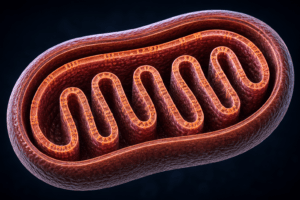
That sprint is not just about releasing an egg. It is about building an egg that is developmentally competent, meaning it can complete maturation, handle chromosome separation, and support early embryo steps if fertilization happens. Mitochondria, the cell’s main energy-producing organelles, sit at the center of that story. (ScienceDirect)
Why ovulation is an energy-heavy event
In the late follicular phase, the dominant follicle grows fast. Granulosa and cumulus cells proliferate, steroid hormone production rises, and the egg transitions through key maturation steps. All of this requires ATP, molecular “spending money” that powers cellular work.
Right before ovulation, the egg also has to reorganize its internal architecture. One of the most demanding tasks is preparing the meiotic spindle, the structure that pulls chromosomes apart. Spindle assembly and accurate chromosome segregation are energy-sensitive processes, and they are consistently discussed as points where age-related mitochondrial changes can matter. (ScienceDirect)
Why this matters is simple. If the egg’s energy systems are strained, the risk of errors rises, and the odds of smooth developmental progression can fall, especially with advancing maternal age.
The egg’s mitochondria, small organelles with big responsibilities
Egg cells are unusually rich in mitochondria, containing as much as 100,000 to 600,000+ mitochondria. They need energy not only for the moment of ovulation but also for the early embryo period, before an embryo fully activates its own gene expression programs. This is one reason mitochondrial integrity is a recurring theme in reproductive aging research. (PMC)
Mitochondria do more than make ATP. They help regulate redox signaling, calcium handling, and stress responses, all of which influence cellular organization and timing. When mitochondrial function declines, studies and reviews commonly note downstream issues like reduced ATP availability, altered redox balance, and increased vulnerability to oxidative damage. (ScienceDirect)
Here’s the key idea. “Energy” in biology is not just about feeling tired. It is about whether a cell can meet a moment-to-moment demand without accumulating damage. In egg biology, that demand peaks during maturation and ovulation.
Oxidative stress in the follicle, helpful signal or harmful excess
Reactive oxygen species, ROS, have a complicated reputation. In moderation, ROS participate in normal signaling. In excess, they can damage lipids, proteins, and DNA. The follicle environment is no exception.
Follicular fluid, the fluid surrounding the egg inside the follicle, carries metabolic byproducts, hormones, and redox markers. Multiple studies and reviews discuss associations between higher oxidative stress markers in follicular fluid and poorer fertilization or embryo-related metrics in assisted reproduction contexts. (PMC)
Aging, metabolism, and the follicle environment
Egg quality tends to decline with age, especially after the mid-30s, and researchers consistently point to mitochondrial mechanisms as part of the explanation. Reviews describe patterns like altered mitochondrial dynamics, reduced respiratory efficiency, and increased oxidative stress susceptibility in aging oocytes. (ScienceDirect)
Metabolic health can also shape the ovarian environment. Obesity and insulin resistance are associated with changes in follicular fluid metabolites, inflammation, and oxidative stress, and these signals can influence granulosa cells and oocyte support systems. Mechanistically, oocyte mitochondria appear to sense substrate availability and cellular stress signals, which can shift how energy is produced and how much oxidative byproduct accumulates. (BioOne)
If you have ever felt the difference between a well-rested training day and a sleep-debt training day, you already understand the principle. Your body’s output changes when recovery capacity changes. Follicles develop across weeks and months, so the “background conditions” matter.
What supports cellular energy during the cycle
There is no single switch for improving egg quality. But there are inputs that reliably shape the physiology surrounding follicle development and they tend to be the same inputs that support mitochondrial resilience in other tissues.
Sleep and circadian stability
Sleep loss can disrupt insulin sensitivity, appetite hormones, and stress signaling, and those systems interact with reproductive hormones. While sleep alone is not a fertility guarantee, stable circadian rhythms support the metabolic backdrop follicles mature in, and that backdrop influences redox and energy balance. (PMC)
Nutrient sufficiency, not perfection
Oocytes and granulosa cells rely on tightly coordinated energy metabolism and redox control during maturation, processes that depend on adequate biochemical building blocks and antioxidant capacity. (PMC) The goal is not a perfect ‘fertility diet,’ but avoiding chronic nutritional shortfalls within an overall pattern that supports metabolic stability. (ASRM)
Recovery, inflammation, and training load
Moderate physical activity activates exercise-responsive pathways such as PGC-1α that support mitochondrial biogenesis and oxidative capacity across tissues. (PMC) In contrast, high training loads combined with low energy availability can disrupt reproductive hormone signaling and contribute to menstrual irregularities, which is why recovery and adequate fueling matter when cycles become unpredictable. (acbsp.com)
Supplements in the conversation, what the evidence actually says
This is an area where people often want a simple answer but biology rarely offers one. Still, a few compounds show up repeatedly in reproductive research because they connect logically to mitochondrial energetics and oxidative stress.
Coenzyme Q10 (CoQ10)
CoQ10 is part of the mitochondrial electron transport chain and also functions as an antioxidant. Preclinical work suggests CoQ10 can improve oocyte mitochondrial measures in aging models. (PMC)
In humans, clinical studies in fertility settings suggest CoQ10 pretreatment may improve some ovarian response and embryo-related parameters in specific groups, such as individuals with diminished ovarian reserve or poor response, but outcomes vary and many trials focus on IVF metrics rather than natural conception. (Springer)
Melatonin
Melatonin is best known for circadian signaling but it also has antioxidant properties and appears in follicular fluid. Meta-analyses in assisted reproduction contexts have reported improvements in some intermediate outcomes, such as mature oocyte count, though effects on pregnancy outcomes are less consistent across studies. (PubMed)
The honest framing is this. These compounds are plausible supports for redox and mitochondrial biology, and there is clinical research in IVF settings, but they should be discussed with a clinician when fertility treatment is involved because timing, dosing, and individual context matter.
Targeted nutritional support, where Mitozz fits in
At FMG Health Sciences, we focus on mitochondrial health to improve resilience, energy availability, and healthy aging. Mitozz is a nutraceutical that contains 98% pure (-)-epicatechin, a compound studied in relation to mitochondrial signaling and cellular energy pathways.
It is important to note that research directly testing (-)-epicatechin for human egg quality outcomes is limited, for example this Mouse oocyte quality study from 2023. This paper reports that epicatechin improved oocyte quality in a mouse model involving repeated superovulation and discusses mitochondrial function and oxidative stress mechanisms.
If you’re curious about targeted nutritional support, consider exploring Mitozz as a complement to the foundations, sleep, nutrient sufficiency, stress recovery, and metabolic health, especially if your goal is supporting cellular energy capacity broadly.
Conclusion
Ovulation is not just a date on a calendar. It is a high-energy cellular sequence that depends on ATP production, careful redox control, and coordinated support from the surrounding follicle. Mitochondria help make that possible, and age and metabolic strain can make that system more fragile.
The best evidence-aligned approach is to support the conditions follicles mature in over weeks and months with sleep, recovery, nutrient sufficiency, and metabolic stability. Targeted supplements may be considered as supportive add-ons in some contexts, but they should sit on top of the basics, not replace them.
References
- van der Reest, J., Nardini Cecchino, G., Haigis, M. C., & Kordowitzki, P. (2021). Mitochondria: Their relevance during oocyte ageing. Ageing Research Reviews. (ScienceDirect)
- Zhang, D., Keilty, D., Zhang, Z., & Chian, R. C. (2017). Mitochondria in oocyte aging: current understanding. Reproduction. (PMC)
- Wang, T. et al. (2025). Mitochondrial dysfunction in oocytes: implications for fertility. [Journal in PMC article]. (PMC)
- Buxton, O. M., et al. (2012). Adverse metabolic consequences in humans of prolonged sleep restriction combined with circadian disruption. Science Translational Medicine (PMC)
- Kirillova, A., et al. (2021). The Role of Mitochondria in Oocyte Maturation. (review, PMC)
- ASRM Practice Committee (2022). Optimizing natural fertility: a committee opinion.
- Lira, V. A., & Hood, D. A. (2010). PGC-1α regulation by exercise training and its influences on muscle metabolism and adaptation. Applied Physiology, Nutrition, and Metabolism. (PMC full text)
- Mountjoy, M., et al. (2018, updated conceptually in later work). The IOC consensus statement on Relative Energy Deficiency in Sport (RED-S). (BJSM/IOC consensus PDF)
- Xu, Y., Nisenblat, V., Lu, C., Li, R., Qiao, J., Zhen, X., & Wang, S. (2018). Pretreatment with coenzyme Q10 improves ovarian response and embryo quality in low-prognosis young women with decreased ovarian reserve: A randomized controlled trial. Reproductive Biology and Endocrinology
- Chen, Y. et al. (2023). The impact of follicular fluid oxidative stress levels… [PMC article]. (PMC)
- Mejlhede, M. A. B. et al. (2021). Oral melatonin supplementation during IVF: systematic review and meta-analysis. (PubMed)
- Wu, Y. et al. (2025). Melatonin improved the outcomes of women with ART: systematic review/meta-analysis. (PMC)
- Ben-Meir, A. et al. (2015). Coenzyme Q10 restores oocyte mitochondrial function… [PMC article]. (PMC)
- Ju, W. et al. (2024). Mechanisms of mitochondrial dysfunction in ovarian aging. Frontiers in Endocrinology. (Frontiers)
- Oocyte mitochondria, key regulators of…” (2022). Biology of Reproduction (download). (BioOne)
Share this blog article
Understanding mitochondrial health is a long-term process. That’s why we created the Mitozz Newsletter: a free way to keep learning about cellular energy, mitochondrial health, and the lifestyle signals that support your body over time. You’ll receive science-based educational content, practical guidance, and updates from Mitozz, all at your own pace.
Sign up for the Mitozz Newsletter
Get science-based education on mitochondrial health, cellular energy, and lifestyle signals that support your body over time.
Medical Disclaimer: The information provided in this article is for educational and informational purposes only and is not intended as medical advice. It is not a substitute for professional medical diagnosis, treatment, or guidance. Always consult with a qualified healthcare professional before making changes to your diet, exercise routine, fasting practices, or supplement use, especially if you have a medical condition, are pregnant or nursing, or are taking medications.
FDA Disclaimer: These statements have not been evaluated by the Food and Drug Administration. They are not not intended to diagnose, treat, cure, or prevent any disease.