
Mitocôndrias e pele
The science behind cellular energy, aging, and healthier-looking skin.
Skin is not just a surface. It is a living, energy-demanding tissue where mitochondria help cells manage energy production, oxidative stress, renewal, and normal skin function.
Skin is an energy-demanding organ.
Skin is constantly renewing, defending, repairing, and responding to stress. That work requires cellular energy, controlled signaling, and a healthy response to oxidative pressure. Mitochondria are part of that deeper biology.
Skin cells need energy
Keratinocytes, fibroblasts, melanocytes, and other skin cells all depend on energy to perform their normal roles.
Mitochondria help manage stress
Beyond energy production, mitochondria participate in cellular stress responses, redox signaling, and renewal biology.
Aging changes the cellular environment
Over time, UV exposure, oxidative stress, and normal aging can influence the biology that supports skin structure and appearance.
Appearance starts below the surface
Texture, resilience, tone, and hydration are visible at the surface, but they are connected to deeper cellular systems.
Different skin cells depend on energy in different ways.
Skin appearance is shaped by many cell types working together. Mitochondria help those cells produce energy, respond to stress, communicate, renew, and maintain normal function.
Keratinocytes
These are the main cells of the outer skin layer. They help form the skin barrier and support the normal renewal cycle.
Fibroblasts
These cells help maintain the collagen-rich matrix beneath the surface, which contributes to the skin’s structure and resilience.
Melanocytes
These cells produce melanin, the pigment involved in skin color and the skin’s response to light exposure.
Immune and vascular cells
Skin also contains cells that support immune defense, inflammation control, circulation, and tissue signaling.
Aging skin is also changing at the cellular level.
Fine lines, texture and dullness are visible at the surface, but the biology begins deeper. Aging skin reflects changes in cell renewal, oxidative stress, matrix support, and the way cells respond to daily environmental pressure.
Mitochondria sit near the center of that story.
In skin research, mitochondrial dysfunction is one of several biological factors associated with skin aging and photoaging. Mitochondria help cells manage energy, redox signaling, stress response, and programmed renewal, all of which matter for healthy skin function.
Energy demand
Skin cells need energy to renew, communicate, maintain structure, and respond to stress. When the cellular environment changes with age, those processes can become less efficient.
Oxidative stress
Mitochondria are involved in redox signaling, but excess oxidative pressure can disrupt normal cellular function and contribute to visible aging biology.
UV exposure
Ultraviolet light is one of the best-known environmental stressors for skin. Research links UV exposure with oxidative stress, mitochondrial stress, and photoaging-related changes.
Skin structure depends on more than collagen alone.
Collagen matters, but firm and resilient-looking skin is not just about how much collagen is present. It also depends on how well the dermal environment supports organization, hydration, repair, and renewal over time.
The dermis is a living support system.
The deeper structure of skin depends on a collagen-rich extracellular matrix, water-binding molecules, blood flow, immune signaling, and the cells that maintain the tissue around them. Fibroblasts are part of this system, but they do not work alone.
That is why firmness and elasticity should be understood as tissue-level outcomes. The skin has to maintain structure, manage stress, stay hydrated, and keep its repair biology coordinated.
Collagen organization
Collagen helps provide strength, but its arrangement also matters. With age and UV exposure, the matrix can become more fragmented and less organized.
Cellular energy
Skin cells need energy to produce proteins, communicate, repair damage, and respond to daily stress. Mitochondria are part of that energy and stress-response system.
Oxidative balance
Some oxidative signaling is normal, but excess oxidative pressure can affect cell behavior and the matrix environment that supports skin structure.
Hydration and matrix support
Hydration helps skin look smoother and more resilient, while the dermal matrix provides deeper support connected to firmness and elasticity.
Uneven-looking skin tone reflects more than pigment alone.
Light exposure, irritation, inflammation, oxidative stress, and barrier condition can all shape how skin tone looks over time. Mitochondria fit into this because they help skin cells manage energy and stress response.
Melanin helps protect the skin.
Melanocytes produce melanin (pigment), but they do not act alone. They respond to UV exposure, inflammation, oxidative stress, and signals from nearby skin cells.
Light exposure
UV exposure can trigger pigment-related signaling and increase oxidative stress.
Oxidative balance
Some oxidative signaling is normal, but excess oxidative pressure can interfere with healthy skin cell communication.
Cell signaling
Visible tone is shaped by communication between pigment-producing cells, surrounding skin cells, immune signals, and vascular signals.
Healthy-looking skin depends on the conditions your cells live in.
A better daily strategy is simple: reduce unnecessary stress, protect the barrier, keep skin hydrated, and support recovery from within.
Manage light exposure
UV exposure is one of the biggest sources of skin stress. Shade, protective clothing, smart timing, and sunscreen when needed can help reduce unnecessary pressure.
Respect the barrier
The skin barrier helps keep water in and irritants out. Gentle cleansing, moisturization, and avoiding repeated irritation can support healthier-looking skin.
Maintain hydration
Hydrated skin tends to look smoother and more resilient. Humectants and barrier-supportive skin care help the surface hold water more effectively.
Support recovery from within
Skin cells need energy to renew, communicate, and respond to daily stress. Sleep, nutrition, movement, and mitochondrial health routines belong in the bigger picture.
Two ways to support skin from the inside and outside.
Mitozz and Mitozz RS belong in the same skin-energy conversation, but they play different roles.
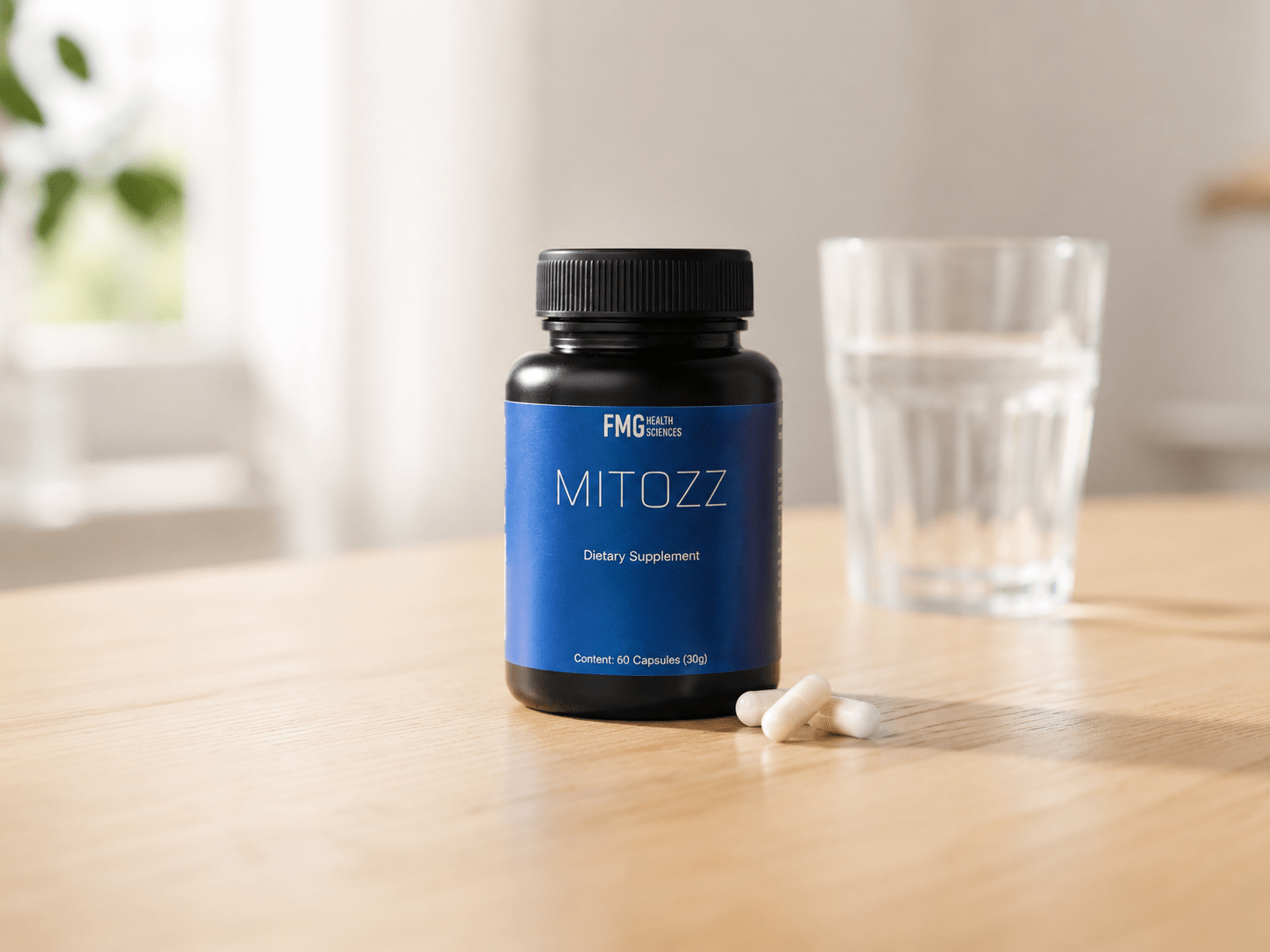
Mitozz
A dietary supplement built around 98% pure (−)-epicatechin.
Mitozz is designed to support normal mitochondrial function and cellular energy from within. It fits into a daily routine built around nutrition, movement, sleep, and recovery.
Learn about Mitozz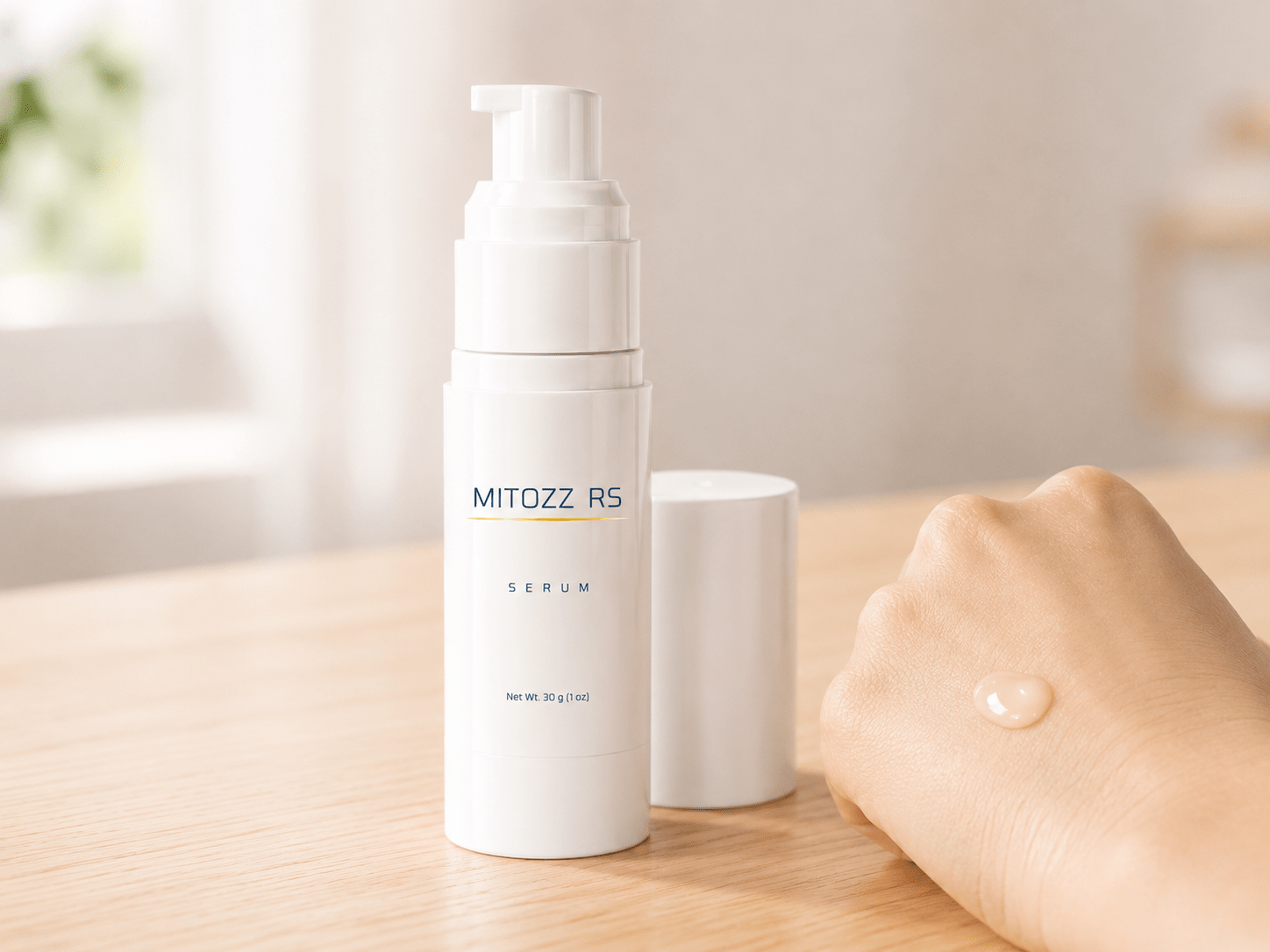
Mitozz
A daily cosmetic serum built around 98% pure (−)-epicatechin.
Mitozz RS helps hydrate and condition the skin while helping improve the appearance of fine lines and supporting a smoother, more even-looking complexion.
Learn about Mitozz RSReferences and further reading.
These sources provide context for the skin biology, ingredient rationale, and claim boundaries discussed on this page. Mechanistic and ingredient studies help explain the science, but they should not be treated as finished-product clinical proof.
Mitochondria in skin biology Core scientific foundation
These sources support the central idea of the page: skin is a metabolically active tissue, and mitochondria are involved in energy production, oxidative stress, signaling, renewal, and normal skin-cell function.
Dermatologic Manifestations of Mitochondrial Dysfunction: A Review of the Literature
Reviews how mitochondrial dysfunction connects to cutaneous aging, photoaging biology, repair biology, inflammatory skin conditions, hair changes, and broader dermatologic function.
Skin aging and photoaging UV exposure, oxidative stress, and visible aging biology
These sources support the page’s discussion of aging, photoaging, oxidative stress, mitochondrial stress, and age-related changes in the skin environment.
Collagen Fragmentation Promotes Oxidative Stress and Elevates Matrix Metalloproteinase-1 in Fibroblasts in Aged Human Skin
Supports the discussion of collagen matrix fragmentation, oxidative stress, and fibroblast behavior in aged skin.
Keratinocytes, renewal, and barrier biology Surface function and epidermal renewal
These sources support the idea that the skin barrier is biologically active. Keratinocytes renew, differentiate, signal, and respond to stress.
Mitochondrial signaling and keratinocyte differentiation
Supports mitochondrial relevance in keratinocyte differentiation, epidermal renewal, and barrier-related biology.
Uneven tone and pigmentation biology Melanocytes, oxidative stress, and light exposure
These sources support a careful discussion of pigmentation biology, oxidative stress, UV exposure, and cosmetic skin appearance. This section is educational and should not be used to imply treatment of pigmentation disorders.
A Recent Update on the Potential Use of Catechins in Cosmeceuticals
Reviews catechins as antioxidant compounds of interest in cosmetic skin-care research, including aging, UV stress, and pigmentation-related mechanisms.
Oral flavanols and epicatechin Useful context, not Mitozz-specific skin proof
These sources support careful discussion of flavanols and (−)-epicatechin. Cocoa flavanol studies and general mitochondrial studies should not be treated as direct proof of Mitozz-specific skin outcomes.
Cocoa Flavanol Supplementation Influences Skin Conditions of Photo-Aged Women
A 24-week randomized controlled trial studying cocoa flavanol supplementation and skin measures in women with moderate photoaging.
Effects of (−)-Epicatechin on Mitochondria
Reviews research on (−)-epicatechin and mitochondrial function, mitochondrial markers, and related biological pathways.
Topical ingredients and cosmetic formulation Hydration, conditioning, and antioxidant-support context
These sources support cosmetic language for Mitozz RS, especially hydration, humectancy, skin appearance, antioxidant-support, and conditioning. Ingredient evidence does not automatically prove finished-product outcomes.
Topical epicatechin skin research
PubMed-indexed research relevant to topical epicatechin, skin penetration, and oxidative stress models. Use as ingredient rationale, not as finished-product efficacy proof.
Hyaluronic acid and topical hydration
Supports the use of hyaluronic acid as a cosmetic humectant for skin hydration and appearance support, depending on molecular weight and formulation.
Glycerol and the Skin: Holistic Approach to Its Origin and Functions
Supports glycerin as a classic humectant with relevance to stratum corneum hydration and barrier-related skin properties.
Topical vitamin C in dermatology and skin care
Supports careful antioxidant-support and skin-care language. Claims involving collagen stimulation, pigmentation correction, or UV protection require extra caution.
Vitamin E and Skin Health
Supports vitamin E as a fat-soluble antioxidant relevant to skin antioxidant defenses and skin-conditioning language.
Claim boundaries and regulatory guidance Why cosmetic wording matters
These sources define the boundary between cosmetic appearance language and drug-style structure/function or disease-treatment claims. They are especially important for Mitozz RS.
Is It a Cosmetic, a Drug, or Both?
FDA guidance explaining that intended use determines whether a product is a cosmetic, drug, or both.
Wrinkle Treatments and Other Anti-Aging Products
FDA guidance distinguishing cosmetic appearance claims from claims that remove wrinkles, increase collagen production, or affect body structure or function.
This page is for educational purposes only. The science discussed here explains biological concepts related to mitochondria, skin cells, oxidative stress, hydration, collagen matrix biology, and skin appearance. It should not be read as a claim that any product reverses skin aging, repairs mitochondria in skin, increases collagen, corrects pigmentation, or treats skin conditions.
Mitozz is a dietary supplement intended to support normal mitochondrial function and cellular energy. Mitozz RS is a topical cosmetic serum intended for skin appearance, hydration, conditioning, and daily skin care. Neither product is intended to diagnose, treat, cure, or prevent disease.