When people think about heart health, they often picture clogged arteries or dramatic cardiac events. In reality, arterial health develops quietly over decades, shaped more by small daily habits than by sudden crises.
Arteries aren’t rigid pipes. They’re living, flexible tissues that respond constantly to what’s happening inside your body. Blood pressure, blood sugar, inflammation, sleep quality, stress hormones, and physical activity all send signals to your arteries every day. When those signals are mostly supportive, arteries remain elastic and responsive, adjusting blood flow smoothly as your body’s needs change. When those signals are consistently harsh, arteries gradually become stiffer and less adaptable, a process that often begins long before any diagnosis appears.
The good news is that arterial health is unusually sensitive to everyday habits. You don’t need extreme interventions. You need consistency.
What “arterial health” actually means
The phrase “healthy arteries” sounds simple, but it reflects several overlapping functions working together.
Endothelial function
The endothelium is the thin inner lining of your arteries. It acts like a sensing system, detecting changes in blood flow and releasing chemical signals, most notably nitric oxide, that tell arteries when to relax or tighten. Healthy endothelial function supports smooth blood flow and balanced blood pressure.
Arterial flexibility
Healthy arteries expand slightly with each heartbeat and recoil as blood moves forward. As arteries stiffen, pressure waves travel faster and hit delicate tissues harder, increasing strain on the heart and organs.
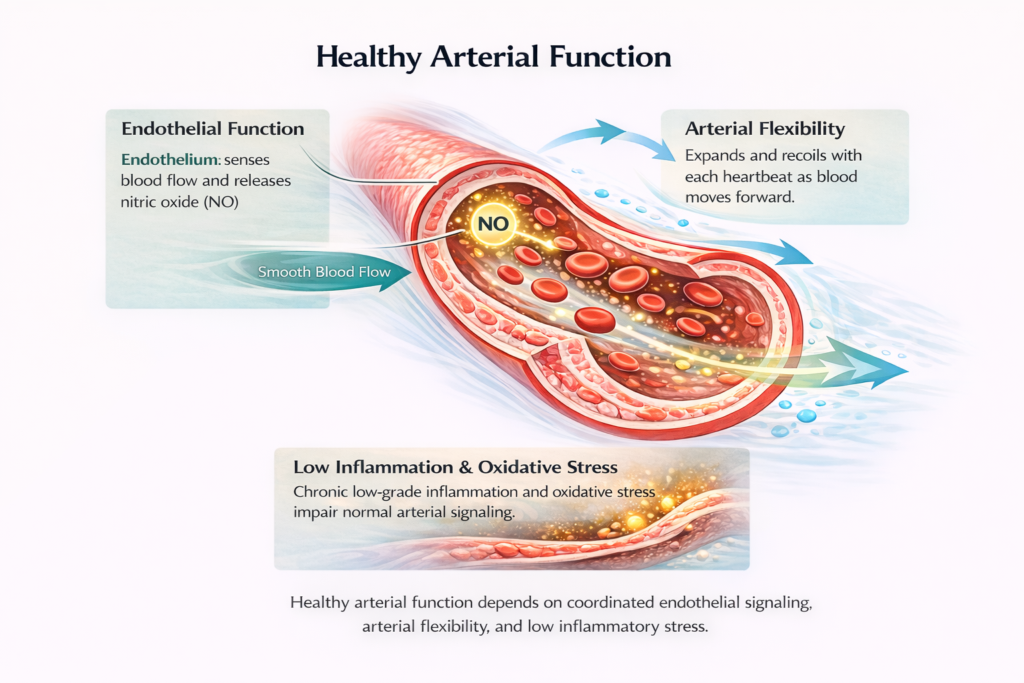
Low inflammation and oxidative stress
Chronic low-grade inflammation and oxidative stress slowly damage the artery wall and interfere with normal signaling. This process doesn’t cause symptoms early on, but gradually reduces vascular resilience over time.
Balanced pressure and flow
Blood pressure that stays even mildly elevated throughout the day creates constant mechanical stress on artery walls. Over years, this background strain accelerates vascular aging.
Together, these features form the biological interface through which daily habits like movement, sleep, diet, and stress shape long-term arterial health.
Why daily habits matter biologically
Nitric oxide: the artery “relaxation signal”
Nitric oxide helps arteries widen, improves blood flow, and buffers against excessive constriction. Over time, nitric oxide availability can drop due to oxidative stress, aging, poor sleep, sedentary behavior, insulin resistance, and chronic psychological stress. Habits that reduce these stressors help preserve this critical signaling pathway.
Arterial stiffness isn’t just about plaque
While plaque buildup matters, stiffness also reflects changes in artery wall structure, smooth muscle tone, inflammation, and long-term exposure to elevated glucose. That’s why people can improve arterial function through lifestyle changes even if they don’t lose significant weight.
Energy and recovery set the tone
The cells lining your arteries are metabolically active. When the body is under-recovered, too little sleep, too much sitting, frequent overeating, arteries lose their ability to adapt. Arterial health is best understood as a capacity issue: when the system has more energy and recovery, it responds better to stress.
What research consistently shows
Across cardiovascular research, one theme appears again and again: lifestyle habits are foundational. Improvements in diet quality, physical activity, sleep, and weight management consistently improve the risk factors that damage arteries. The most effective strategies are the ones people can repeat over time.
Research has also explored how certain plant compounds support vascular signaling. Cacao flavanols, including (−)-epicatechin, have been studied for their effects on endothelial nitric oxide pathways and vascular relaxation in controlled settings.
At a population level, organizations such as the American Heart Association consistently highlight the same pillars of cardiovascular health: movement, diet quality, sleep, blood pressure control, blood sugar regulation, healthy body weight, and avoidance of nicotine. These habits tend to cluster together and reinforce one another.
8 habits that help improve arterial health
Habit 1: Move every day and sit less
Movement increases blood flow, creating gentle friction along artery walls that helps keep the endothelium responsive. Regular movement also lowers average blood pressure over the course of the day.
Aim for 30–45 minutes of walking most days, or break movement into shorter sessions throughout the day. If you sit for long periods, stand up and walk briefly at least once an hour.

Habit 2: Treat blood pressure as artery load
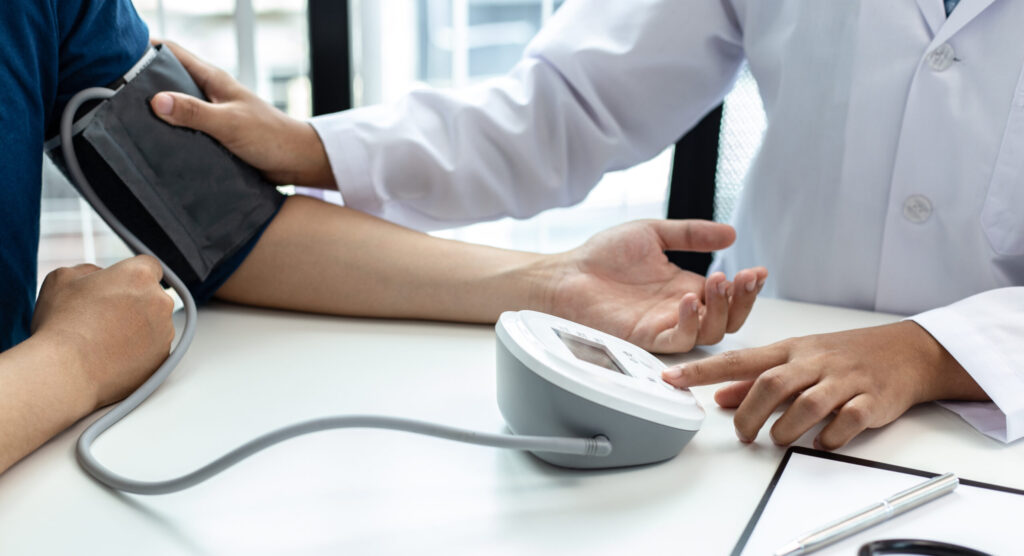
Blood pressure reflects the cumulative load your arteries experience each day. Focus less on individual readings and more on trends over time.
Limiting excess sodium, staying physically active, managing stress, and protecting sleep all help reduce the mechanical strain placed on artery walls.
Habit 3: Follow a vessel-friendly eating pattern
For arteries, consistency matters more than perfection. Eating patterns that repeatedly support vascular health tend to be plant-forward and minimally processed.
Focus on vegetables, beans, fruits, whole grains, nuts, olive oil, and fish, while limiting ultra-processed foods and added sugars. Mediterranean-style eating patterns are repeatedly associated with improved endothelial function.

Habit 4: Smooth out blood sugar swings
Repeated spikes in blood sugar increase oxidative stress and contribute to artery stiffening over time.
Pair carbohydrates with protein or fiber, take a short walk after larger meals, and prioritize sleep, since sleep loss worsens insulin sensitivity.

Habit 5: Treat sleep as a vascular habit
Sleep influences inflammation, stress hormones, appetite regulation, blood pressure, and glucose control. Poor sleep quietly undermines arterial health.
Keep a consistent wake time, get morning light exposure, and set a caffeine cutoff that protects sleep quality.

Habit 6: Eliminate nicotine exposure
Nicotine and smoke directly damage the artery lining and accelerate vascular aging.
Avoiding both active and secondhand exposure is one of the highest-impact steps for arterial health.

Habit 7: Make stress reduction practical
Stress management matters most when it changes physiology, not just mindset. Lower resting stress improves sleep, blood pressure, and metabolic health.
Five to ten minutes per day of slow breathing or mindfulness, plus regular social connection and predictable routines.

Habit 8: Polyphenol-rich foods
Foods like cacao, tea, and berries contain compounds studied for endothelial support.
You may also consider supplementing your diet with (-)-epicatechin.

Conclusion
Arterial health is rarely lost overnight, and it’s rarely rebuilt with a single dramatic change. It shifts gradually in response to repeated daily inputs. The habits that matter most aren’t exotic: move regularly, keep blood pressure and blood sugar from staying just a little too high, eat a plant-forward pattern you can repeat, protect sleep, eliminate nicotine exposure, and use stress tools that actually calm the nervous system.
Think in terms of resilience, not perfection. Arteries respond to trends—and those trends are shaped every day.
References
- Garate-Carrillo, A., Navarrete-Yañez, V., Ortiz-Vilchis, P., et al. (2020). Arginase inhibition by (−)-epicatechin reverses endothelial cell aging. European Journal of Pharmacology, 885, 173442.
- Lloyd-Jones, D. M., et al. (2022). Life’s Essential 8: Updating and enhancing the American Heart Association’s construct of cardiovascular health. Circulation. (AHA Journals)
- Shannon, O. M., et al. (2020). Mediterranean diet increases endothelial function in adults: A systematic review and meta-analysis. The Journal of Nutrition. (PubMed)
- Villarreal, F. (2011). Editorial on epicatechin, eNOS activation, and vascular effects. Journal of Applied Physiology.
- American Heartssential 8. (www.heart.org)
- Sacre, J. W., et al. (2014). Exercise and dietary influences on arterial stiffness in aging. Hypertension. (AHA Journals)
- Schroeter et al., (2006) (–)-Epicatechin mediates beneficial effects of flavanol-rich cocoa on vascular function in humans. (PNAS)
If you’re interested in going deeper into the science behind arterial health, cellular energy, and the everyday habits that shape long-term resilience, the free Mitozz Community offers ongoing education, expert discussions, and practical guidance you can apply in real life.
Medical Disclaimer: The information provided in this article is for educational and informational purposes only and is not intended as medical advice. It is not a substitute for professional medical diagnosis, treatment, or guidance. Always consult with a qualified healthcare professional before making changes to your diet, exercise routine, fasting practices, or supplement use, especially if you have a medical condition, are pregnant or nursing, or are taking medications.
FDA Disclaimer: These statements have not been evaluated by the Food and Drug Administration. They are not not intended to diagnose, treat, cure, or prevent any disease.
Join the Mitozz Community
Access member and expert discussions, educational content, and live Q&A sessions focused on cellular energy and mitochondrial health.
Medical Disclaimer: The information provided in this article is for educational and informational purposes only and is not intended as medical advice. It is not a substitute for professional medical diagnosis, treatment, or guidance. Always consult with a qualified healthcare professional before making changes to your diet, exercise routine, fasting practices, or supplement use, especially if you have a medical condition, are pregnant or nursing, or are taking medications.
FDA Disclaimer: These statements have not been evaluated by the Food and Drug Administration. They are not not intended to diagnose, treat, cure, or prevent any disease.