Hypertension (high blood pressure) is one of the most common health conditions worldwide but it is best understood not as a single malfunction or sudden failure. Instead, it reflects how multiple biological systems interact over time to regulate circulation, fluid balance, and vascular tone.
Blood pressure is continuously adjusted by the coordinated activity of the blood vessels, kidneys, nervous system, hormones, and metabolic signals. These systems are designed to adapt to everyday demands such as stress, physical activity, salt intake, sleep, and aging. When these adaptations persist for too long or become imbalanced, the body can gradually settle into a state of chronically elevated pressure.
Your blood pressure reflects how well several systems in your body are working together: your blood vessels, kidneys, nervous system, hormones, and everyday habits.
Rather than appearing overnight, high blood pressure typically develops through small, long-term shifts across these interconnected systems. What begins as compensation can slowly become a new baseline, often without obvious symptoms, making hypertension both widespread and difficult to detect early.
This article explains high blood pressure not as a single failure, but as the result of how multiple systems adapt over time.
How blood pressure is regulated in the body
Blood pressure refers to the force of blood moving through the arteries. While the heart plays a central role, blood pressure regulation depends on several interconnected systems.
- The heart controls how much blood is pumped.
- Blood vessels adjust their diameter to increase or decrease resistance.
- The kidneys regulate fluid and sodium balance.
- Hormones coordinate longer-term signal.
- The nervous system manages rapid adjustments in vessel tone.
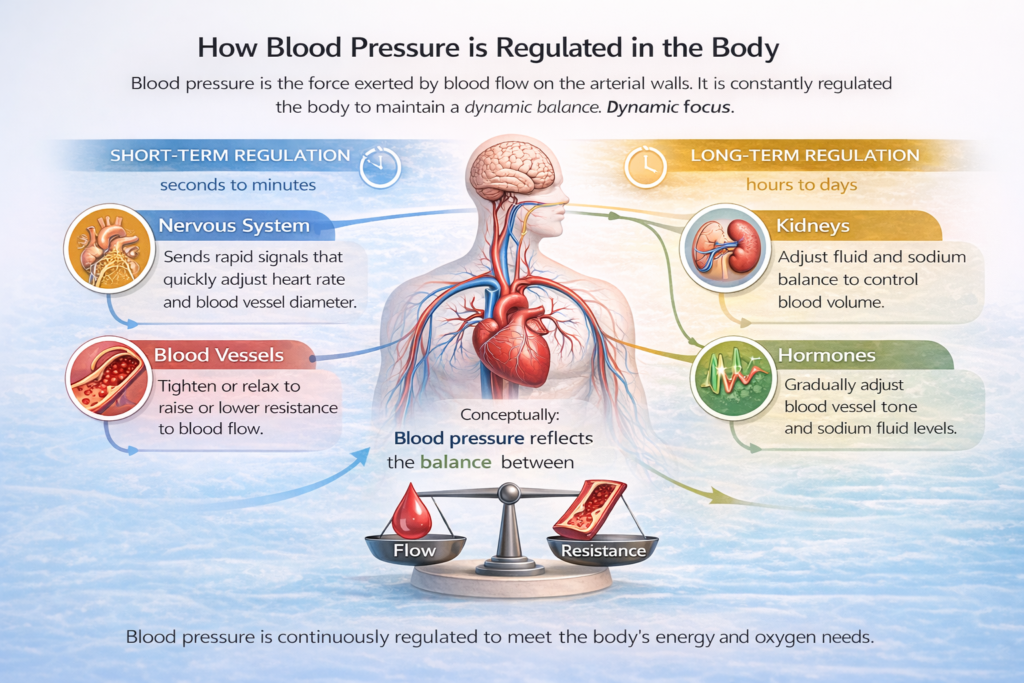
In healthy regulation, these systems respond continuously to changes in activity, stress, hydration, and posture to keep blood pressure within a stable range.
Blood pressure is best understood as a dynamic balance, not simply a fixed number.
Why blood pressure rises over time
High blood pressure usually develops when regulatory systems repeatedly respond to the same signals over long periods. Factors such as chronic stress, aging, dietary patterns, reduced physical activity, and metabolic changes can influence how the body adapts.
When these signals persist, the body may recalibrate. Blood vessels may remain slightly more constricted. Fluid levels may stay elevated. Hormonal signals designed for short-term regulation may become sustained.
High blood pressure is often the result of a gradual adaptation across multiple systems, not a sudden failure or single trigger.
The role of the kidneys, blood vessels, hormones, and nervous system
Although hypertension is often associated with the heart, long-term blood pressure control depends heavily on other systems:
- Kidneys: regulate fluid volume and sodium balance
- Blood vessels: adjust stiffness and constriction
- Hormones: coordinate long-term pressure signals
- Nervous system: controls short-term tightening and relaxation
These systems operate through feedback loops, constantly influencing one another. Over time, small upward shifts in these loops can establish elevated blood pressure as the new baseline.
Why high blood pressure often has no symptoms
One of the most important characteristics of hypertension is that it is frequently asymptomatic. The body is highly effective at maintaining circulation even as pressure slowly increases.
Many people feel normal for years because the body compensates while blood pressure gradually rises.
Symptoms usually appear only after prolonged strain affects blood vessels or organs. This is why hypertension is often identified through routine blood pressure measurement rather than physical sensations.
Hypertension is frequently silent, which is why measurement matters more than symptoms.

What this means for understanding hypertension
Viewing high blood pressure as a gradual, multi-system process helps clarify several common realities:
- Blood pressure can increase without noticeable warning signs
- Multiple body systems are usually involved at the same time
- Feeling well does not always reflect blood pressure status
These systems respond continuously to everyday signals such as movement, sleep, stress, and metabolic health. Over time, small daily habits can influence how arteries adapt, how vessels respond, and how blood pressure is regulated.
We explore practical, everyday behaviors that support arterial flexibility and vascular health in our article 8 Simple Everyday Habits That Help Keep Your Arteries Healthy.
A systems-level condition
High blood pressure is not simply the result of a single malfunction or an abrupt change. It reflects how the body adapts over time to repeated physiological signals affecting circulation, fluid balance, and vascular function.
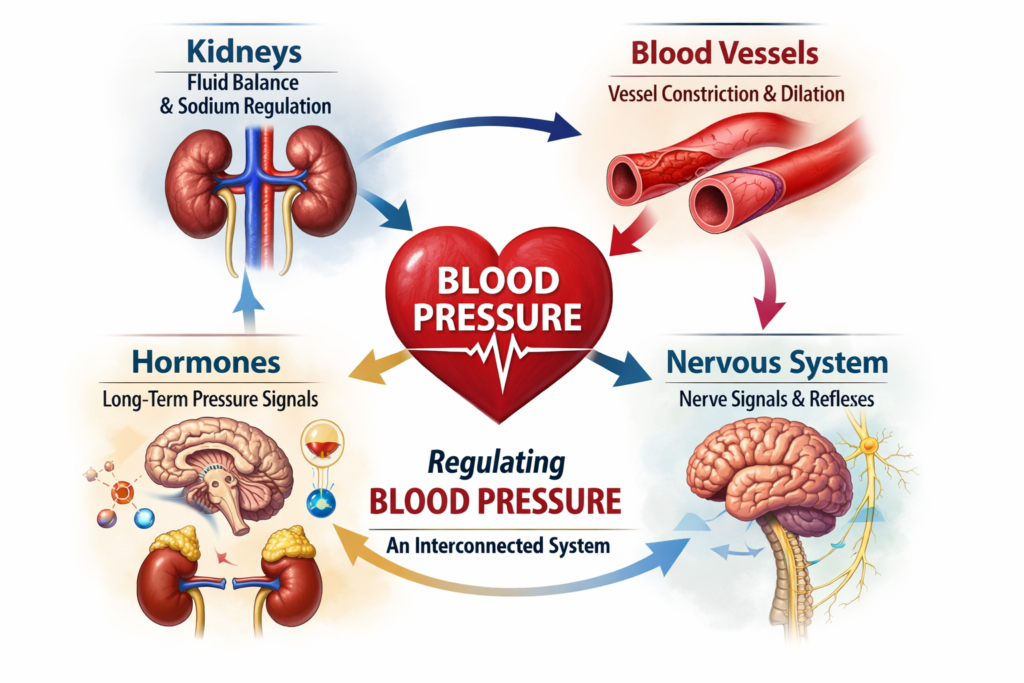
By understanding hypertension as a systems-level condition, it becomes easier to explain its slow progression, silent nature, and widespread prevalence, without reducing it to a single cause or symptom.
Conclusion
High blood pressure is rarely the failure of a single system or organ. It reflects a long-term shift in how the body regulates pressure, shaped by biology, aging, and repeated daily signals that influence metabolism and cellular energy.
For most people, there isn’t one cause. There’s a pattern. Understanding how energy production and daily habits shape that pattern is the first step toward managing it effectively. For a deeper look at this connection, see our related article on supporting mitochondrial health naturally.
Related emerging topics
The microbiome, circadian disruption, and inflammation
Research is active on how gut-derived metabolites, circadian rhythm disruption, and low-grade inflammation interact with vascular tone and salt handling. These areas are promising but not yet a primary explanatory framework for most cases.
Mitochondrial signaling as a “capacity lens”
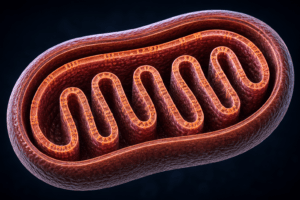
It is increasingly useful to think of hypertension as partly reflecting reduced adaptive capacity within vascular and kidney tissues. Research on mitochondrial function suggests that energy handling and redox balance may influence how these tissues respond to long-term physiological stress and maintain resilience over time.
Recent reviews suggest that when mitochondria don’t function optimally, blood vessels and kidneys may become less able to adapt to long-term stress. Rather than directly causing high blood pressure, these changes may influence how the body adjusts over time, helping explain why hypertension often develops gradually.
References
- Harrison, D. G., & colleagues. (2021). Pathophysiology of hypertension. Circulation Research. (AHA Journals)
- National Heart, Lung, and Blood Institute. (2024, April 30). High blood pressure: Causes and risk factors. (NHLBI, NIH)
- American Heart Association. (2024, May 20). Know your risk factors for high blood pressure. (www.heart.org)
- Whelton, P. K., et al. (2018). 2017 ACC/AHA guideline for the prevention, detection, evaluation, and management of high blood pressure in adults. Hypertension. (AHA Journals)
- Montes-Rivera, J., & colleagues. (2019). Effect of (−)-epicatechin on the modulation of progression markers of chronic renal damage in a 5/6 nephrectomy experimental model. (Heliyon)
Understanding blood pressure is an ongoing process shaped by how the body’s systems respond to daily signals over time. The free Mitozz Community offers a space to explore the science behind cellular energy, mitochondrial function, and cardiovascular regulation through expert discussions, educational content, and live Q&A—at your own pace.
Sign up for the Mitozz Newsletter
Get science-based education on mitochondrial health, cellular energy, and lifestyle signals that support your body over time.
Medical Disclaimer: The information provided in this article is for educational and informational purposes only and is not intended as medical advice. It is not a substitute for professional medical diagnosis, treatment, or guidance. Always consult with a qualified healthcare professional before making changes to your diet, exercise routine, fasting practices, or supplement use, especially if you have a medical condition, are pregnant or nursing, or are taking medications.
FDA Disclaimer: These statements have not been evaluated by the Food and Drug Administration. They are not not intended to diagnose, treat, cure, or prevent any disease.