Key Takeaways
- “More mitochondria” really just means more aerobic capacity in your working muscles.
- Easy, repeatable running is the main driver because it creates a steady signal your body can build on week after week.
- A small dose of intervals can amplify the stimulus, but only if it doesn’t sabotage consistency or recovery.
- Recovery is part of the training signal, sleep, fueling, and down time are where adaptations get built.
- Progress happens over weeks to months, the goal is durable, sustainable improvement, not a one-workout breakthrough.
- Consider targeted support: Mitozz can be a great add on alongside training and recovery.
Picture the following scenario. Two runners are running at the same pace but one looks smooth and steady while the other is gasping for breath with legs burning after mile three. The difference between the two has to do with how efficiently their muscle cells can use oxygen and generate fuel to keep producing energy, minute after minute.
If you are like the second runner and want to increase your aerobic horsepower, meaning you want to run longer with less strain, bounce back faster, and use both fat and carbohydrate more efficiently, what you need to focus on is building your muscles’ mitochondrial capacity.
The good news is that mitochondria are highly trainable, especially with the right mix of consistency, intensity, and recovery. In this article, we’ll break down the most practical, science-aligned strategies you can use to support that adaptation, from how to structure your running to the recovery habits that help the gains stick.
What “Increasing Mitochondria” Actually Means
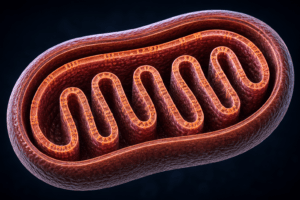
Mitochondria are the cell’s energy-processing hubs. In working muscle, endurance training can:
- increase mitochondrial content,
- boost oxidative enzymes, and
- improve the overall machinery that supports sustained ATP production.
This is one of the classic adaptations observed with regular endurance exercise. (pubmed.ncbi.nlm.nih.gov)
But it is not only about mitochondrial count. Runners benefit from a broader package that often changes together:
- More mitochondrial proteins and enzyme activity that support aerobic metabolism (often measured with markers like citrate synthase). (frontiersin.org)
- Better oxygen delivery, including capillary growth in trained muscle. (pmc.ncbi.nlm.nih.gov)
- Better coordination of fuel use, so pace feels more sustainable, especially near threshold. (sciencedirect.com)
What this means in real life is simple: the goal is to build a body that can meet running’s energy demands with less energy and recovery chaos.
The Training Signals That Build Mitochondrial Capacity
Your muscles do not build mitochondria because you “ran hard once.” They adapt because repeated sessions create cellular signals that say, “We need more aerobic capacity here.”
One key coordinator is PGC-1α, a transcriptional coactivator involved in regulating genes related to mitochondrial biogenesis and oxidative metabolism. Endurance exercise can increase PGC-1α signaling, and repeated activation over time is part of how training reshapes muscle. (pmc.ncbi.nlm.nih.gov)
Different workouts stress the system differently and that is useful. Broadly speaking, runners get strong mitochondrial adaptation from two levers:
- Lots of relatively easy aerobic work, and
- A smaller dose of high-intensity work that adds a potent signal.
Lever 1: Easy volume over time
Steady, moderate and low-intensity endurance training is strongly associated with increases in mitochondrial content and oxidative capacity in skeletal muscle. (pubmed.ncbi.nlm.nih.gov)
“Easy miles” matter. Easy running increases total time under aerobic demand without exhausting you, so that you can stack training days, week after week. Stack enough of those sessions and you will start building durable endurance.

Easy miles is are like compound interest. Small deposits, done consistently, create the big payoff over time.
Lever 2: Intervals add a strong mitochondrial stimulus
High-intensity interval training (HIIT) and related interval formats can improve mitochondrial markers and aerobic performance, sometimes with impressive time efficiency. Many comparisons show HIIT can produce equal or greater improvements in some mitochondrial measures compared with moderate-intensity continuous training. (pmc.ncbi.nlm.nih.gov)
Intervals are powerful because they increase demand quickly. They push oxygen use, metabolite buildup, and signaling pathways that can amplify adaptation. The tradeoff is that intervals are also expensive. They require more recovery, and if you overdo them, they can reduce training consistency, which is counterproductive.

Easy runs build the foundation. Intervals sharpen the edge. Most runners will do best when both are in the plan.
Where Zone 2 training fits in, and where it can go too far
Zone 2 training is usually described as low-intensity exercise below lactate threshold. Breathing is steady and conversation is still possible during training without gasping for air. It’s helpful for building your aerobic base and supporting mitochondrial and fat oxidation capacity.
Still, the idea that Zone 2 is uniquely optimal for everyone is not settled science. A recent narrative review highlights how much of the Zone 2 storyline is extrapolated from elite training patterns and observational data, and why individual needs can vary. (fisiologiadelejercicio.com)
Use Zone 2 as a reliable tool, not a religion. If Zone 2 lets you train more consistently, then it’s doing its job. If Zone 2 isn’t working for you, use the easiest pace that still lets you stack volume, then add a small, controlled dose of faster work.
Strength training, yes, even for mitochondria
Strength training is useful for injury prevention and to increase power but evidence suggests resistance training can also influence mitochondrial biology, including mitochondrial biogenesis signaling and respiratory function. (frontiersin.org)

For runners, the win can be indirect but meaningful. Stronger muscles can reduce the relative effort of each stride, which may let you tolerate more aerobic volume. Strength can also support sprint mechanics, hill running, and durability.
A Runner’s Mitochondria-Building Week
If you want to build mitochondrial capacity for running, you are really building toward:
- Higher aerobic base (easier running feels easier, and you can do more volume)
- Better threshold (your sustainable “steady hard” pace gets faster)
- Better recovery between hard efforts (you bounce back faster because the aerobic system supports restoration)
Below are three example weekly training frameworks. The best one is the one you can repeat for months.
Template A: Beginner to intermediate – build the base
- 3–5 easy runs/week: conversational effort, 20-50 minutes.
- 1 longer easy run: same easy effort, 45-90 minutes.
- 1 “speed play” every 7–10 days: 6 to10 short pickups (20 to 40 seconds long) with easy jogging between.
- 1–2 strength sessions: 20 to 40 minutes focusing on legs, hips, and trunk.
This works because volume drives adaptation and light intensity keeps you consistent.
Template B: Intermediate runner – adding structure
- 2 quality sessions per week:
- Session 1: Threshold-focused (“comfortably hard”)
A steady effort where you can speak only in short phrases, controlled but challenging.
Example: 2–3 × 8–12 minutes at threshold with easy jogging between, or 20–30 minutes total at “steady hard” effort. - Session 2: VO₂max intervals or hill repeats (“hard, controlled”)
Breathing is heavy, pace is hard but you are not sprinting.
Example: 5–8 × 2–3 minutes hard with equal easy recovery, or 6–10 × 45–90 seconds uphill with easy walk/jog down.
- Session 1: Threshold-focused (“comfortably hard”)
- The rest of your runs stay easy
Conversational pace, full sentences possible. These runs make the plan sustainable and stack aerobic time. - 1 long run each week
Kept mostly easy. Often ~20–30% longer than your typical easy run, building durability without wrecking recovery. - 1–2 strength sessions
20–40 minutes, focusing on legs, hips, calves, and trunk. Keep it moderate and repeatable so it supports running rather than competing with it.
This mirrors what systematic reviews often reflect in practice, different training types can improve mitochondrial content and capillarization, with responses shaped by baseline fitness and program design. (pmc.ncbi.nlm.nih.gov)
Template C: Time-crunched but still aiming for adaptation
- 2 key sessions per week (choose based on how you recover)
- Session 1: Short threshold or steady tempo
“Comfortably hard,” controlled, you can speak only in short phrases.
Example: 15–25 minutes total at steady hard effort, or 2 × 10 minutes with easy jogging between. - Session 2: Efficient intervals or hills
Hard but repeatable, not a sprint, stop before form falls apart.
Example: 6–10 × 1 minute hard with 1 minute easy, or 8–12 × 30–45 seconds uphill with easy walk/jog down.
- Session 1: Short threshold or steady tempo
- 1 longer easy run if possible
Keep it conversational, mainly about time on feet, not speed.
Example: 45–75 minutes easy, or ~20–30% longer than your usual easy run. - 1–2 short easy runs or cross-training sessions
These are “maintenance” sessions that keep aerobic volume and recovery moving.
Example: 20–40 minutes easy run, bike, or incline walk. - 1 strength session
20–35 minutes, simple and repeatable, focus on legs, hips, calves, and trunk.
Time-efficient programs can work, but consistency and recovery become even more important. HIIT is very potent but it is also easy to turn “time efficient” into “too intense to sustain” so us it sparingly. (pmc.ncbi.nlm.nih.gov)
Recovery, Sleep, and Fuel: The Often-Missed Multipliers
Mitochondria adapt when stress is followed by recovery. If sleep is short or stress is too high, you can still train hard but you may not consolidate the gains you are chasing.
Nutrition can also shape your training response.
Strategically training with lower carbohydrate availability may amplify short-term signaling linked to mitochondrial biogenesis. Training with high quality protein after aerobic exercise may support mitochondrial protein synthesis. (sciencedirect.com)
Simple Rule
The best plan is the one you can repeat, because staying healthy enough to show up next week is what drives the adaptation.
Common Mistakes That Stall Mitochondrial Adaptation
- Too much intensity, too soon. You get a strong signal but cannot repeat it often enough to build durable capacity.
- Skipping easy volume. Intervals alone rarely build the deep base most runners want.
- Never progressing. The mitochondria you have today were built for last month’s training.
- Under-recovering. If fatigue keeps creeping in, you are collecting stress without cashing the adaptation check.
Where Targeted Nutritional Support Can Fit
Lifestyle foundations come first, training consistency, sleep, and proper nutrition. After that, some runners explore targeted nutritional support that is being studied in relation to mitochondrial signaling and muscle adaptation.
Mitozz is a nutraceutical developed by FMG Health Sciences containing 98% pure (−)-epicatechin, a compound that researchers have investigated for its potential roles in vascular and metabolic pathways, including areas connected to exercise adaptation. Human research has explored vascular function and muscle oxygenation during exercise, (PubMed) while other work has examined effects on detraining-related changes in bioenergetics and capillarity, (FASEB Journal) and broader discussions of epicatechin and training adaptation include both human findings and mechanistic rationale. (frontiersin.org)
Conclusion
In conclusion, to increase your mitochondria as a runner, focus on what reliably drives mitochondrial capacity in human muscle:
- build a steady base with mostly easy running
- add a small, sustainable dose of interval training
- include strength work for durability and economy
- protect recovery, especially sleep and fueling
Over weeks to months, those repeated signals can build more oxidative capacity, better oxygen delivery support, and a smoother feeling at paces that used to feel hard.
Share this blog article
Understanding mitochondrial health is a long-term process. That’s why we created the Mitozz Newsletter: a free way to keep learning about cellular energy, mitochondrial health, and the lifestyle signals that support your body over time. You’ll receive science-based educational content, practical guidance, and updates from Mitozz, all at your own pace.
Sign up for the Mitozz Newsletter
Get science-based education on mitochondrial health, cellular energy, and lifestyle signals that support your body over time.
Medical Disclaimer: The information provided in this article is for educational and informational purposes only and is not intended as medical advice. It is not a substitute for professional medical diagnosis, treatment, or guidance. Always consult with a qualified healthcare professional before making changes to your diet, exercise routine, fasting practices, or supplement use, especially if you have a medical condition, are pregnant or nursing, or are taking medications.
FDA Disclaimer: These statements have not been evaluated by the Food and Drug Administration. They are not not intended to diagnose, treat, cure, or prevent any disease.