Puntos clave
- Memory is energy-intensive; mitochondria help neurons meet demand and manage cellular stress.
- Exercise has some of the most consistent evidence for supporting brain health pathways tied to mitochondrial quality control and plasticity signaling.
- Sleep appears tightly linked to mitochondrial maintenance and stress biology in mechanistic research.
- Mediterranean-style eating patterns are often associated with better cognitive outcomes, though not every study agrees.
- (-)-Epicatechin may help .
Introducción
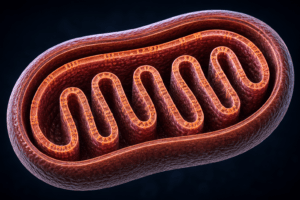
Memory isn’t just “brainpower.” It’s a high-demand biological process that depends on neurons meeting rapid energy needs, maintaining healthy synapses, and staying resilient under metabolic and inflammatory stress. Mitochondria sit near the center of that resilience because they produce ATP, help regulate reactive oxygen species (ROS), and participate in cellular “quality control” processes that help cells stay functional over time.
This doesn’t mean mitochondria are the “cause” of good or bad memory. But it does help explain why certain habits, especially exercise, sleep, and cardiometabolic health, so reliably correlate with cognitive function across many studies.
What “mitochondrial health” means for memory
In neurons, mitoIn neurons, mitochondria matter for memory because they support:
- Synaptic plasticity (the ability of synapses to strengthen/rewire during learning)
- Neurotransmitter cycling and ion pumping (high energy demand)
- Redox balance (excess oxidative stress can strain synapses and signaling)
- Inflammation control (chronic neuroinflammation can disrupt memory circuits)
Recent reviews describe tight “crosstalk” between mitochondrial function and synaptic plasticity, emphasizing that energy supply and mitochondrial dynamics help shape how well synapses adapt during learning.1
Mechanisms and physiology
1) ATP and “energy buffering” for synapses
Memory formation is metabolically expensive. When neural energy demand outpaces supply (for example, under poor blood flow, high metabolic strain, or impaired mitochondrial function), cognitive performance may suffer, especially on sustained attention and working-memory tasks that require continuous neural firing. Reviews on neuronal mitochondrial plasticity highlight ATP production as a core reason mitochondria matter for memory-related processes.2
2) Oxidative stress and inflammation as chronic “signal noise”
ROS aren’t always bad, some are part of normal signaling but chronic excess can damage lipids and proteins and interfere with synaptic signaling. Sleep disruption and other stressors are linked with oxidative stress and cellular stress responses in the brain, which may raise background “noise” that makes learning and recall harder.3
Mitochondria are central here because they are both a source and a regulator of redox balance.
3) Mitochondrial dynamics (fusion/fission) and quality control
Mitochondria constantly remodel (fusion/fission) and remove damaged components (mitophagy). These maintenance processes are increasingly being understood as contributors to cognitive resilience, especially in aging and neurodegenerative disease research contexts.4
Research insights and evidence
Exercise: the strongest lifestyle lever for brain mitochondrial resilience
A 2025 review focused on exercise and brain mitochondrial health describes how aerobic exercise can support mitochondrial biogenesis, dynamics, and mitophagy, and discusses signaling molecules (e.g., BDNF, irisin, IGF-1) linked to neuroplasticity.4
Mechanistic work also connects exercise with increased brain BDNF expression, a factor associated with synaptic plasticity and cognitive benefits.
Practical implication: For most people, the “mitochondrial memory plan” starts with consistent movement.
Sleep: mitochondrial maintenance time
Sleep isn’t just rest. It’s when the brain performs repair and homeostasis. A 2025 Nature paper ties sleep deprivation to mitochondrial processes (including fission and contact sites involved in quality control), supporting the idea that sleep pressure and mitochondrial biology are linked6.
This strengthens the case that poor sleep can impair cellular resilience in ways that plausibly affect memory.
Diet patterns: Mediterranean-style eating as metabolic support
Mediterranean diet research shows generally favorable associations with cognitive function and dementia risk, though not every trial is consistent.7
From a mitochondrial lens, the value is less about a single “brain nutrient” and more about supporting vascular health, insulin sensitivity, and inflammation balance, conditions that affect brain energy delivery and stress load.
Epicatechin as a mitochondrial-support tool
Human proof-of-concept (older adults): a 3-month study using an epicatechin-enriched cacao supplement reported improvements across cognitive domains including memory, attention, and reasoning (small sample; preliminary).8
Animal models: epicatechin improved short and long-term memory in object recognition tasks and was associated with reductions in inflammatory/oxidative markers and improvements in mitochondrial function indicators.9
Practical implications: how to support memory by supporting mitochondria
Think of this as lowering “metabolic friction” in the brain.
1) Build a base of aerobic capacity
- Aim for 150+ minutes/week of moderate aerobic activity (or equivalent), plus some intensity if appropriate.
- Add 2 days/week of resistance training (helps glucose handling and systemic mitochondrial health).
Why it matters: exercise supports mitochondrial quality control and neuroplasticity signaling (including BDNF-related pathways).

2) Treat sleep like brain maintenance
- Keep a consistent sleep window.
- Reduce “sleep debt” (short sleep + irregular timing).
- If you suspect sleep apnea, addressing it can be a high-impact move (sleep fragmentation is a big cognitive stressor).
Why it matters: sleep and mitochondrial stress/quality-control biology are increasingly linked in mechanistic research.

3) Stabilize glucose and cardiometabolic load
- Prioritize whole foods, minimally processed carbohydrates, and adequate protein.
- Combine carbs with protein/fat/fiber to reduce glycemic spikes.
- Maintain a healthy waistline trend (even modest improvements can reduce systemic inflammatory load).
Why it matters: insulin resistance and chronic inflammation raise background stress signals that can reduce cognitive resilience over time.

Practical Weekly Plan
Goal: support memory by improving brain energy availability and stress tolerance (a mitochondrial-resilience framing) through the highest-evidence lifestyle levers: movement, sleep regularity, and metabolic stability.
Weekly targets (simple and trackable)
- Aerobic activity: 150 minutes/week moderate or ~75 minutes/week vigorous
Examples: brisk walking, cycling, swimming, jogging, dance cardio. - Strength training: 2 sessions/week (full-body)
- Sleep: consistent schedule with a stable wake time (most important anchor)
- Nutrition pattern: Mediterranean-style “default plate” most days
- Take a supplement that supports cellular health like Mitozz.
- Stress downshift: 5–10 minutes/day (breathing, walk, mindfulness, journaling)
4) Eat a “pattern”
A Mediterranean-style pattern is a strong default:
- vegetables, legumes, nuts, olive oil
- fish/seafood regularly
- limited ultra-processed foods and refined sugars
Evidence is supportive overall, with some inconsistency across studies (common in nutrition research).

5) Supplementation with (-)-Epicatechin
Consider supplementation with Mitozz as supporting add-on to the core foundations: regular exercise, consistent sleep, a solid diet, and adequate recovery.

Conclusión
If you want to improve memory through mitochondrial health, the most evidence-aligned approach is to:
- increase aerobic fitness,
- protect sleep, and
- reduce metabolic/inflammatory load through diet pattern and body composition trends.
Mitochondria provide a useful organizing framework because they sit at the intersection of energy delivery, stress tolerance, and adaptive capacity, the same qualities memory depends on day to day.
Cómo recuperar y mantener la salud mitocondrial de forma natural
If you would like to read more about how to improve mitochondrial health, read our article exploring evidence-based lifestyle strategies that can help: How to Repair and Maintain Mitochondrial Health Naturally.
Comparte este artículo del blog
Footnotes
- Sayehmiri, F. (2024). Mitochondrial plasticity and synaptic plasticity crosstalk; in health and Alzheimer’s disease. (Review) ↩︎
- Comyn, T. (2024). Mitochondrial plasticity: An emergent concept in neuronal… (Review). ↩︎
- Davinelli, S. (2024). Sleep and oxidative stress: Current perspectives… (Review). ↩︎
- Csikos, V. (2025). The impact of exercise on brain mitochondrial health and… (Review). ↩︎
- Sarnataro, R., et al. (2025). Mitochondrial origins of the pressure to sleep. Nature. ↩︎
- Petersson, S. D., et al. (2016). Mediterranean Diet, Cognitive Function, and Dementia. (Systematic review). ↩︎
- Nájera, N., et al. (2025). Epicatechin-Enriched Cacao Subproducts Improve Cognition in Older Subjects: Proof of Concept. ↩︎
- Ramírez-Sánchez, I. (2025). Stimulatory effects of (+)-epicatechin on short- and long-term memory in aged rats: Underlying mechanisms. Nutrients ↩︎
Comprender la salud mitocondrial es un proceso a largo plazo. Por eso hemos creado el Mitozz : una forma gratuita de seguir aprendiendo sobre la energía celular, la salud mitocondrial y los hábitos de vida que favorecen el bienestar de tu cuerpo a lo largo del tiempo. Recibirás contenido educativo con base científica, consejos prácticos y novedades de Mitozz, todo ello a tu propio ritmo.
Suscríbete al Mitozz de Mitozz
Obtén información con base científica sobre la salud mitocondrial, la energía celular y los hábitos de vida que favorecen el bienestar de tu cuerpo a largo plazo.
Aviso médico: La información proporcionada en este artículo tiene fines exclusivamente educativos e informativos y no pretende constituir un consejo médico. No sustituye el diagnóstico, el tratamiento ni la orientación médicos profesionales. Consulte siempre a un profesional sanitario cualificado antes de realizar cambios en su dieta, rutina de ejercicio, prácticas de ayuno o uso de suplementos, especialmente si padece alguna afección médica, está embarazada o en periodo de lactancia, o está tomando medicamentos.
Descargo de responsabilidad de la FDA: Estas declaraciones no han sido evaluadas por la Administración de Alimentos y Medicamentos (FDA). No están destinadas a diagnosticar, tratar, curar ni prevenir ninguna enfermedad.