Heart disease is often framed in terms of clinical markers, blood pressure, cholesterol, arterial plaque, and heart rate variability. These markers are important and should be monitored, but they describe outcomes rather than underlying biological origins. At a deeper level, cardiovascular health is shaped by how effectively heart cells generate, regulate, and sustain energy over time.

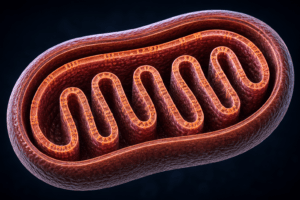
The heart is not just a pump. It is a metabolically active organ with exceptionally high energy demands. Each contraction depends on adenosine triphosphate (ATP), produced primarily by mitochondria within cardiac muscle cells. When mitochondrial function is well supported, the heart adapts efficiently to physical activity, stress, and recovery. When cellular energy systems are strained, the heart compensates by working harder, increasing energy demand, wall stress, and reliance on compensatory signaling that may become less efficient over time.
Viewing heart disease risk through the lens of cellular energy helps us understand how familiar risk factors are biologically connected, and how supporting underlying processes may help mitigate overall cardiovascular risk.
The Heart as a High-Energy Organ
Cardiac muscle cells are densely packed with mitochondria because continuous contraction requires uninterrupted ATP production, however, these mitochondria do more than supply energy. They regulate oxidative balance, calcium handling, metabolic signaling, and pathways involved in cellular repair and turnover.
Healthy mitochondrial function allows the heart to scale energy production up and down smoothly as demand changes. Impaired mitochondrial efficiency, by contrast, can limit energetic reserve and increase reliance on compensatory mechanisms such as elevated heart rate, increased wall stress, or structural remodeling of heart tissue.
From this perspective, keeping your heart healthy through better cellular energy means preserving efficiency, flexibility, and resilience at the cellular level.
Core Risk Factors for Heart Disease Through a Cellular Lens
High Blood Pressure and Sustained Energy Demand
High blood pressure increases the force required for each cardiac contraction. This directly raises ATP demand inside heart cells and increases mechanical stress on blood vessels. Over time, the heart adapts by thickening muscle tissue, a response that initially helps maintain output but also increases oxygen and energy requirements.
Mitochondria influence blood pressure regulation indirectly through vascular function. Energy-dependent signaling in endothelial cells helps regulate vessel tone and responsiveness. When mitochondrial redox balance is disrupted, cells can produce more reactive byproducts than they can safely manage. This can interfere with the normal signaling that allows blood vessels to relax, making it harder for them to adjust to changing demands and gradually increasing resistance to blood flow.
This systems-level view explains why mitochondrial function is relevant to blood pressure regulation. Blood pressure is not controlled by a single organ or signal. It emerges from coordinated regulation across several energy-dependent systems:
- Blood vessels, which adjust diameter and tone to regulate resistance and blood flow
- The nervous system, which rapidly modulates heart rate and vessel constriction in response to stress and activity
- The kidneys, which regulate fluid balance and long-term blood volume through sodium and water handling
- Metabolic signaling, which influences vascular function, inflammation, and energy availability at the cellular level
All of these systems rely on adequate cellular energy to respond efficiently to changing demands.
Metabolic Health and Cardiac Fuel Use
The heart is metabolically flexible. Under normal conditions, it shifts between fatty acids, glucose, and other fuel substrates depending on availability and workload. This flexibility supports stable ATP production across a wide range of physiological states.
How the Heart Shifts Between Energy Substrates
- At rest: the heart relies primarily on fatty acids to support steady, efficient ATP production.
- During exercise or increased workload: the heart increases use of glucose and lactate, which can be converted to energy more rapidly.
- During acute stress: hormonal signals raise glucose availability, leading the heart to temporarily favor glucose for fast energy turnover.
- During fasting or low carbohydrate availability: the heart shifts toward fatty acids and ketone bodies to sustain energy production.
- During recovery: as demand decreases, the heart gradually returns to greater reliance on fatty acids.
Metabolic dysfunction can impair this adaptability. When substrate utilization becomes less efficient, mitochondria may generate energy with greater oxidative cost. This increases reactive byproducts and reduces energetic reserve. Over time, this environment can contribute to cellular stress, impaired recovery, and reduced tolerance to exertion.
Supporting heart health through cellular energy can help preserve metabolic flexibility and support redox balance, enabling heart cells to adjust fuel use efficiently as conditions change.
Chronic Inflammation and Mitochondrial Stress
Low-grade, chronic inflammation alters the intracellular environment in which mitochondria operate. Inflammatory signaling increases oxidative pressure and can disrupt mitochondrial dynamics, including fusion, fission, and turnover, processes that help maintain a functional and adaptable mitochondrial network within cells.
Causes of Chronic Inflammation
- Poor metabolic health (insulin resistance, obesity, chronically elevated blood sugar)
- Persistent oxidative stress (smoking, air pollution, excess alcohol, chronic psychological stress)
- Unresolved or recurrent infections that keep the immune system partially activated
- Dysregulated immune responses (autoimmune activity or impaired resolution of inflammation)
- Sedentary lifestyle and low physical activity
- Nutrient imbalances (excess refined carbohydrates, high omega-6 intake, micronutrient deficiencies)
- Chronic tissue stress or damage (hypertension, vascular strain, repeated mechanical overload)
- Age-related immune changes (“inflammaging”)
As inflammatory signaling persists, mitochondrial priorities shift. Instead of primarily supporting efficient ATP production, mitochondria increasingly allocate resources toward redox regulation, stress signaling, and damage control. This raises the energetic cost of basic cellular function and reduces overall efficiency.
While inflammation alone does not define heart disease, it establishes a state of elevated baseline strain. Over time, this reduces energetic reserve and limits adaptive capacity, making heart and vascular cells less able to tolerate additional stressors such as increased workload, metabolic disruption, or transient reductions in oxygen availability.
Aging and Declining Energetic Reserve
With aging, the total number of mitochondria in cells gradually declines, alongside changes in mitochondrial structure, signaling, and turnover. Together, these shifts tend to reduce maximal energetic capacity rather than baseline function. As a result, the heart may continue to function adequately at rest, yet have less reserve available to meet higher demands.
This reduced reserve becomes more apparent during periods of stress, such as physical exertion, illness, disrupted sleep, or metabolic strain, when energy needs rise quickly. Supporting mitochondrial health does not prevent aging, but it may help preserve energetic capacity and cellular adaptability, allowing the heart to respond more effectively to changing demands as those challenges arise.
What Happens to Heart Cells During a Heart Attack
Heart attacks are often described in anatomical terms, as sudden interruptions of blood flow. At the cellular level, they represent an abrupt loss of energy supply. When oxygen delivery drops, mitochondrial ATP production falls rapidly, disrupting ion balance, impairing contraction and relaxation, and threatening cellular stability.
What happens next depends not only on the interruption of blood flow, but on how prepared heart cells are to handle an energy crisis. Oxygen is essential for mitochondrial energy production. Cells with greater energetic reserve and more efficient mitochondrial function are better equipped to withstand short periods of loss of energy.
In other words, the state of mitochondrial health shapes how cells will respond when sudden energy loss occurs.
Possible Cellular Responses to Sudden Loss of Energy
- Continue functioning normally, maintaining coordinated contraction and relaxation
- Shift into repair mode, prioritizing damage control and recovery processes
- Lose normal regulation, increasing vulnerability to injury and slowing recovery
If mitochondrial health is compromised, heart cells have less ability to tolerate sudden energy loss. This increases vulnerability during the event and can slow recovery once oxygen delivery is restored.
Lifestyle Factors That Support Heart Health Through Mitochondrial Function
Many established recommendations for heart health converge on a shared biological goal: supporting efficient cellular energy production. Exercise, nutrition, sleep, and stress regulation influence cardiovascular health not only at the system level, but through their effects on mitochondrial structure, signaling, and metabolic flexibility.
Exercise and Mitochondrial Adaptation
Regular physical activity is one of the strongest physiological signals for mitochondrial adaptation. Exercise increases mitochondrial density, enhances oxidative enzyme activity, and improves the efficiency of ATP production in both skeletal and cardiac muscle. These adaptations lower the relative energy cost of work.
Rather than simply “strengthening” the heart, exercise trains the cellular energy systems that allow sustained performance with greater efficiency and resilience.
Nutrition and Cellular Energy Support
Nutrition affects heart health by supplying the fuel and building blocks cells need to make energy and stay resilient. A balanced intake of proteins, fats, carbohydrates, and essential vitamins and minerals helps heart cells produce energy efficiently and manage everyday stress.
From this view, supporting heart health is less about quick fixes and more about steady, sustainable eating habits. Mitochondria respond best to consistent nutrition over time, rather than extreme diets or short-term changes.
Sleep, Stress, and Recovery Biology
Sleep and recovery are periods of active mitochondrial maintenance. During these phases, damaged components are repaired or recycled, signaling pathways recalibrate, and oxidative balance is restored.
Supporting recovery helps preserve mitochondrial resilience and reduces cumulative cardiovascular strain, particularly as energetic reserve naturally changes with age.
Bringing the Pieces Together
- Regular movement promotes mitochondrial efficiency and metabolic flexibility
- Balanced nutrition supports sustained ATP production and cellular repair
- Adequate sleep enables mitochondrial maintenance and signaling reset
- Managing stress helps reduce chronic oxidative and inflammatory burden
- Targeted supplementation, such as (–)-epicatechin, may support mitochondrial signaling pathways involved in cellular energy regulation and adaptive responses
Together, these factors provide a biologically grounded way to support heart health by sustaining mitochondrial function.
For a deeper dive into how everyday behaviors influence mitochondrial function across the body, you can explore our related article, How to Repair and Maintain Mitochondrial Health Naturally.
Conclusion: Cellular Energy as the Common Foundation
Risk factors for heart disease are often discussed individually, but at the cellular level they frequently converge on mitochondria and energy regulation. The heart’s long-term function depends on how efficiently its mitochondria produce energy, manage oxidative stress, and adapt to changing demands.
Keeping your heart healthy through better cellular energy means supporting these systems consistently over time.
When mitochondrial function is supported, the heart is better equipped to meet the demands of life, beat after beat after beat…
Understanding mitochondrial health is a long-term process. That’s why we created the Mitozz Newsletter: a free way to keep learning about cellular energy, mitochondrial health, and the lifestyle signals that support your body over time. You’ll receive science-based educational content, practical guidance, and updates from Mitozz, all at your own pace.
Sign up for the Mitozz Newsletter
Get science-based education on mitochondrial health, cellular energy, and lifestyle signals that support your body over time.
Medical Disclaimer: The information provided in this article is for educational and informational purposes only and is not intended as medical advice. It is not a substitute for professional medical diagnosis, treatment, or guidance. Always consult with a qualified healthcare professional before making changes to your diet, exercise routine, fasting practices, or supplement use, especially if you have a medical condition, are pregnant or nursing, or are taking medications.
FDA Disclaimer: These statements have not been evaluated by the Food and Drug Administration. They are not not intended to diagnose, treat, cure, or prevent any disease.