





Mitozz da Mitozz
Compreenda os fundamentos científicos por trás da energia celular, da saúde mitocondrial, da recuperação e da longevidade.
How Cells Share Mitochondria to Protect Nerves
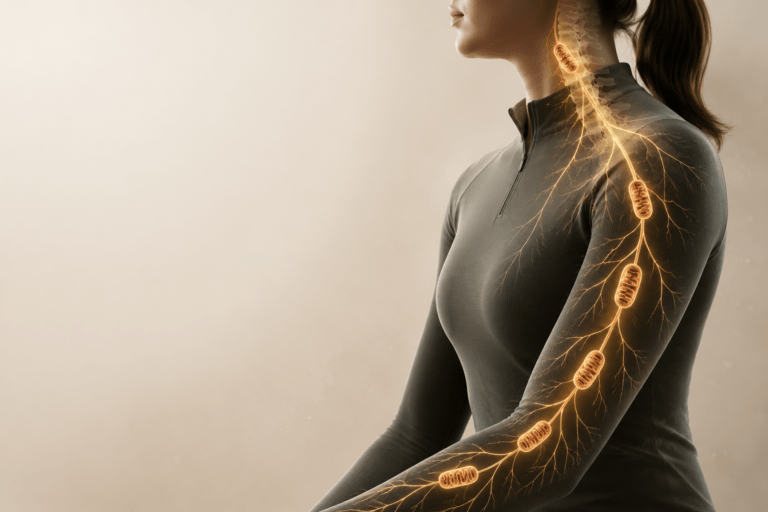
A 2026 Nature study reveals that satellite glial cells can transfer mitochondria to sensory neurons, helping protect nerve function in models of peripheral neuropathy. Here is what the research means, and what it does not mean yet.
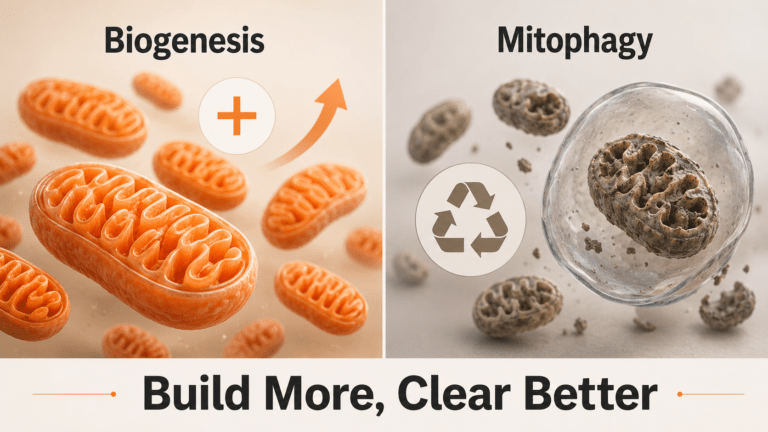
Mitochondria and Mitophagy: The Science of Cellular Recycling
Learn how mitochondrial biogenesis and mitophagy work together to support cellular energy, quality control, recovery, and long-term mitochondrial health.
Why Does Energy Drop as We Get Older? What Changes at the Cellular Level
By age 80, the average person’s mitochondrial energy output drops by 50% while, at the same time, cellular damage skyrockets. This isn't because we are just "getting older," it’s a biological shift in your cellular power plants. We dive into the landmark research on mitochondrial mass and explore how targeted interventions like Mitozz are helping to shift the curve of aging to restore youthful energy at the source.
Mitochondria and Depression: The Bioenergetic Link to Mood
Mitochondria may play a deeper role in mood than once thought. This article explores the “Mito-Mood Hypothesis,” how cellular energy, oxidative stress, inflammation, and neuroplasticity may connect mitochondrial function with emotional resilience, and what practical habits can support the brain’s bioenergetic health.
Mitochondria and Vision: The Energy Behind the Retina
Your retina is one of the body’s most energy-demanding tissues, built to process light and contrast in real time. This article explains why vision depends so heavily on mitochondrial energy, how photoreceptors spend ATP even in darkness, and why supporting cellular resilience may matter for long-term visual health.
Jet Lag and Mitochondria: Why You’re So Tired
Jet lag isn’t just sleep disruption. It’s a temporary mismatch between your brain’s master clock and the cellular clocks that regulate mitochondrial energy production. This article explains why crossing time zones can leave you feeling drained, foggy, and physically slow, and how light exposure, meal timing, movement, and sleep routines help your body resynchronize from the brain down to the mitochondria.
Mitocôndrias e inflamação: a relação bidirecional
Explore o “ciclo energia-inflamação” e os avanços científicos na área da sinalização mitocondrial. Descubra como o DNA mitocondrial que se dissipa atua como um alarme celular, desencadeando inflamação sistêmica e influenciando diretamente sua resiliência fisiológica e capacidade de adaptação a longo prazo. Saiba por que manter a integridade mitocondrial é um pilar fundamental para um envelhecimento saudável e a vitalidade metabólica.
Por que sinto sempre frio?
Se você sempre sente frio, mesmo quando todos os outros estão confortáveis, geralmente não se trata apenas da temperatura ambiente. Trata-se do sistema de termorregulação do seu corpo, ou seja, de como você produz, conserva e distribui o calor. Este artigo explica a verdadeira fisiologia por trás da sensação de frio, desde o metabolismo e a circulação sanguínea até a tireoide e o equilíbrio energético, e ajuda você a entender o que seu corpo pode estar tentando lhe dizer.
Receba dicas e novidades sobre mitocôndrias
Sem spam. Cancele a assinatura a qualquer momento.