Pontos principais
- Reactive oxygen species, or ROS, are not necessarily harmful waste products. At controlled levels, they help cells communicate and adapt.
- Exercise uses short-lived ROS signals to help activate antioxidant defenses, glucose metabolism, and mitochondrial remodeling.
- ROS also help injured tissues signal that repair is needed.
- Problems arise when ROS production stays high, antioxidant defenses are overwhelmed, or damaged mitochondria produce additional ROS.
- The goal is not to eliminate ROS. It is to maintain redox balance so useful signals remain temporary and controlled.
Reactive oxygen species have a public-relations problem.
They are normally associated with oxidative stress, cellular damage, inflammation, and aging. That reputation is not entirely wrong but it is definitely incomplete.
Cells also use ROS as signals. A temporary rise can help the body respond to exercise, coordinate wound repair, strengthen its own antioxidant defenses, and remodel mitochondria. Viewed from this larger perspective, ROS are less like toxic exhaust and more like an alarm that triggers an organized response.
The important distinction is not simply whether ROS are present. It is whether the signal is brief and proportionate, or persistent and overwhelming.
What Are Reactive Oxygen Species?
Reactive oxygen species are chemically reactive molecules derived from oxygen. They include superoxide, hydrogen peroxide, and related compounds.
Some ROS are produced as electrons move through the mitochondrial respiratory system. Others come from enzymes such as NADPH oxidases, which can generate ROS as part of normal cell signaling. Immune activity, exercise, tissue injury, and environmental exposures can also raise ROS production.
Hydrogen peroxide is especially important in signaling because it can move within cells and temporarily modify sensitive sites on proteins. Researchers have identified hundreds of protein sites that respond to hydrogen peroxide, showing that redox signaling is not a rare accident. It is built into cellular regulation.1
Redox Signaling Is Not the Same as Oxidative Stress
Redox balance describes the relationship between oxidant production and the systems that control it. Those systems include enzymes such as superoxide dismutase, catalase, and glutathione peroxidase, along with nonenzymatic defenses.
A useful ROS signal is usually limited in strength, location, and duration. It modifies selected proteins, helps activate a response, and then subsides.
Oxidative stress occurs when oxidant production exceeds the cell’s ability to contain or repair it. The same chemistry that supports signaling can then begin damaging lipids, proteins, and DNA.
This is why calling all ROS “bad” creates the wrong mental model. The biological question is whether the signal remains controlled or not.

Exercise Depends Partly on ROS Signals
Exercise temporarily disturbs cellular balance. Muscles use more oxygen and fuel, calcium signaling changes, energy demand rises, and ROS production increases. These changes help tell the muscle that it needs to adapt.
In a mouse study, high-intensity interval training activated the ROS-producing enzyme NOX2. Mice with impaired NOX2 activity developed weaker improvements in running capacity, antioxidant defenses, glucose metabolism, and several mitochondrial markers.2 This does not mean more ROS always produce better results. It shows that at least some exercise adaptation depends on a controlled oxidant signal.
Human studies support the same general idea, although results are not perfectly uniform. In one trial, high-dose vitamins C and E prevented several exercise-related improvements in insulin sensitivity and endogenous antioxidant defenses.3 Another randomized trial found that the same type of supplementation reduced increases in markers related to mitochondrial biogenesis, even though improvements in oxygen uptake and running performance were not clearly different.4
Other studies have found less interference from antioxidant supplements.5 The evidence therefore does not justify saying that vitamins C and E always block training adaptation. It does suggest that aggressively suppressing exercise-generated ROS can sometimes mute part of the signal the body uses to respond.
ROS Help Coordinate Wound Repair
Tissue injury creates another situation in which a temporary oxidant signal can be useful.
In zebrafish, researchers observed a rapidly formed hydrogen peroxide gradient extending from a wound. That gradient helped direct immune cells toward the damaged area.6 A mouse wound study also found that redox conditions affected angiogenesis and wound closure. Lower, controlled hydrogen peroxide exposure supported repair-related processes, while excessive exposure was harmful.7
This does not mean hydrogen peroxide should be applied to wounds as a healing strategy. Concentrated antiseptic peroxide can damage healthy tissue. The research instead shows that cells generate tightly controlled peroxide signals internally as part of the repair response.
The same molecule can therefore be useful as a localized biological message and harmful as an uncontrolled chemical exposure.
Mitochondrial Stress Can Trigger Remodeling
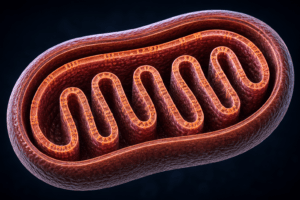
Mitochondria are not static structures. They change shape, increase or decrease in number, exchange components, and undergo quality control in response to energy demand and stress.
Exercise can stimulate mitochondrial biogenesis, which builds mitochondrial capacity. It can also activate mitophagy, which helps cells identify and recycle mitochondria that are damaged or no longer needed.
In mice, an acute exercise session produced temporary mitochondrial oxidative stress followed by mitophagy several hours later. The process depended on signaling through AMPK and ULK1, proteins that help connect energy stress with mitochondrial cleanup.8
A recent human study adds another layer. Sprint interval exercise caused temporary changes in mitochondrial structure and activated stress-response and quality-control pathways. After eight weeks, sprint and moderate training produced different patterns of mitochondrial remodeling, suggesting that the type and intensity of the challenge influence the adaptation.9
Temporary mitochondrial stress is therefore not automatically evidence of harm. When recovery and quality-control systems respond successfully, the disturbance can become part of the remodeling process.
When a Useful Signal Becomes Chronic Noise
A fire alarm is useful when it sounds during a fire and then stops. It becomes a problem when it never turns off.
ROS signaling follows a similar principle. Short-lived increases can activate adaptation. Persistent elevation can damage cellular structures and keep inflammatory pathways active.
Chronic ROS pressure may arise when production remains high, antioxidant and repair systems become less effective, or damaged mitochondria are not removed efficiently. Poor metabolic health, smoking, excessive ultraviolet exposure, environmental toxins, persistent inflammation, and inadequate recovery can all shift the system toward oxidative stress.
The dividing line is not a single universal ROS level. It depends on where the ROS are produced, how long the signal lasts, what molecules are affected, and whether the cell can restore balance.
The Antioxidant Paradox
The popularity of antioxidants grew from a reasonable idea: if excessive oxidation contributes to damage, antioxidants should help. The mistake was assuming that more suppression is always better.
Antioxidant-rich foods provide nutrients within a complex dietary pattern and should not be treated as equivalent to high-dose isolated supplements. The exercise studies also do not show that ordinary fruit and vegetable consumption impairs adaptation.
The more defensible take away is narrower: don’t assume that large antioxidant doses are automatically beneficial, especially around training. They may be appropriate in particular clinical situations, but using them to erase every sign of oxidative stress misunderstands how adaptation works.
The target is not zero ROS. The target is enough control to prevent a temporary signal from becoming sustained damage.
O que isso significa na prática
Supporting healthy redox signaling is less about finding a product that “detoxes” ROS and more about strengthening the systems that regulate them.
Regular exercise gives cells repeated, recoverable challenges. Adequate sleep and recovery allow adaptive processes to catch up with the stress. A varied diet supplies the protein, minerals, vitamins, and plant compounds used in antioxidant and repair systems. Avoiding smoking and excessive environmental exposure reduces unnecessary oxidant load.
It is also useful to separate normal training stress from chronic overload. More exercise is not always better. If stress repeatedly exceeds recovery capacity, the signal may stop being productive.
O Mitozz
Mitozz is a dietary supplement developed by FMG Health Sciences and formulated with 98% pure (−)-epicatechin. It is designed to support healthy mitochondrial function and normal cellular energy as part of a broader routine that includes movement, sleep, nutrition, and recovery.
Preclinical cell research suggests that (−)-epicatechin can influence redox-sensitive pathways, including Nrf2-related signaling.10 This is mechanistic evidence, not proof that Mitozz optimizes ROS levels.
Mitozz therefore fits this discussion as broader mitochondrial support, not as a product intended to eliminate ROS. That distinction matters because healthy mitochondrial function depends on responding to appropriate stress signals, not silencing them indiscriminately.
Conclusão
ROS are not necessarily enemies of cellular health. In controlled amounts, they help cells recognize a challenge and organize a response.
Exercise adaptation, tissue repair, antioxidant defense, and mitochondrial remodeling all use redox signaling. Trouble begins when a temporary message becomes chronic noise.
Rather than trying to eliminate ROS, we need to support the cell’s ability to use them as temporary signals, restore balance once the message has been delivered, and prevent them from accumulating to damaging levels.
Compartilhe este artigo do blog
Referências
- Fu L, et al. Systematic and quantitative assessment of hydrogen peroxide reactivity with cysteines across human proteomes. Molecular & Cellular Proteomics. 2017;16(10):1815–1828. ↩︎
- Henríquez-Olguín C, et al. Adaptations to high-intensity interval training in skeletal muscle require NADPH oxidase 2. Redox Biology. 2019;24:101188. ↩︎
- Ristow M, et al. Antioxidants prevent health-promoting effects of physical exercise in humans. Proceedings of the National Academy of Sciences. 2009;106(21):8665–8670. ↩︎
- Paulsen G, et al. Vitamin C and E supplementation hampers cellular adaptation to endurance training in humans: A double-blind, randomised, controlled trial. The Journal of Physiology. 2014;592(8):1887–1901. ↩︎
- Yfanti C, et al. Antioxidant supplementation does not alter endurance training adaptation. Medicine & Science in Sports & Exercise. 2010;42(7):1388–1395. ↩︎
- Niethammer P, et al. A tissue-scale gradient of hydrogen peroxide mediates rapid wound detection in zebrafish. Nature. 2009;459(7249):996–999. ↩︎
- Roy S, et al. Dermal wound healing is subject to redox control. Molecular Therapy. 2006;13(1):211–220. ↩︎
- Laker RC, et al. AMPK phosphorylation of ULK1 is required for targeting of mitochondria to lysosomes in exercise-induced mitophagy. Nature Communications. 2017;8:548. ↩︎
- Botella J, et al. Sprint interval exercise disrupts mitochondrial ultrastructure, driving a unique mitochondrial stress response and remodelling in men. Nature Communications. 2025;17(1):71. ↩︎
- Granado-Serrano AB, et al. Epicatechin induces NF-κB, activator protein-1 and Nrf2 through PI3K/AKT and ERK signalling in HepG2 cells. British Journal of Nutrition. 2010;103(2):168–179. ↩︎
- Fu L, et al. Systematic and quantitative assessment of hydrogen peroxide reactivity with cysteines across human proteomes. Molecular & Cellular Proteomics. 2017;16(10):1815–1828. ↩︎
- Henríquez-Olguín C, et al. Adaptations to high-intensity interval training in skeletal muscle require NADPH oxidase 2. Redox Biology. 2019;24:101188. ↩︎
- Ristow M, et al. Antioxidants prevent health-promoting effects of physical exercise in humans. Proceedings of the National Academy of Sciences. 2009;106(21):8665–8670. ↩︎
- Paulsen G, et al. Vitamin C and E supplementation hampers cellular adaptation to endurance training in humans: A double-blind, randomised, controlled trial. The Journal of Physiology. 2014;592(8):1887–1901. ↩︎
- Yfanti C, et al. Antioxidant supplementation does not alter endurance training adaptation. Medicine & Science in Sports & Exercise. 2010;42(7):1388–1395. ↩︎
- Niethammer P, et al. A tissue-scale gradient of hydrogen peroxide mediates rapid wound detection in zebrafish. Nature. 2009;459(7249):996–999. ↩︎
- Roy S, et al. Dermal wound healing is subject to redox control. Molecular Therapy. 2006;13(1):211–220. ↩︎
- Laker RC, et al. AMPK phosphorylation of ULK1 is required for targeting of mitochondria to lysosomes in exercise-induced mitophagy. Nature Communications. 2017;8:548. ↩︎
- Botella J, et al. Sprint interval exercise disrupts mitochondrial ultrastructure, driving a unique mitochondrial stress response and remodelling in men. Nature Communications. 2025;17(1):71. ↩︎
- Granado-Serrano AB, et al. Epicatechin induces NF-κB, activator protein-1 and Nrf2 through PI3K/AKT and ERK signalling in HepG2 cells. British Journal of Nutrition. 2010;103(2):168–179. ↩︎
Compreender a saúde mitocondrial é um processo de longo prazo. É por isso que criamos o Mitozz : uma forma gratuita de continuar aprendendo sobre energia celular, saúde mitocondrial e os hábitos de vida que apoiam seu corpo ao longo do tempo. Você receberá conteúdo educativo com base científica, orientações práticas e novidades da Mitozz, tudo no seu próprio ritmo.
Inscreva-se no Mitozz da Mitozz
Obtenha informações com base científica sobre saúde mitocondrial, energia celular e hábitos de vida que contribuem para a saúde do seu corpo a longo prazo.
Aviso médico: As informações fornecidas neste artigo têm caráter exclusivamente educativo e informativo, não constituindo orientação médica. Não substituem o diagnóstico, o tratamento ou a orientação de um profissional de saúde. Consulte sempre um profissional de saúde qualificado antes de fazer alterações em sua dieta, rotina de exercícios, práticas de jejum ou uso de suplementos, especialmente se você tiver alguma condição médica, estiver grávida ou amamentando, ou estiver tomando medicamentos.
Isenção de responsabilidade da FDA: Estas declarações não foram avaliadas pela Food and Drug Administration. Elas não se destinam a diagnosticar, tratar, curar ou prevenir qualquer doença.