Mitozz


細胞エネルギー、ミトコンドリアの健康、回復、そして長寿の科学的メカニズムを理解しましょう。

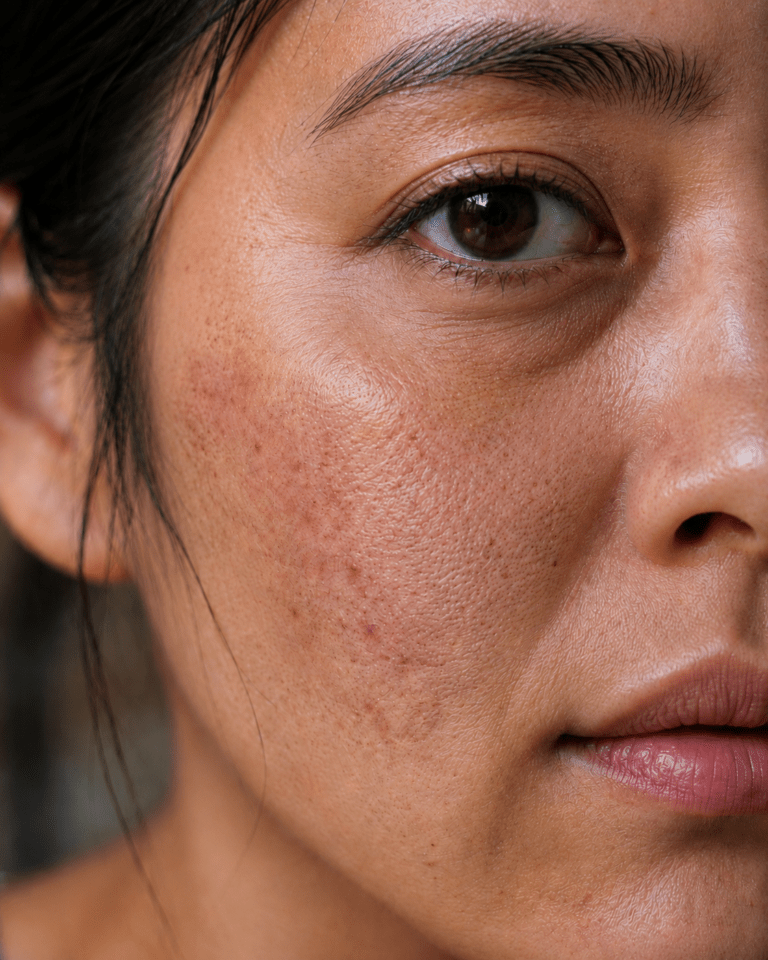
Close-up photorealistic portrait showing uneven skin tone, mild redness, and visible texture on the cheek of a young woman.

Mitochondria, Oxidative Stress, and Uneven Skin Tone

Uneven skin tone is not just a surface issue. This article explains how oxidative stress, mitochondria, UV exposure, and daily skin support fit together.
Healthy older woman with gray hair looking at the camera in soft natural light, Mitozz RS.

Mitochondria, Collagen, and Skin Structure: The Biology Beneath Firmness and Elasticity

Skin firmness is not only about collagen. This article explains how mitochondria, fibroblasts, oxidative stress, and hydration shape the biology beneath elasticity.
mitochondrial hormesis using heat, Mitozz, FMG Health Sciences

Heat, Cold, and Mitochondrial Hormesis: How Temperature Stress 5月 Shape Cellular Resilience

Heat and cold can act as controlled stress signals for mitochondria. Learn how mitochondrial hormesis, thermogenesis, heat shock proteins, and recovery shape cellular resilience.
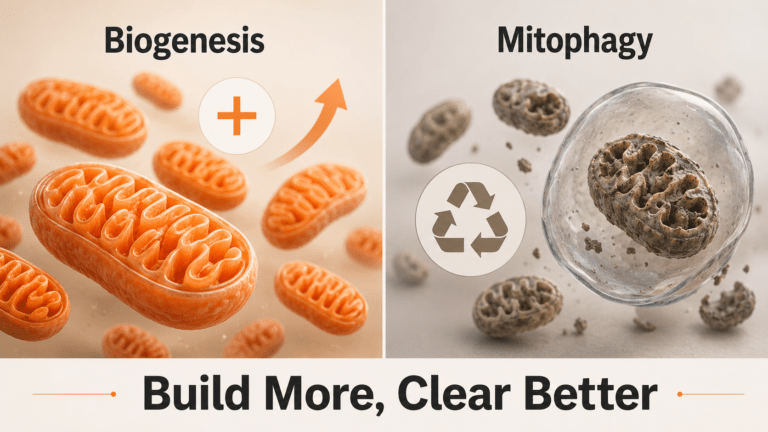
Two-panel Mitozz illustration showing mitochondrial biogenesis with healthy mitochondria and mitophagy with worn mitochondria being recycled.

Mitochondrial Biogenesis and Mitophagy: Build More, Clear Better

Learn how mitochondrial biogenesis and mitophagy work together to build energy capacity, clear damaged mitochondria, and support long-term mitochondrial health.
food and mitochondria

Food, Fasting, and Mitochondria: How Nutrient Timing Shapes Cellular Energy

Food and fasting both send important signals to your mitochondria. Learn how the body shifts between using incoming nutrients after meals and stored fuels during fasting, and why metabolic flexibility matters more than extreme restriction.
Satellite glial cells transferring mitochondria to a sensory neuron, illustrating mitochondrial support, nerve health, and cellular resilience for Mitozz by FMG Health Sciences.

How Cells Share Mitochondria to Protect Nerves

A 2026 Nature study reveals that satellite glial cells can transfer mitochondria to sensory neurons, helping protect nerve function in models of peripheral neuropathy. Here is what the research means, and what it does not mean yet.
An active individual running outdoors at sunrise, representing healthy lifestyle habits and mitochondrial health supported by Mitozz.

Mitochondria and Mitophagy: The Science of Cellular Recycling

Learn how mitochondrial biogenesis and mitophagy work together to support cellular energy, quality control, recovery, and long-term mitochondrial health.
A middle-aged man sitting on a wooden chair in a living room, looking weary with his hand on his forehead, illustrating the physical and mental fatigue associated with age-related energy decline.

Why Does Energy Drop as We Get Older? What Changes at the Cellular Level

By age 80, the average person’s mitochondrial energy output drops by 50% while, at the same time, cellular damage skyrockets. This isn't because we are just "getting older," it’s a biological shift in your cellular power plants. We dive into the landmark research on mitochondrial mass and explore how targeted interventions like Mitozz are helping to shift the curve of aging to restore youthful energy at the source.
A woman looking down in deep reflection near a window, illustrating the biological connection between chronic stress, mental health, and mitochondrial bioenergetics.

Mitochondria and Depression: The Bioenergetic Link to Mood

Mitochondria may play a deeper role in mood than once thought. This article explores the “Mito-Mood Hypothesis,” how cellular energy, oxidative stress, inflammation, and neuroplasticity may connect mitochondrial function with emotional resilience, and what practical habits can support the brain’s bioenergetic health.
A traveler suffering from jet lag looking out the window of a long-haul flight at night over city lights, illustrating the impact of travel and sleep debt on cellular energy. FMG Health Sciences

Jet Lag and Mitochondria: Why You’re So Tired

Jet lag isn’t just sleep disruption. It’s a temporary mismatch between your brain’s master clock and the cellular clocks that regulate mitochondrial energy production. This article explains why crossing time zones can leave you feeling drained, foggy, and physically slow, and how light exposure, meal timing, movement, and sleep routines help your body resynchronize from the brain down to the mitochondria.

左側にカカオの生豆、中央に新鮮な緑茶の葉、右側に日差しの降り注ぐ公園をジョギングする女性を描いた3分割の画像。これは、エピカテキンの天然由来源と、健康的な加齢や活力への効果を表しています。

(-)-Epicatechin ミトコンドリアの健康:科学的な知見

Discover the connection between signaling pathways and energy regulation. We explore how (-)-epicatechin supports mitochondrial adaptation and long-term cellular resilience.
自然光が差し込む部屋でソファに座る中年女性が、「ミトコンドリア機能低下」とは実際どのようなものなのか、と自問している -Mitozz

「ミトコンドリア機能障害」は実際にはどのような症状が現れるのでしょうか?

If your energy, recovery, or mental stamina feels off, it may not be just motivation or sleep. Mitochondrial function shapes how you feel day to day. This article breaks down what that can look like.