The Mitozz Blog


Understand the science behind cellular energy, mitochondrial health, recovery, and longevity.

Healthy older woman hiking outdoors, representing mitochondrial quality control, cellular energy, and healthy aging.

Why Damaged Mitochondrial DNA Changes the Aging Conversation

As we age, we tend to lose mitochondrial capacity. But having fewer mitochondria does not tell the full story. The quality of the mitochondria that remain, including the condition of their DNA, also plays an important role in how well cells continue to produce and manage energy.
Generic NAD+ support supplement bottle representing NAD and mitochondrial energy metabolism

NAD and Mitochondrial Capacity: Why More NAD Is Not Enough

Raising NAD+ may support cellular energy metabolism, but does more NAD+ actually mean better mitochondria? The answer depends on what happens beyond NAD+.
Large ROS text above the word ENEMY crossed out in red, illustrating that reactive oxygen species are not always harmful.

ROS Are Not the Enemy: How Cells Turn Stress Into Adaptation

Reactive oxygen species are usually portrayed as cellular enemies. In controlled amounts, however, they help cells respond to exercise, tissue injury, and mitochondrial stress. The real issue is when a useful signal becomes chronic noise.
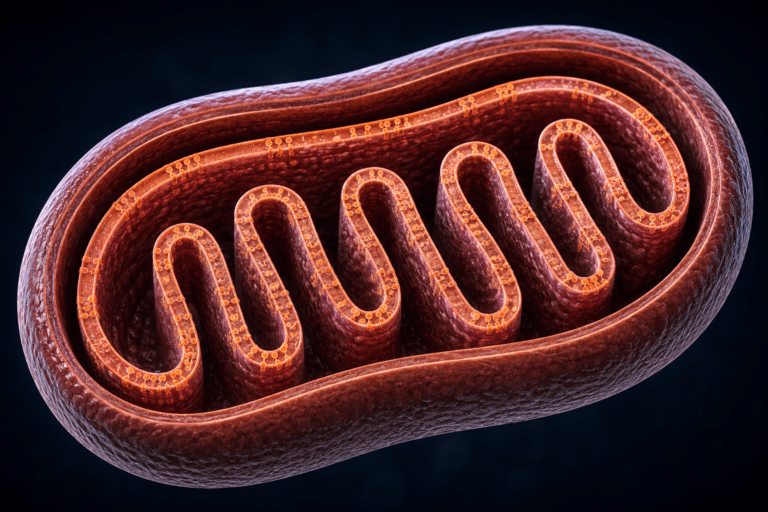
Mitochondrion with cardiolipin highlighted along the curved inner membrane and cristae.

Cardiolipin: The Mitochondrial Fat Almost Nobody Talks About

Cardiolipin is a specialized phospholipid found mainly in the inner mitochondrial membrane. Its unusual four-tailed structure helps support mitochondrial cristae and the proteins involved in ATP production. Here is why this little-known membrane lipid matters for mitochondrial organization, energy production, and renewal.
Woman standing in soft filtered sunlight, with light highlighting her abdominal area to represent the connection between the gut microbiome and mitochondrial energy.

How the Microbiome and Mitochondria Shape Each Other

The gut microbiome does more than support digestion. Microbial metabolites can influence mitochondrial fuel use, signaling, and quality control, while mitochondria also help shape the gut environment.
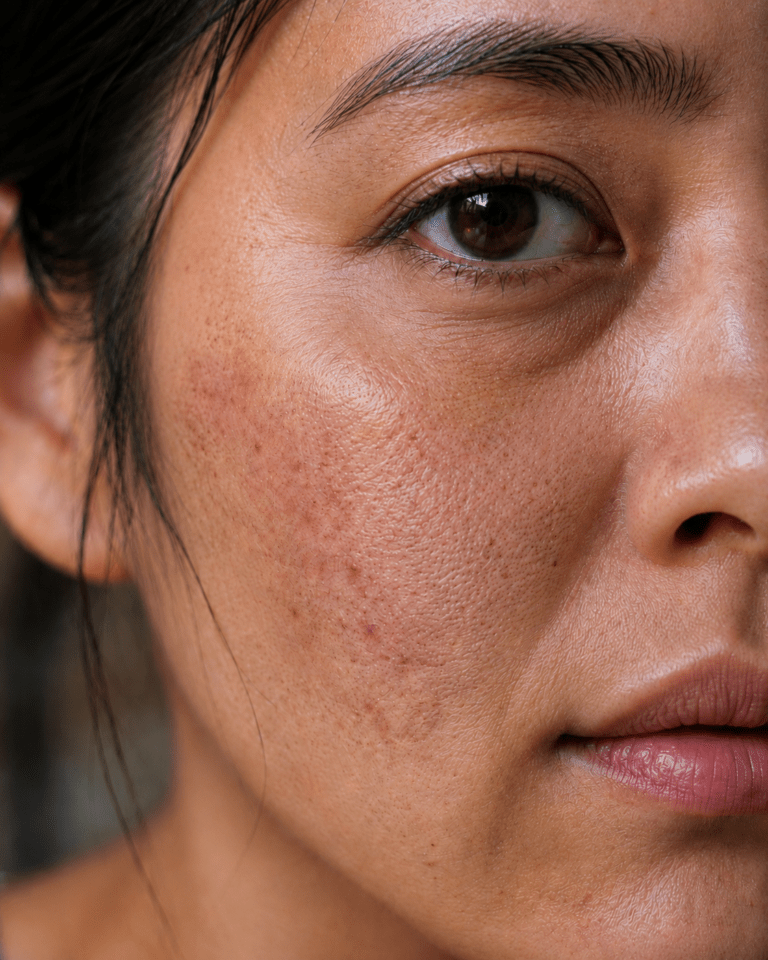
Close-up photorealistic portrait showing uneven skin tone, mild redness, and visible texture on the cheek of a young woman.

Mitochondria, Oxidative Stress, and Uneven Skin Tone

Uneven skin tone is not just a surface issue. This article explains how oxidative stress, mitochondria, UV exposure, and daily skin support fit together.
Healthy older woman with gray hair looking at the camera in soft natural light, Mitozz RS.

Mitochondria, Collagen, and Skin Structure: The Biology Beneath Firmness and Elasticity

Skin firmness is not only about collagen. This article explains how mitochondria, fibroblasts, oxidative stress, and hydration shape the biology beneath elasticity.
mitochondrial hormesis using heat, Mitozz, FMG Health Sciences

Heat, Cold, and Mitochondrial Hormesis: How Temperature Stress May Shape Cellular Resilience

Heat and cold can act as controlled stress signals for mitochondria. Learn how mitochondrial hormesis, thermogenesis, heat shock proteins, and recovery shape cellular resilience.

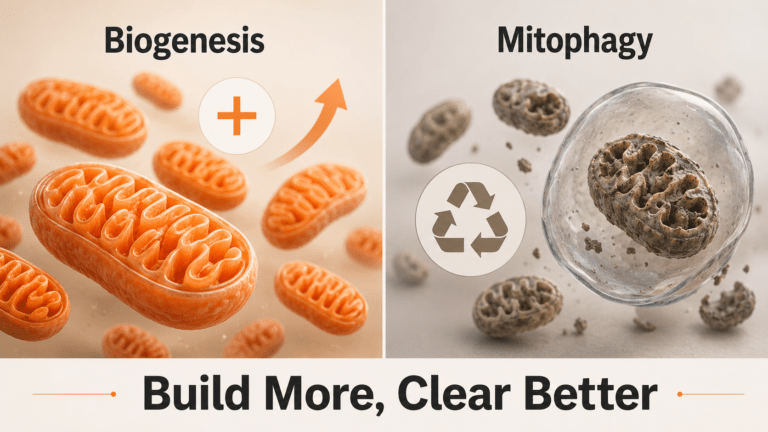
Two-panel Mitozz illustration showing mitochondrial biogenesis with healthy mitochondria and mitophagy with worn mitochondria being recycled.

Mitochondrial Biogenesis and Mitophagy: Build More, Clear Better

Learn how mitochondrial biogenesis and mitophagy work together to build energy capacity, clear damaged mitochondria, and support long-term mitochondrial health.
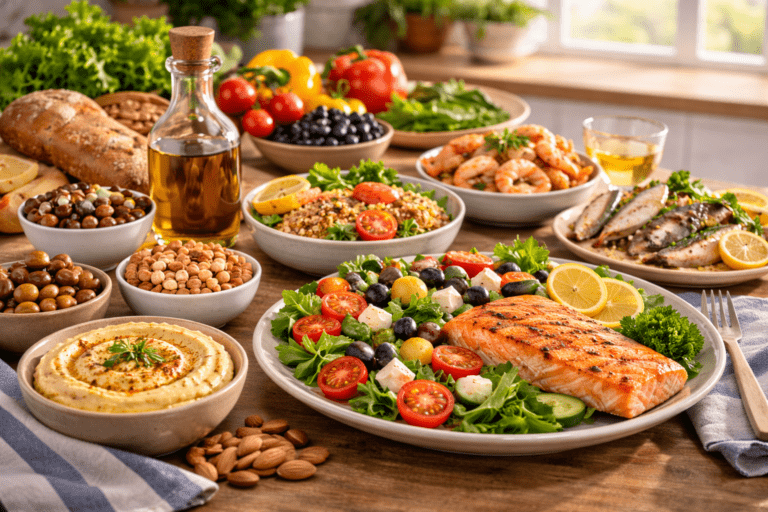
food and mitochondria

Food, Fasting, and Mitochondria: How Nutrient Timing Shapes Cellular Energy

Food and fasting both send important signals to your mitochondria. Learn how the body shifts between using incoming nutrients after meals and stored fuels during fasting, and why metabolic flexibility matters more than extreme restriction.
Satellite glial cells transferring mitochondria to a sensory neuron, illustrating mitochondrial support, nerve health, and cellular resilience for Mitozz by FMG Health Sciences.

How Cells Share Mitochondria to Protect Nerves

A 2026 Nature study reveals that satellite glial cells can transfer mitochondria to sensory neurons, helping protect nerve function in models of peripheral neuropathy. Here is what the research means, and what it does not mean yet.
An active individual running outdoors at sunrise, representing healthy lifestyle habits and mitochondrial health supported by Mitozz.

Mitochondria and Mitophagy: The Science of Cellular Recycling

Learn how mitochondrial biogenesis and mitophagy work together to support cellular energy, quality control, recovery, and long-term mitochondrial health.